• Fri frakt över 249 kr
  • •
  • Snabba leveranser
  • •
  • Billiga böcker
Kundservice

Du är på sajten för privatpersoner.

Företag, bibliotek eller offentlig verksamhet?

Du handlar på classic.bokus.com, där alla dina funktioner finns intakta.
Till classic.bokus.com
Bokus logotyp. Gå till startsidan.
  • Erbjudanden
  • Nyheter
  • Student
  • Topplistor
  • Barn & ungdom
  • Bokus Play
  • E-böcker
  • Pocketböcker
  • Spel & pussel

10% rabatt på allt med kod: NYSTART10 →

Sidfot

Mina sidor

    Hjälp

    • Kundservice
    • Vanliga frågor och svar
    • Frakt och leverans
    • Retur vid ångerrätt
    • Reklamera vara
    • Betalning
    • Köpvillkor
    • Allmänna villkor
    • Information om webbplatsens tillgänglighet

    Om Bokus

    • Om oss
    • Pressrum
    • För studenter
    • För företag
    • För bibliotek och offentlig verksamhet
    • För leverantörer
    • Hållbarhet

    Populärt

    • Aktuella erbjudanden
    • Presentkort
    • Studentlitteratur
    • Nya böcker
    • Topplistor
    • Signerade böcker
    • Engelska böcker

    Inspiration

    • Boktips
    • BookTok
    • Populära bokserier
    • Barnbokskaraktärer
    • Populära författare
    Logotyp för Bokus
    Följ oss på Facebook (extern länk)Följ oss på Instagram (extern länk)Följ oss på YouTube (extern länk)Följ oss på TikTok (extern länk)
    bokus @ CookiesAnpassa cookiesIntegritetspolicyKöpvillkor
    Till Citymail hemsida (extern länk)Till Budbee hemsida (extern länk)Till Postnord hemsida (extern länk)Till Schenker hemsida (extern länk)Till Early Bird hemsida (extern länk)Till Walleys hemsida (extern länk)
    1. Samhälle och politik
    2. Samhälle och kultur
    3. Sociala grupper och identitet

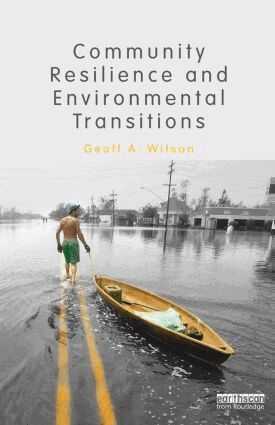
    Community Resilience and Environmental Transitions

    AvGeoff Wilson

    Häftad, Engelska, 2012

    878 kr

    Beställningsvara. Skickas inom 10-15 vardagar. Fri frakt över 249 kr.

    Fler format och utgåvor

    E-bok

    1 040 kr

    E-bok

    1 040 kr

    Inbunden

    2 648 kr

    Beskrivning

    This book discusses the resilience of communities in both developed and developing world contexts. It investigates the notion of ‘resilience’ and the challenges faced by local communities around the world to deal with disturbances (natural hazards or human-made) that may threaten their long-term survival. Using global examples, specific emphasis is placed on how learning processes, traditions, policies and politics affect the resilience of communities and what constraints and opportunities exist for communities to raise resilience levels.

    Produktinformation

    • Utgivningsdatum:2012-12-17
    • Mått:156 x 234 x 15 mm
    • Vikt:422 g
    • Format:Häftad
    • Språk:Engelska
    • Antal sidor:260
    • Förlag:Taylor & Francis Ltd
    • ISBN:9780415827935

    Utforska kategorier

    • Sociala grupper och identitet inom Samhälle och politik

    Mer om författaren

    Geoff Wilson has worked on research topics linked to human-environment interactions for the past 20 years, with extensive research conducted in various geographical settings including New Zealand, Australia, Germany, Switzerland and the UK. He has published several books, including 'Environmental Management: New Directions for the 21st Century' and is currently Editor of the journal 'Geography Compass: Environment and Society'.

    Recensioner i media

    'Community Resilience and Environmental Transitions is a welcome addition to studies of the increasingly pervasive concept of resilience.' – Gerald Taylor Aiken, Environmental Values

    Innehållsförteckning

    • 1. Introduction  2. Towards a Framework for Understanding Community Resilience  3. Transition Theory: Environmental Pathways and Resilient Communities  4. System Memory: Community Learning, Tradition and Historical Networks  5. Path Dependency: 'Lock-In' Mechanisms and Pathways of the '(Im)possible'  6. Transitional Corridors: External Constraints for Endogenous Community Resilience  7. Environmental transitions and the Policy Challenge: How to make Local Communities More Resilient  8. Conclusions