• Fri frakt över 249 kr
  • •
  • Snabba leveranser
  • •
  • Billiga böcker
Kundservice

Du är på sajten för privatpersoner.

Företag, bibliotek eller offentlig verksamhet?

Du handlar på classic.bokus.com, där alla dina funktioner finns intakta.
Till classic.bokus.com
Bokus logotyp. Gå till startsidan.
  • Erbjudanden
  • Nyheter
  • Student
  • Topplistor
  • Barn & ungdom
  • Bokus Play
  • E-böcker
  • Pocketböcker
  • Spel & pussel

10% rabatt på allt med kod NYSTART10 →

Sidfot

Mina sidor

    Hjälp

    • Kundservice
    • Vanliga frågor och svar
    • Frakt och leverans
    • Retur vid ångerrätt
    • Reklamera vara
    • Betalning
    • Köpvillkor
    • Allmänna villkor
    • Information om webbplatsens tillgänglighet

    Om Bokus

    • Om oss
    • Pressrum
    • För studenter
    • För företag
    • För bibliotek och offentlig verksamhet
    • För leverantörer
    • Hållbarhet

    Populärt

    • Aktuella erbjudanden
    • Presentkort
    • Studentlitteratur
    • Nya böcker
    • Topplistor
    • Signerade böcker
    • Engelska böcker

    Inspiration

    • Boktips
    • BookTok
    • Populära bokserier
    • Barnbokskaraktärer
    • Populära författare
    Logotyp för Bokus
    Följ oss på Facebook (extern länk)Följ oss på Instagram (extern länk)Följ oss på YouTube (extern länk)Följ oss på TikTok (extern länk)
    bokus @ CookiesAnpassa cookiesIntegritetspolicyKöpvillkor
    Till Citymail hemsida (extern länk)Till Budbee hemsida (extern länk)Till Postnord hemsida (extern länk)Till Schenker hemsida (extern länk)Till Early Bird hemsida (extern länk)Till Walleys hemsida (extern länk)
    1. Psykologi och pedagogik
    2. Psykologi
    3. Psykologisk metod

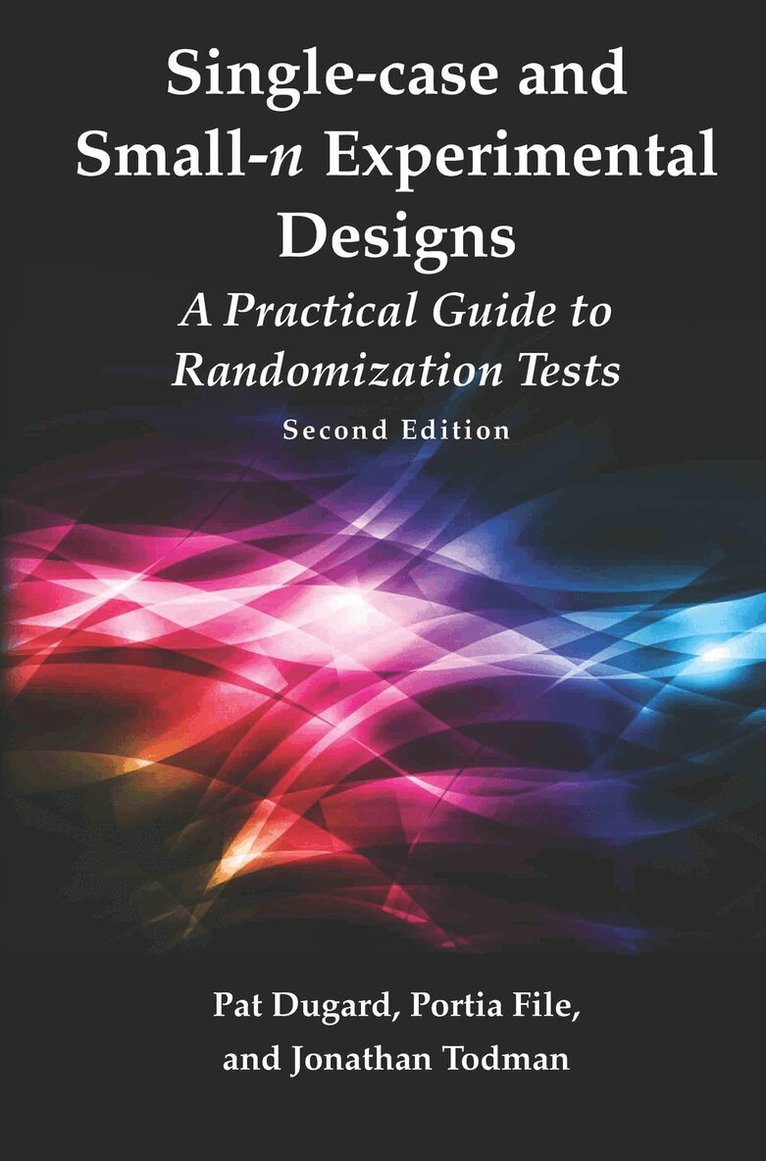
    Single-case and Small-n Experimental Designs

    A Practical Guide To Randomization Tests, Second Edition

    AvPat Dugard,Portia File

    Inbunden, Engelska, 2011

    2 354 kr

    Beställningsvara. Skickas inom 10-15 vardagar. Fri frakt över 249 kr.

    Fler format och utgåvor

    Häftad

    703 kr

    Beskrivning

    This practical guide explains the use of randomization tests and provides example designs and macros for implementation in IBM SPSS and Excel. It reviews the theory and practice of single-case and small-n designs so readers can draw valid causal inferences from small-scale clinical studies. The macros and example data are provided on the book’s website so that users can run analyses of the text data as well as data from their own studies.The new edition features:More explanation as to why randomization tests are useful and how to apply them.More varied and expanded examples that demonstrate the use of these tests in education, clinical work and psychology.A website with the macros and datasets for all of the text examples in IBM SPSS and Excel.Exercises at the end of most chapters that help readers test their understanding of the material.A new glossary that defines the key words that appear in italics when they are first introduced.A new appendix that reviews the basic skills needed to do randomization tests.New appendices that provide annotated SPSS and Excel macros to help readers write their own or tinker with the ones provided in the book.The book opens with an overview of single case and small n designs -- why they are needed and how they differ from descriptive case studies. Chapter 2 focuses on the basic concepts of randoization tests. Next how to choose and implement a randomization design is reviewed including material on how to perform the randomizations, how to select the number of observations, and how to record the data. Chapter 5 focuses on how to analyze the data including how to use the macros and understand the results. Chapter 6 shows how randomization tests fit into the body of statistical inference. Chapter 7 discusses size and power. The book concludes with a demonstration of how to edit or modify the macros or use parts of them to write your own.Ideal as a text for courses on single-case, small n design, and/or randomization tests taught at the graduate level in psychology (especially clinical, counseling, educational, and school), education, human development, nursing, and other social and health sciences, this inexpensive book also serves as a supplement in statistics or research methods courses. Practitioners and researchers with an applied clinical focus also appreciate this book’s accessible approach. An introduction to basic statistics, SPSS, and Excel is assumed.

    Produktinformation

    • Utgivningsdatum:2011-10-25
    • Mått:152 x 229 x 22 mm
    • Vikt:532 g
    • Format:Inbunden
    • Språk:Engelska
    • Antal sidor:304
    • Upplaga:2
    • Förlag:Taylor & Francis Ltd
    • ISBN:9780415886222

    Utforska kategorier

    • Psykologisk metod inom Psykologi och pedagogik

    Mer om författaren

    Pat Dugard taught statistics at the University of Abertay Dundee until 1999 and has also taught courses at the Open University. She now concentrates on writing. She received her PGDip in Mathematical Statistics from the University of Cambridge. Portia File is a psychologist and computer scientist experienced in teaching university courses on research methods. She taught at University of Abertay Dundee from 1983 until 2007. She received her PhD in Cognitive Psychology from the University of Texas at Austin in 1975.Jonathan Todman is a Clinical Psychologist in the Pain Management Programme at NHS Greater Glasgow and Clyde in Glasgow, Scotland. He received his Clinical Psychology Doctorate from Edinburgh in 2010.

    Recensioner i media

    "The presentation is good, and the authors give a practical resource for those who must work with the specific designs in the text."—Technometrics

    Innehållsförteckning

    • Preface. 1. Single-case and Small-n Designs in Context. 2. Understanding Randomization Tests. 3. Obtaining the Data: Choosing the Design. 4. Obtaining the Data: Implementing the Design. 5. Analyzing the Data: Using the Macros. 6. Analyzing the Data: Wider Considerations. 7. Size and Power. 8. Going Further. Appendixes: 1. Basic Skills for Randomization Tests. 2. SPSS Macros. 3. Excel Macros.