• Fri frakt över 249 kr
  • •
  • Snabba leveranser
  • •
  • Billiga böcker
Kundservice

Du är på sajten för privatpersoner.

Företag, bibliotek eller offentlig verksamhet?

Du handlar på classic.bokus.com, där alla dina funktioner finns intakta.
Till classic.bokus.com
Bokus logotyp. Gå till startsidan.
  • Erbjudanden
  • Student
  • Topplistor
  • Barn & ungdom
  • Bokus Play
  • E-böcker
  • Ljudböcker
  • Pocketböcker
  • Spel och pussel

5% studentrabatt – använd koden KURSBOK27 →

Sidfot

Mina sidor

    Hjälp

    • Kundservice
    • Vanliga frågor och svar
    • Frakt och leverans
    • Retur vid ångerrätt
    • Reklamera vara
    • Betalning
    • Köpvillkor
    • Allmänna villkor
    • Information om webbplatsens tillgänglighet

    Om Bokus

    • Om oss
    • Pressrum
    • För studenter
    • För företag
    • För bibliotek och offentlig verksamhet
    • För leverantörer
    • Hållbarhet

    Populärt

    • Aktuella erbjudanden
    • Presentkort
    • Studentlitteratur
    • Nya böcker
    • Topplistor
    • Signerade böcker
    • Engelska böcker

    Inspiration

    • Boktips
    • BookTok
    • Barnbokskaraktärer
    • Populära författare
    Logotyp för Bokus
    Följ oss på Facebook (extern länk)Följ oss på Instagram (extern länk)Följ oss på YouTube (extern länk)Följ oss på TikTok (extern länk)
    bokus @ CookiesAnpassa cookiesIntegritetspolicyKöpvillkor
    Till Citymail hemsida (extern länk)Till Budbee hemsida (extern länk)Till Postnord hemsida (extern länk)Till Schenker hemsida (extern länk)Till Early Bird hemsida (extern länk)Till Walleys hemsida (extern länk)
    1. Ekonomi och Ledarskap
    2. Industrier och branscher
    3. Tillverkningsindustri

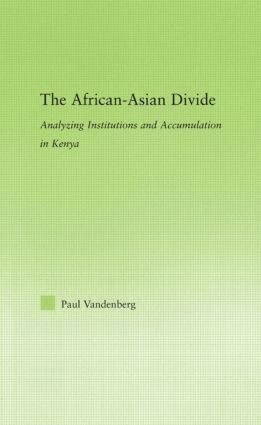
    African-Asian Divide

    Analyzing Institutions and Accumulation in Kenya

    AvPaul Vandenberg

    Inbunden, Engelska, 2006

    Del i serien New Political Economy

    2 481 kr

    Beställningsvara. Skickas inom 10-15 vardagar. Fri frakt över 249 kr.

    Fler format och utgåvor

    Häftad

    784 kr

    E-bok

    906 kr

    E-bok

    933 kr

    Beskrivning

    Why have Africans not gained a more dominant position in urban manufacturing in Kenya? This question is explored through an analysis of the institutions, both formal and informal, that have affected patterns of capital accumulation in Kenya by the African and Asian (Indian) communities. Using a new institutional economics approach, this book explores the history of economic activity through the pre-colonial, colonial and post-colonial periods, including the transformative period of British rule. During the colonial period, Asians were brought in to build the railways and subsequently focused on urban-based activities. Africans, meanwhile, found it difficult to move out of agriculture. Thus, the ethnic-sectoral division of activities was entrenched by the formal laws and powers of the British. Following independence, the network and financial capital that Asians had built up allowed them to survive early attempts at the Africanization of industry. Africans, now supported by the formal institutions of the state, still found it difficult to engage in manufacturing because they lacked the informal networks that support trade and credit. The analysis is supported by the results of a contemporary survey of 120 manufacturing firms in Nairobi’s metal sector that highlight the division between smaller African firms and larger Asian ones.

    Produktinformation

    • Utgivningsdatum:2006-06-23
    • Mått:152 x 229 x 19 mm
    • Vikt:660 g
    • Format:Inbunden
    • Språk:Engelska
    • Serie:New Political Economy
    • Antal sidor:268
    • Förlag:Taylor & Francis Ltd
    • ISBN:9780415979832

    Utforska kategorier

    • Tillverkningsindustri inom Ekonomi och Ledarskap

    Innehållsförteckning

    • 1. Institutional Theory, Africa and Ethnic Business Communities 2. Institutional Diversity Prior to 1900 3. Discrete and Evolutionary Change during Colonialism 4. Land, Agriculture and Urban Business following Independence 5. Metal Manufacturing: Location and Technology 6. Legal and Financial Institutions for Enterprises 7. Inter-Firm, Inter-Mediated and Informal Credit