• Fri frakt över 249 kr
  • •
  • Snabba leveranser
  • •
  • Billiga böcker
Kundservice

Du är på sajten för privatpersoner.

Företag, bibliotek eller offentlig verksamhet?

Du handlar på classic.bokus.com, där alla dina funktioner finns intakta.
Till classic.bokus.com
Bokus logotyp. Gå till startsidan.
  • Erbjudanden
  • Nyheter
  • Student
  • Topplistor
  • Barn & ungdom
  • Bokus Play
  • E-böcker
  • Pocketböcker
  • Spel & pussel

10% rabatt på allt med kod: NYSTART10 →

Sidfot

Mina sidor

    Hjälp

    • Kundservice
    • Vanliga frågor och svar
    • Frakt och leverans
    • Retur vid ångerrätt
    • Reklamera vara
    • Betalning
    • Köpvillkor
    • Allmänna villkor
    • Information om webbplatsens tillgänglighet

    Om Bokus

    • Om oss
    • Pressrum
    • För studenter
    • För företag
    • För bibliotek och offentlig verksamhet
    • För leverantörer
    • Hållbarhet

    Populärt

    • Aktuella erbjudanden
    • Presentkort
    • Studentlitteratur
    • Nya böcker
    • Topplistor
    • Signerade böcker
    • Engelska böcker

    Inspiration

    • Boktips
    • BookTok
    • Populära bokserier
    • Barnbokskaraktärer
    • Populära författare
    Logotyp för Bokus
    Följ oss på Facebook (extern länk)Följ oss på Instagram (extern länk)Följ oss på YouTube (extern länk)Följ oss på TikTok (extern länk)
    bokus @ CookiesAnpassa cookiesIntegritetspolicyKöpvillkor
    Till Citymail hemsida (extern länk)Till Budbee hemsida (extern länk)Till Postnord hemsida (extern länk)Till Schenker hemsida (extern länk)Till Early Bird hemsida (extern länk)Till Walleys hemsida (extern länk)
    1. Naturvetenskap och teknik
    2. Matematik och naturvetenskap
    3. Biologi

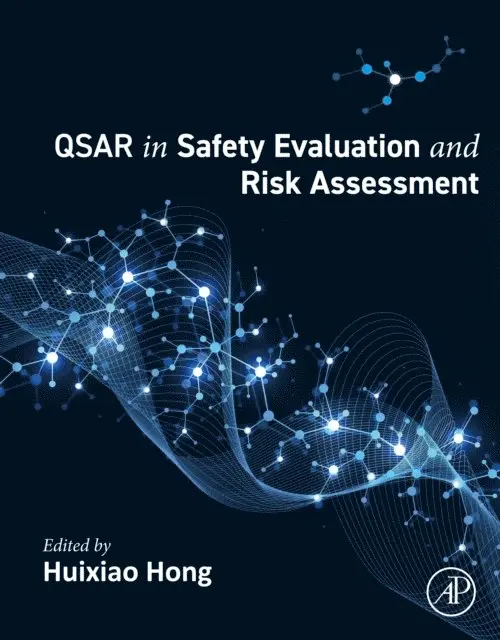
    QSAR in Safety Evaluation and Risk Assessment

    AvHuixiao Hong

    Häftad, Engelska, 2023

    1 776 kr

    Beställningsvara. Skickas inom 10-15 vardagar. Fri frakt över 249 kr.

    Beskrivning

    QSAR in Safety Evaluation and Risk Assessment provides comprehensive coverage on QSAR methods, tools, data sources, and models focusing on applications in products safety evaluation and chemicals risk assessment.
    Organized into five parts, the book covers almost all aspects of QSAR modeling and application. Topics in the book include methods of QSAR, from both scientific and regulatory viewpoints; data sources available for facilitating QSAR models development; software tools for QSAR development; and QSAR models developed for assisting safety evaluation and risk assessment. Chapter contributors are authored by a lineup of active scientists in this field. The chapters not only provide professional level technical summarizations but also cover introductory descriptions for all aspects of QSAR for safety evaluation and risk assessment.
    • Provides comprehensive content�about the�QSAR techniques and models in facilitating the safety evaluation of drugs and consumer products and risk assesment of environmental chemicals
    • Includes some of the most cutting-edge methodologies such as deep learning and machine learning for QSAR
    • Offers detailed procedures of modeling and provides examples of each model's application in real practice

    Produktinformation

    • Utgivningsdatum:2023-08-22
    • Mått:216 x 276 x 31 mm
    • Vikt:1 520 g
    • Format:Häftad
    • Språk:Engelska
    • Antal sidor:564
    • Förlag:Elsevier Science
    • ISBN:9780443153396

    Utforska kategorier

    • Biologi inom Naturvetenskap och teknik

    Mer om författaren

    Huixiao Hong received his PhD from Nanjing University in China and conducted research at Maxwell Institute in Leeds University, England. He was an associate professor and the Director of Laboratory of Computational Chemistry at Nanjing University in China, a visiting scientist at the National Cancer Institute (NCI) at National Institutes of Health (NIH), a research scientist at Sumitomo Chemical Company in Japan. Huixiao Hong joined National Central for Toxicological Research (NCTR) at the U.S. Food and Drug Administration (FDA) in 2000. He is an SBRBPAS expert and the Chief of Bioinformatics Branch at NCTR/FDA. He is an associate editor of Experimental Biology and Medicine, Frontiers in Artificial Intelligence, and Frontiers in Bioinformatics, as well as editorial board member of several scientific journals. He has over 250 publications with over 15,000 citations and a Google Scholar H-index 63.

    Innehållsförteckning

    • 1. QSAR facilitating safety evaluation and risk assessmentPart I: Methods and Advances of QSAR 2. Development of QSAR models as reliable computational tools for regulatory assessment of chemicals for acute toxicity3. Deep learning-based descriptors as input for QSAR4. Decision Forest – A machine learning algorithms for QSAR modeling5. Integrated modelling for compound efficacy and safety assessment6. Deep learning QSAR methods for chemical toxicity prediction and risk assessment7. Predictive modeling approaches for the risk assessment of persistent organic pollutants: Classical to Machine learning based QSAR Models8. Machine learning based QSAR for safety evaluation9. Advances in QSAR through Artificial Intelligence and Machine Learning methods10. Advances of the QSAR approach as an alternative strategy in the Environmental Risk Assessment11. QSAR modeling based on graph neural networksPart II: Tools and Data Sources for QSAR 12. Modeling safety and risk assessment with VEGA HUB13. Recent advancements in QSAR and Machine Learning Approaches for risk assessment of organic chemicals14. admetSAR - a valuable tool for assisting safety evaluation15. QSAR tools for toxicity prediction in risk assessment – a comparative analysis16. Fast and Efficient Implementation of Computational Toxicology Solutions Using the FlexFilters Platform17. Annotate a standard dataset for drug-induced liver injury to support developing QSAR models 18. Application of QSAR Models Based on Machine Learning Methods in Chemical Risk Assessment and Drug Discovery19. EADB – The database providing curated data for developing QSAR models to facilitate assessment of endocrine activity20. Centralized data sources and QSAR methods for the prediction of idiosyncratic adverse drug reactionPart III: QSAR models for Safety Evaluation of Drugs and Consumer Products 21. QSAR modeling for predicting drug-induced liver injury22. The need of QSAR methods to assess safety of chemicals in food contact materials23. QSAR models for predicting in vivo reproductive toxicity24. Aryl hydrocarbon receptors and their ligands in human health management25. Use of in silico protocols to evaluate drug safety26. QSAR models for predicting cardiac toxicity of dugsPart IV: QSAR models for Risk Assessment of Chemicals 27. Similarity-based analyses for the false-positive and false-negative chemicals on the second Ames/QSAR international challenge project28. QSAR Model of Photolysis Kinetic Parameters in Aquatic Environment29. QSAR models on transthyretin disrupting effects of chemicals30. QSAR models for toxicity assessment of multicomponent systems31. Deploying QSAR to discriminate excess toxicity and identify the toxic mode of action of organic pollutants to aquatic organisms32. QSAR models for prediction of carrying capacity of microplastic towards organic pollutants33. QSAR models on degradation rate constants of atmospheric pollutantsPart V: QSAR models in Material Science and Other Areas 34. Significance of QSAR in cancer risk assessment of polycyclic aromatic compounds (PACs)35. QSAR in risk assessment of nanomaterials36. In silico and in vitro ecotoxicity - QSAR based predictions for the aquatic environment37. In vitro to in vivo Extrapolation Methods in Chemical Hazard Identification and Risk Assessment38. QSAR models in marine ecotoxicology