• Fri frakt över 249 kr
  • •
  • Snabba leveranser
  • •
  • Billiga böcker
Kundservice

Du är på sajten för privatpersoner.

Företag, bibliotek eller offentlig verksamhet?

Du handlar på classic.bokus.com, där alla dina funktioner finns intakta.
Till classic.bokus.com
Bokus logotyp. Gå till startsidan.
  • Erbjudanden
  • Nyheter
  • Student
  • Topplistor
  • Barn & ungdom
  • Bokus Play
  • E-böcker
  • Pocketböcker
  • Spel & pussel

10% rabatt på allt med kod: NYSTART10 →

Sidfot

Mina sidor

    Hjälp

    • Kundservice
    • Vanliga frågor och svar
    • Frakt och leverans
    • Retur vid ångerrätt
    • Reklamera vara
    • Betalning
    • Köpvillkor
    • Allmänna villkor
    • Information om webbplatsens tillgänglighet

    Om Bokus

    • Om oss
    • Pressrum
    • För studenter
    • För företag
    • För bibliotek och offentlig verksamhet
    • För leverantörer
    • Hållbarhet

    Populärt

    • Aktuella erbjudanden
    • Presentkort
    • Studentlitteratur
    • Nya böcker
    • Topplistor
    • Signerade böcker
    • Engelska böcker

    Inspiration

    • Boktips
    • BookTok
    • Populära bokserier
    • Barnbokskaraktärer
    • Populära författare
    Logotyp för Bokus
    Följ oss på Facebook (extern länk)Följ oss på Instagram (extern länk)Följ oss på YouTube (extern länk)Följ oss på TikTok (extern länk)
    bokus @ CookiesAnpassa cookiesIntegritetspolicyKöpvillkor
    Till Citymail hemsida (extern länk)Till Budbee hemsida (extern länk)Till Postnord hemsida (extern länk)Till Schenker hemsida (extern länk)Till Early Bird hemsida (extern länk)Till Walleys hemsida (extern länk)
    1. Medicin
    2. Klinisk medicin och internmedicin
    3. Sjukdomar och rubbningar
    4. Onkologi

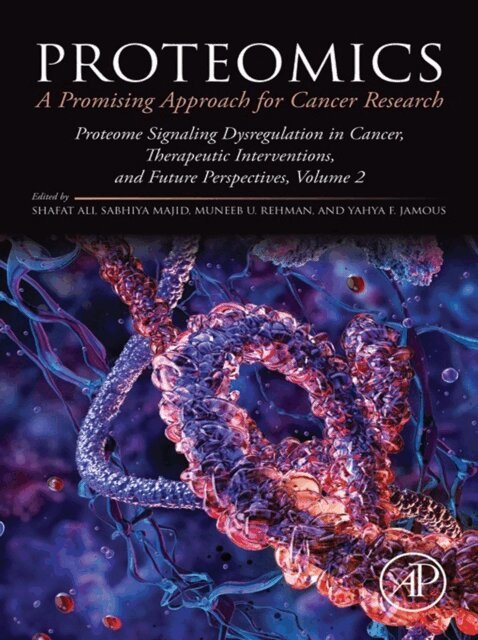
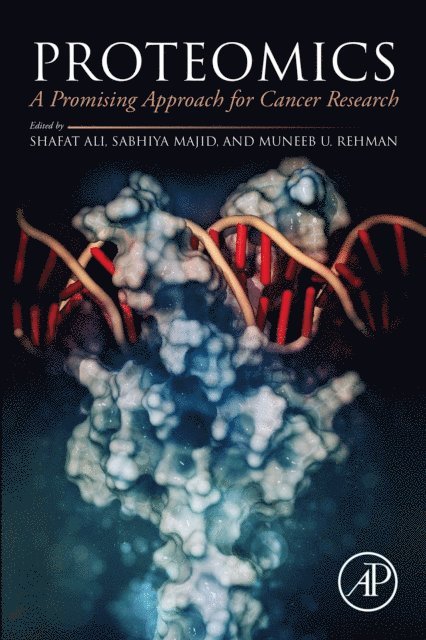
    Proteomics: A Promising Approach for Cancer Research

    Proteome Signaling Dysregulation in Cancer, Therapeutic Interventions, and Future Perspectives, Volume 2

    AvMuneeb U Rehman,Sabhiya Majid

    Häftad, Engelska, 2026

    1 727 kr

    Beställningsvara. Skickas inom 10-15 vardagar. Fri frakt över 249 kr.

    Beskrivning

    Proteomics: A Promising Approach for Cancer Research Volume 2 Proteome signaling dysregulation in cancer, therapeutic interventions, and future perspectives provides an updated overview of scientific knowledge, achievements, and findings in the field of cancer proteomics. The field of cancer proteomics is very dynamic, with emerging trends specifically related to clinical solutions. The book content was developed to help readers get up to speed on the topic and easily apply learnings into research or clinical practice.

    Volume 2 covers proteome signaling, their dysregulation to therapeutics options and future prospects in 17 different signaling pathways. It capitalizes the enormous interest in proteomics among academics and gives new viewpoints on this topic in cancer treatment. It is a valuable resource for cancer researchers, oncologists, graduate students, and members of biomedical field who are interested in the potential of proteomics in cancer research and treatment.


    • Provides up to date information on current cancer proteomics research developed globally
    • Presents from basic research aspects to clinical implications of proteomics on cancer diagnosis and potential treatments
    • Discusses challenges and future developments of the field to leverage further research and applicability in clinical setting
    • Contains exclusive information about research on proteome signaling dysregulation in cancer and therapies globally
    • Includes recent details which will be the prerequisite requirement for any researcher who wants to work on cancer proteomics, proteome signaling dysregulation and therapeutics

    Produktinformation

    • Utgivningsdatum:2026-01-29
    • Mått:152 x 229 x 32 mm
    • Vikt:450 g
    • Format:Häftad
    • Språk:Engelska
    • Antal sidor:642
    • Förlag:Elsevier Science
    • ISBN:9780443239083

    Utforska kategorier

    • Onkologi inom Medicin

    Mer om författaren

    Muneeb U Rehman (Ph.D.) is a Faculty member at College of Pharmacy, King Saud University, Riyadh, Saudi Arabia. He holds a doctorate in Toxicology (specialization in cancer biology and natural product research) from Jamia Hamdard, New Delhi, India. Dr. Rehman has more than 10 years of research and teaching experience in the field of toxicology, cancer biology, natural product pharmacology and pharmacogenomics. He is the recipient of several national and international fellowships and awards. He has published more than 100 research papers in peer-reviewed, international journals, and has 5 edited books and 30 book chapters. Dr. Rehman is on the editorial boards and is a reviewer of several high-impact, international scientific journals. He is also a life member of various international societies and organizations. Currently, Dr. Rehman is engaged in studying the molecular mechanisms of cancer prevention by natural products and the role of pharmacogenomics and toxicogenomics in evaluating the effectiveness and safety of drugs. Sabhiya Majid, Ph.D. is a Professor and Chairperson of the Department of Biochemistry, Govt. Medical College Srinagar (GMC Sgr.), J&K, India. Prof. Majid has 30 years of experience in teaching, research and diagnostic biochemistry, having published around 100 research papers in journals of repute, many books and 12 book chapters. She has been the recipient of several fellowships, awards and grants from various reputed funding agencies. She has been the nodal officer and implemented various research and infrastructure development schemes including Fund for Improvement of Science & Technology Infrastructure, Department of Science & Technology, Govt. of India. She is a member of several scientific associations and boards of undergraduate, postgraduate and research studies. She is on the reviewer panel of a number of online peer-reviewed journals. Having moved on from her doctoral work on nutritional modulation of carcinogenesis to understanding the molecular basis of various disease processes, her current research focuses on non invasive cancer markers. Shafat Ali (Ph.D.) pursued his BSc. from University of Kashmir and Masters in Zoology from Barkatullah Vishwavidyalaya, India. Currently he is engaged in research work for last 5 years at Cytogenetics and Molecular Biology Laboratory, Centre of Research for Development, University of Kashmir, Department of Biochemistry, Government Medical College, Srinagar, Jammu and Kashmir, and ICMR funded Multidisciplinary Research Unit, Government Medical College, Srinagar, Jammu and Kashmir, India, with specialization in the field of reproductive immunogenetics, cytokine biology, gynaecology and obstetrics, molecular biology, cancer biology and cytogenetics. He has 5 years of research experience and 5 years of teaching experience. He has more than 20 book chapters, several edited books and numerous peer-reviewed, international research publications to his credit. Dr. Ali is also the reviewer of many reputed international journals. Presently, Dr. Ali is involved in studying immunogenetic mechanisms involved in recurrent pregnancy loss. Dr. Yahya F. Jamous is a Saudi pharmaceutical scientist and Associate Research Professor at Institute of Health Technologies and Preventative Medicine, Health Sector, King Abdulaziz City of Science and Technology (KACST), Riyadh. He has been in the research and teaching field of over 15 years has an excellent history of scientific publications in pharmaceutical biotechnology, nanotechnology, and molecular pharmacology.Dr. Jamous has served KACST in various high-ranking academic and administrative roles, such as Associate Research Professor, Assistant Research Professor, Acting Director of National Partnerships, and a former Director of the National Vaccines and Bioprocessing Centre (NVBC) in support of programs that go in line with Saudi Vision 2030.He has a PhD in Molecular Pharmacology at ETH Zurich in new therapeutic targets in heart failure and MSc and BSc degrees in Pharmaceutical Sciences at King Saud University. Dr. Jamous is a licensed Consultant of Pharmaceutical Sciences.

    Innehållsförteckning

    • 1. Breast cancer: JAK/STAT signaling dysregulation, potential proteomic techniques, therapeutic strategies, and future perspectives2. Colorectal cancer: Notch signaling dysregulation, potential proteomic techniques, therapeutic strategies, and future perspectives3. Lung cancer: Akt/PKB signaling dysregulation, potential proteomic techniques, therapeutic strategies, and future perspectives4. Leukemia: Hedgehog signaling dysregulation, potential proteomic techniques, therapeutic strategies, and future perspectives5. Gastric cancer: AMPK signaling dysregulation, potential proteomic techniques, therapeutic strategies, and future perspectives6. Pancreatic cancer: Wnt signaling dysregulation, potential proteomic techniques, therapeutic strategies, and future perspectives7. Cervical cancer: TGFβ signaling dysregulation, potential proteomic techniques, therapeutic strategies, and future perspectives8. Ovarian cancer: VEGF signaling dysregulation, potential proteomic techniques, therapeutic strategies, and future perspectives9. Brain cancer: Hippo signaling dysregulation, potential proteomic techniques, therapeutic strategies, and future perspectives10. Endometrial cancer: cAMP-dependent signaling dysregulation, potential proteomic techniques, therapeutic strategies, and future perspectives11. Lymphoma: TLR signaling dysregulation, potential proteomic techniques, therapeutic strategies, and future perspectives12. Thyroid cancer: MAPK/Erk signaling dysregulation, potential proteomic techniques, therapeutic strategies, and future perspectives13. Kidney cancer: mTOR signaling dysregulation, potential proteomic techniques, therapeutic strategies, and future perspectives14. Liver cancer: Insulin signal transduction pathway dysregulation, potential proteomic techniques, therapeutic strategies, and future perspectives15. Bladder cancer: PI3K/Akt/mTOR signaling dysregulation, potential proteomic techniques, therapeutic strategies, and future perspectives16. Skin cancer: Eph/ephrin signaling dysregulation, potential proteomic techniques, therapeutic strategies, and future perspectives17. Esophageal Cancer: Nodal signaling dysregulation, potential proteomic techniques, therapeutic strategies, and future perspectives