• Fri frakt över 249 kr
  • •
  • Snabba leveranser
  • •
  • Billiga böcker
Kundservice

Du är på sajten för privatpersoner.

Företag, bibliotek eller offentlig verksamhet?

Du handlar på classic.bokus.com, där alla dina funktioner finns intakta.
Till classic.bokus.com
Bokus logotyp. Gå till startsidan.
  • Erbjudanden
  • Nyheter
  • Student
  • Topplistor
  • Barn & ungdom
  • Bokus Play
  • E-böcker
  • Pocketböcker
  • Spel & pussel

10% rabatt på allt med kod: NYSTART10 →

Sidfot

Mina sidor

    Hjälp

    • Kundservice
    • Vanliga frågor och svar
    • Frakt och leverans
    • Retur vid ångerrätt
    • Reklamera vara
    • Betalning
    • Köpvillkor
    • Allmänna villkor
    • Information om webbplatsens tillgänglighet

    Om Bokus

    • Om oss
    • Pressrum
    • För studenter
    • För företag
    • För bibliotek och offentlig verksamhet
    • För leverantörer
    • Hållbarhet

    Populärt

    • Aktuella erbjudanden
    • Presentkort
    • Studentlitteratur
    • Nya böcker
    • Topplistor
    • Signerade böcker
    • Engelska böcker

    Inspiration

    • Boktips
    • BookTok
    • Populära bokserier
    • Barnbokskaraktärer
    • Populära författare
    Logotyp för Bokus
    Följ oss på Facebook (extern länk)Följ oss på Instagram (extern länk)Följ oss på YouTube (extern länk)Följ oss på TikTok (extern länk)
    bokus @ CookiesAnpassa cookiesIntegritetspolicyKöpvillkor
    Till Citymail hemsida (extern länk)Till Budbee hemsida (extern länk)Till Postnord hemsida (extern länk)Till Schenker hemsida (extern länk)Till Early Bird hemsida (extern länk)Till Walleys hemsida (extern länk)
    1. Medicin
    2. Medicin: allmänt
    3. Medicinsk utrustning och medicinska tekniker

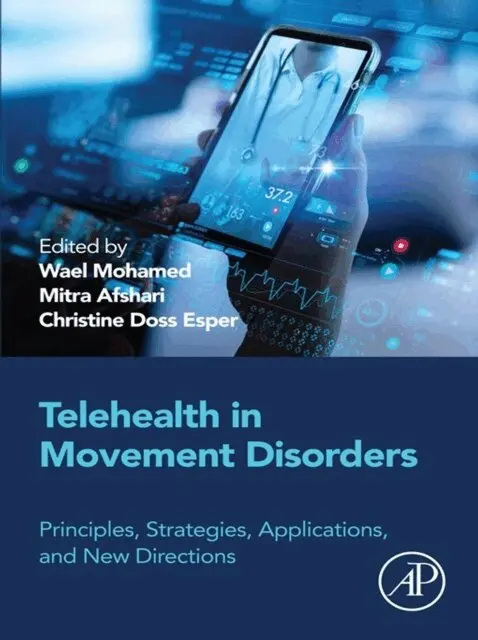
    Telehealth in Movement Disorders

    Principles, Strategies, Applications, and New Directions

    AvWael Mohamed,Mitra Afshari

    Häftad, Engelska, 2026

    2 093 kr

    Beställningsvara. Skickas inom 10-15 vardagar. Fri frakt över 249 kr.

    Beskrivning

    The COVID-19 pandemic forced the world to pause and reevaluate how we operate specifically in medicine, shifting to telemedicine and telehealth. Integrating telemedicine and telehealth into the healthcare system enables patient safety and has been proven beneficial to medical and surgical practices including patient primary care. Telehealth in Movement Disorder: Principles, Strategies, Applications, and New Directions provides guidance on how to deliver clinical assessment and treatment to movements disorders patients through telemedicine. This book is divided into three distinct sections. The first section reviews general principles including strategies, standards, policies, and ethical aspects. The second section explores how telemedicine can be integrated into diagnosis, treatment, and care of patients with movement disorders including the use of new AI technologies. The final section discusses the integration and application of telemedicine in developing countries, including challenges and future opportunities.

    • Reviews how to create a compliance and evidence-based telehealth practice
    • Discusses the advantages and disadvantages of telemedicine and telepsychiatry for movements disorders
    • Outlines new technologies Inertial measurement unit (IMU), Smart Textile and wearable healthcare

    Produktinformation

    • Utgivningsdatum:2026-04-24
    • Mått:152 x 229 x 21 mm
    • Vikt:560 g
    • Format:Häftad
    • Språk:Engelska
    • Antal sidor:350
    • Förlag:Elsevier Science
    • ISBN:9780443288401

    Utforska kategorier

    • Medicinsk utrustning och medicinska tekniker inom Medicin
    • Neurologi och klinisk neurofysiologi inom Medicin

    Mer om författaren

    Dr. Wael Mohamed, BSc, MMSc, MD, PhD, FAAS, is Professor, Basic Medical Science Department at the International Islamic University Malaysia (IIUM). He specializes in translational brain research and the development of novel treatments for Alzheimer’s Disease and Parkinson’s Disease. Mitra Afshari, MD, MPH, is an assistant professor of Neurology at Rush University Medical Center in Chicago, the newest member of the Faculty in the Section of Movement Disorders. She is originally from Chicago, where she completed her undergraduate, medical school, and residency training at Northwestern University. She completed her fellowship in Movement Disorders at the University of California, San Francisco (UCSF), where she received comprehensive training in neurostimulation and neuromodulation for various Movement Disorders. During medical school, she also obtained her Masters’ in Public Health and traveled to Mexico, India, and Uganda for both clinical and research-related trips.Clinically, Afshari is adept at making decisions as it pertains to deep brain stimulation candidacy and programming, as well as performing botulinum toxin injections for dystonia, including limb injections. In addition to seeing patients, her primary research interests lie in Parkinson’s Disease, as it pertains to epidemiology, biomarkers, and clinical trials; deep brain stimulation therapy and other interventional therapies for advanced Movement disorders; telemedicine, teleneurology, and telerehabilitation; and palliative/supportive care in advanced Parkinsonian disorders. Dr. Christine D. Esper is a neurologist in Atlanta, Georgia and is affiliated with multiple hospitals in the area, including Grady Memorial Hospital and Emory University Hospital. She received her medical degree from University of Illinois College of Medicine at Chicago and has been in practice for more than 20 years.

    Innehållsförteckning

    • SECTION-I: PRINCIPELS OF TELEMEDICINE, AND TELEHEALTH1. Telemedicine, and Telehealth: principles, Strategies and applications2. Standards and Guidelines in Telehealth: Creating a Compliance and Evidence-Based Telehealth Practice3. USA Federal and State policies of telehealth reimbursements4. Legal and regulatory implication of Telehealth5. Telehealth patient portal: opportunities and realities6. Globalization of telemedicine7. Ethical aspect of telemedicine8. Telehealth Technology, Information, and Data System ConsiderationsSECTION-II: TELEMEDICINE, TELEHEALTH AND MOVEMENTS DISORDERS9. Telemedicine and Movement disorders10. Telehealth in pediatric neurology11. Smart and Assistive Technologies for Movement Disorders: Wearable healthcare12. eLearning: Distant Learning for Health Professionals13. Health Education: Teaching Healthy Lifestyles for a High Quality of Life in Movement Disorder14. Telehealth: A patient perspective15. Telemedicine and Precision medicine for personalized healthcare for Movement Disorder16. Mobile health sleep technologies for Movement DisordersSECTION-III: TELEMEDICINE, AND TELEHEALTH IN DEVELOPING COUNTRIES17. Telemedicine, Telehealth In Developing Countries: Challenges And Hopes18. Advances to improve telehealth in developing countries19. Telemedicine and Movement disorders in special circumstances: war, conflicts, disasters, battlefield20. Future trends in healthcare technologies