• Fri frakt över 249 kr
  • •
  • Snabba leveranser
  • •
  • Billiga böcker
Kundservice

Du är på sajten för privatpersoner.

Företag, bibliotek eller offentlig verksamhet?

Du handlar på classic.bokus.com, där alla dina funktioner finns intakta.
Till classic.bokus.com
Bokus logotyp. Gå till startsidan.
  • Erbjudanden
  • Student
  • Topplistor
  • Barn & ungdom
  • Bokus Play
  • E-böcker
  • Ljudböcker
  • Pocketböcker
  • Spel och pussel

Skapa nya rutiner – hälsoböcker upp till 50% →

Sidfot

Mina sidor

    Hjälp

    • Kundservice
    • Vanliga frågor och svar
    • Frakt och leverans
    • Retur vid ångerrätt
    • Reklamera vara
    • Betalning
    • Köpvillkor
    • Allmänna villkor
    • Information om webbplatsens tillgänglighet

    Om Bokus

    • Om oss
    • Pressrum
    • För studenter
    • För företag
    • För bibliotek och offentlig verksamhet
    • För leverantörer
    • Hållbarhet

    Populärt

    • Aktuella erbjudanden
    • Presentkort
    • Studentlitteratur
    • Nya böcker
    • Topplistor
    • Signerade böcker
    • Engelska böcker

    Inspiration

    • Boktips
    • BookTok
    • Barnbokskaraktärer
    • Populära författare
    Logotyp för Bokus
    Följ oss på Facebook (extern länk)Följ oss på Instagram (extern länk)Följ oss på YouTube (extern länk)Följ oss på TikTok (extern länk)
    bokus @ CookiesAnpassa cookiesIntegritetspolicyKöpvillkor
    Till Citymail hemsida (extern länk)Till Budbee hemsida (extern länk)Till Postnord hemsida (extern länk)Till Schenker hemsida (extern länk)Till Early Bird hemsida (extern länk)Till Walleys hemsida (extern länk)
    1. Data och IT
    2. Systemvetenskap och AI
    3. Artificiell intelligens

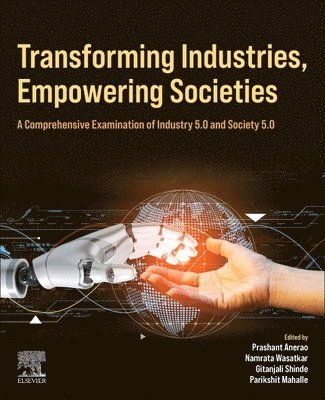
    Transforming Industries, Empowering Societies

    A Comprehensive Examination of Industry 5.0 and Society 5.0

    AvParikshit Narendra Mahalle,Gitanjali R. Shinde

    Häftad, Engelska, 2025

    1 765 kr

    Beställningsvara. Skickas inom 10-15 vardagar. Fri frakt över 249 kr.

    Beskrivning

    With the ever-increasing use of AI technologies, ethical considerations take on greater importance. Human-centric AI emphasizes transparency, making sure that AI systems work in a way that users can comprehend and trust. Additionally, it addresses bias and discrimination issues, ensuring fairness and inclusion in the design and implementation of AI apps. By emphasizing user experience, security, and human-centric AI, the goal is to improve collaboration between people and machines, rather than replacing human decisions, creating a future where technology is a force for good, benefiting both businesses and society. Written from a technological point of view, Industry 5.0 for Society 5.0 explores the impact of cutting-edge technologies, including the Internet of Things, cloud, artificial intelligence, and digital twin, on individuals and community, and considers how they can be used to solve societal problems. The book considers how these technologies can positively affect industry, healthcare, agriculture, design and manufacture, contributing to the development of a sustainable environment that ultimately creates a positive and mutually beneficial relationship between people and AI.

    • Presents the fundamentals, challenges and advancements in AI required for Industry 5.0 to be beneficial to society
    • Focuses on human-centric AI and how it can be used to create more sustainable industry
    • Explores the ethical considerations and regulatory aspects of Edge AI, helping readers navigate the responsible use of this technology

    Produktinformation

    • Utgivningsdatum:2025-12-09
    • Mått:216 x 276 x undefined mm
    • Vikt:450 g
    • Format:Häftad
    • Språk:Engelska
    • Antal sidor:286
    • Förlag:Elsevier Science
    • ISBN:9780443328787

    Utforska kategorier

    • Artificiell intelligens inom Data och IT
    • Människa – datorinteraktion inom Data och IT

    Mer om författaren

    Dr Parikshit is a senior member IEEE and is Professor, Dean Research and Development and Head - Department of Artificial Intelligence and Data Science at Vishwakarma Institute of Information Technology, Pune, India. He completed his Ph. D from Aalborg University, Denmark and continued as Post Doc Researcher at CMI, Copenhagen, Denmark. He has 23 + years of teaching and research experience. He is an ex-member of the Board of Studies in Computer Engineering, Ex-Chairman Information Technology, Savitribai Phule Pune University and various Universities and autonomous colleges across India. He has 15 patents, 200+ research publications (Google Scholar citations-2950 plus, H index-25 and Scopus Citations are 1550 plus with H index -18, Web of Science citations are 438 with H index - 10) and authored/edited 56 books with Springer, CRC Press, Cambridge University Press, etc. He is editor in chief for IGI Global International Journal of Rough Sets and Data Analysis, Inter-science International Journal of Grid and Utility Computing, member-Editorial Review Board for IGI Global – International Journal of Ambient Computing and Intelligence and reviewer for various journals and conferences of the repute. His research interests are Machine Learning, Data Science, Algorithms, Internet of Things, Identity Management and Security. He is guiding 8 PhD students in the area of IoT and machine learning and SIX students have successfully defended their PhD under his supervision from SPPU. He is also the recipient of “Best Faculty Award” by Sinhgad Institutes and Cognizant Technologies Solutions. He has delivered 200 plus lectures at national and international level.Dr. Gitanjali R. Shinde has overall 15 years of experience, presently working as Associate Professor in Department of Computer Engineering, Vishwakarma Institute of Information Technology, Pune, India. She did her Ph.D. in Wireless Communication from CMI, Aalborg University, Copenhagen, Denmark on Research Problem Statement “Cluster Framework for Internet of People, Things and Services”. She obtained M.E. (Computer Engineering) degree from the University of Pune, Pune in 2012 and B.E. (Computer Engineering) degree from the University of Pune, Pune in 2006. She has received research funding for the project “Lightweight group authentication for IoT” by SPPU, Pune. She has presented a research article in the World Wireless Research Forum (WWRF) meeting, Beijing China. She has published 50+ papers in National, International conferences and journals. She is author of 10+ books with publishers Springer and CRC Taylor & Francis Group and she is also editor of books. Her book “Data Analytics for Pandemics A COVID 19 Case Study” is awarded outstanding Book of the year 2020.Dr.Namrata N Wasatkar has overall 10 years of experience, presently working as Assistant Professor in Department of Computer Engineering, Vishwakarma Institute of Information Technology, Pune, India. She has done Ph.D. in Computer Engineering from Savitribai Phule Pune University, Pune, India on Research Problem Statement “Rule based Machine translation of simple Marathi sentences to English sentences”. She obtained M.E. (Computer Engineering) degree from the University of Pune, Pune in 2014 and B.E. (Computer Engineering) degree from the University of Pune, Pune in 2012. She has received research funding for the project “SPPU online chatbot” by SPPU, Pune. She has published 14+ papers in National, International conferences and journals. Prashant Anerao is an assistant professor in the Department of Mechanical Engineering at the Vishwakarma Institute of Information Technology, Pune. He earned his M. Tech. in Mechanical Engineering, specialisation in Manufacturing Engineering, from the Indian Institute of Technology, Bombay, in 2009. His research encompasses additive manufacturing of bio composites and the application of machine learning in 3D printing. He has published research papers in peer-reviewed journals, contributed to book chapters, and presented findings at national and international conferences. His work reflects a dedication to advancing engineering and technology, with a focus on innovative approaches in manufacturing and 3D printing.

    Innehållsförteckning

    • ContentsContributors xiiiForeword xvPreface xviiPart ITransformation towards Industry 5.01. Transitioning from traditional artificial intelligence to emerging trends: Exploring paradigm shifts, challenges, and opportunitiesAnamika Anu, Jagrati Nagdiya and Sheril Thomas1.1. Introduction1.2. Paradigm shifts1.3. Technology1.4. Computational power1.5. Cognitive understanding1.6. Traditional artificial intelligence approaches1.7. Limitations of early artificial intelligence systems1.8. Emerging trends in artificial intelligence1.9. Artificial intelligence-powered solutions1.10. Challenges and ethical considerations1.11. Data privacy, security, and interpretability1.12. Challenges and opportunities in the transition1.13. ConclusionReferences2. Human-machine collaboration in Industry 5.0 using Big Data analyticsSamiksha Khule, Muskan Sihare, Rakhi Arora, Nitin Dixit, Gaurav Dubey and Yogesh Kumar Sharma2.1. Introduction2.2. Technologies of Industry 5.02.3. Creative applications of Industry 5.02.4. The role of vision transformers in industry 4.0 and Industry 5.02.5. Principles of Industry 5.02.6. Literature review2.7. Challenges in Industry 5.02.8. Limitations in Industry 5.02.9. ConclusionReferences3. Implications of Industry 5.0 for Society 5.0: A systematic literature reviewGanesh Narkhede, Gajanan Ghuge and Madahavi Mohite3.1. Introduction3.2. Literature review3.3. Results and discussion3.4. ConclusionReferences4. Cloud security through robust cryptographic measures: Overview, advances, and applicationRadha Nishant Deoghare, Prachi Nishant Shah-Bahekar, Shradha Nishant Tawade and Sapana Nishant Kolambe4.1. Introduction4.2. Related Work4.3. Proposed Approach4.4. Result Analysis4.5. ConclusionReferences5. Mesocaps: Enhancing deepfake detection 1Umesh Pranjal Shirsat, Shivani Joshi, Siddhi Shinde, Vaibhav Garje, Amit Joshi and Suraj Sawant5.1. Introduction5.2. Literature review5.3. Deepfake generation5.4. Deepfake detection5.5. Gap analysis5.6. Methodology5.7. Model architecture5.8. MesoNet5.9. Capsule network5.10. Results and discussion5.11. Experimental setup5.12. Performance metrics and comparison5.13. Conclusion and future scopeReferencesPart IITransformation in Healthcare 5.06. Digital health evaluation: A roadmap aheadPranali Chavhan, Namrata Kharate, Prashant Anerao and Gajanan Chavhan6.1. Introduction6.2. Current Approaches to Digital Health Evaluation6.3. A Roadmap for Future Evaluation6.4. Case Studies6.5. Digital Health: Barrier and Solution6.6. ConclusionReferences7. Adapting online medical services for the well-being diverse patientsJyoti Deshmukh, Vijay Rathod, Nilesh Sable and Gitanjali Shinde7.1. Introduction7.2. Telemedicine Strategy Implementation in 2019 During the COVID-19 Era7.3. Technological Solutions for Telemedicine7.4. Related Information7.5. COVID-19 Pandemic: The Remote Medication Network for Neurorehabilitation7.6. ConclusionReferences8. Revolutionizing healthcare using digital twins: Monitoring, analysis, and advancementRakhi Arora, Nitin Dixit, Jigyasa Mishra, Muskan Sihare, Samiksha Khule and Yogesh Kumar Sharma8.1. Introduction8.2. Literature Survey8.3. Enabling Technologies and Data Sources8.4. Digital Twin In Healthcare—Applications8.5. Integration of Artificial Intelligence in Human Digital Twins8.6. Limitations Associated with Healthcare Digital Twins8.7. ConclusionReferences9. Wellbeing of working mothers based on decision making: A data science approach 1Jyoti Deshmukh, Vijay Rathod, Nilesh Sable and Gitanjali Shinde9.1. Introduction9.2. Exploration of Wearable Devices9.3. Experimental Methods9.4. Monitoring of Fetal Movement9.5. The Wearable Device Design9.6. The Patient Data Possession9.7. Energy Assessment9.8. Fetal Movement Extraction of Feature9.9. Design of Phantom—The Simulation System for Fetal Movement9.10. ConclusionReferencesPart IIITransformation in agriculture10. Navigating the agricultural landscape: Artificial intelligence and Industry 5.0 insightsPradnya Samit Mehta and Sanved Narwadkar10.1. Overview of Artificial Intelligence in Agriculture10.2. Role of Artificial Intelligence in Decision-making10.3. Precision Agriculture Techniques10.4. Data-driven Crop Yield Predictions10.5. Climate and Weather Impact Assessment Strategies With Artificial Intelligence10.6. Holistic Approach With Artificial Intelligence for Industry 5.0 Society 5.010.7. Smart Irrigation Systems for Artificial Intelligence Advancements in Farming: A Revolution an Agriculture10.8. Case Studies Demonstrating Increased Water Efficiency and Crop Yield10.9. ConclusionReferences11. Industry 5.0 unveiled, precision agriculture empowered: Integrating recommendation and prediction systems for transparent farming transactionsKaustubh Vitthal Rathod, Devesh Rathi and Sankalp Naranje11.1. Introduction11.2. Methodology11.3. Results and Discussion11.4. Conclusion11.5. Future ScopeReferences12. Enhancing agricultural resilience through synergistic human–AI collaboration in Industry 5.0Yogesh Kumar Sharma, Samiksha Khule, Gaurav Dubey, Rakhi Arora, Nitin Dixit and Muskan Sihare12.1. Introduction12.2. Literature Review12.3. Industry 5.0 Technologies12.4. Industry 4.0 vs Industry 5.012.5. Challenges of Industry 5.012.6. Industry 5.0: Applications12.7. Industry 5.0: Limitations12.8. Future Directions12.9. ConclusionReferences13. Cultivating the future of agriculture where digital twin meets artificial intelligenceMuskan Sihare, Samiksha Khule, Rakhi Arora, Nitin Dixit, Gaurav Dubey and Yogesh Kumar Sharma13.1. Introduction13.2. Literature Review13.3. Digital Twin Definition13.4. Digital Twin in Agriculture13.5. Artificial Intelligence for the Digital Twin13.6. Artificial Intelligence and Digital Twin Convergence13.7. Agriculture Has Undergone Distinct Phases of Evolution13.8. The Industrial Revolution’s Phases Can Be Compared With The Development of Agricultural Technology13.9. Digital Agriculture Tools13.10. Application of Digital Twins in Agriculture13.11. Benefits and Challenges13.12. The Future Pathways for Digital Twins13.13. ConclusionReferences14. Explainable artificial intelligence for plant disease diagnosisDiana Susan Joseph and Pranav M Pawar14.1. Introduction14.2. Related Works14.3. Methods of Explainable Artificial Intelligence14.4. Explainable Artificial Intelligence For Sustainable Agriculture14.5. Research Directions of Artificial Intelligence in Agriculture With Explainable Artificial Intelligence14.6. ConclusionReferencesPart IVTransformation in Design & Manufacturing15. Challenges, opportunities, and frameworks for human-centric design and manufacturing in Industry 5.0Prashant Anerao, Namrata Kharate, Yashwant Shrirang Munde and Pranali Chavhan15.1. Introduction to Industry 5.015.2. Challenges and Opportunities15.3. Framework of Industry 5.0 in Design and Manufacturing15.4. Key Considerations for Implementation15.5. Roadmap Ahead15.6. ConclusionReferences16. Transformation in manufacturing industry: Review and future trendsMansi Subhedar and Suyog Dasnurkar16.1. Introduction16.2. Collaborative Robots16.3. Digital Twins and Simulations16.4. Virtual Reality and Augmented Reality for Industrial Testing16.5. AI and ML in Manufacturing16.6. Challenges for Transformations in the Manufacturing Industry16.7. Future Directions16.8. ConclusionReferences17. The pivotal role of artificial intelligence in digital twins: A case studyNalini Jagtap, Trisha Singh and Eshwari Sonawane17.1. Introduction17.2. Literature Survey17.3. Core Functionalities of Artificial Intelligence in Digital Twins17.4. Case Studies and Applications17.5. ConclusionReferences18. Developing artificial intelligence applications in manufacturing using digital twin-driven machine learning technology1Dixit Nitin, Rakhi Arora, Vijay Sharma, Muskan Sihare, Samiksha Khule and Bhawna Ojha18.1. Introduction18.2. Background and Recent Advances18.3. Framework for Digital Twin-driven Industrial Artificial Intelligence18.4. Digital Twin in Machine Learning18.5. ConclusionReferencesPart VEnergy and sustainable development19. The role of optimization techniques in achieving sustainable artificial intelligence 1Hanan Hussain and S. Tamizharasan19.1. Introduction19.2. Related Works19.3. Optimization Techniques for Sustainable Artificial Intelligence19.4. Challenges and Open Issues in Achieving Sustainable Artificial Intelligence19.5. ConclusionReferences20. Smart disaster management: Leveraging machine learning and remote sensing for informed decision-makingRuta Prabhu, Anupama Jawale, Hiral Patel, Disha Gandhi, Shivwani Nadar and Riddhi Lonandkar20.1. Introduction20.2. Literature Review20.3. Methods for Disaster Monitoring20.4. Overview of Various Algorithms for Disaster and Hazard Detection20.5. Tsunami Detection20.6. ConclusionReferences21. Navigating ethical complexities in energy transitionsBhawna Ojha, Yogesh Kumar Sharma, Khemchand Shakywar and Aniket Arya21.1. Introduction21.2. Understanding Industry 5.021.3. Benefits and Challenges of Industry 5.0 Implementation21.4. Ethical Complexities in Energy Transitions21.5. Addressing Ethical Complexities Through Industry 5.021.6. Stakeholder Engagement and Collaboration721.7. Future Outlook and Recommendations21.8. ConclusionReferences22. Revolutionizing energy storage for a smart societyAsmita Kalamkar, Gitanjali Shinde, Riddhi Mirajkar, ParikshitMahalle,Namrata Kharate and Prashant Anerao22.1. Background and Context22.2. Green Computing: Principles and Practices22.3. Renewable Energy Integration22.4. Case Studies and Applications22.5. Challenges and Barriers22.6. ConclusionReferences23. Green energy storage: Bridging sustainability and smart industriesRiddhi Mirajkar, Gitanjali Shinde, Snehal Rathi, Vidula Meshram, Pankaj Chandre and Pranali Chavhan23.1. Introduction23.2. Fundamentals of Green Energy Storage23.3. Advanced Energy Storage Technologies23.4. Artificial Intelligence and Internet of Things in Smart Energy Storage23.5. Integrating Green Energy Storage in Industry 5.023.6. Policy and Regulatory Frameworks23.7. Challenges and Future Prospects of Energy Storage23.8. ConclusionReferencesIndex
    Hoppa över listan

    Du kanske också är intresserad av

    Prashant Ramchandra Anerao, Namrata N. Wasatkar, Gitanjali R. Shinde, Parikshit Narendra Mahalle - Transforming Industries, Empowering Societies, E-bok

    Transforming Industries, Empowering Societies

    Prashant Ramchandra Anerao, Namrata N. Wasatkar, Gitanjali R. Shinde, Parikshit Narendra Mahalle

    E-bok
    2025

    2 308 kr

    Parikshit N. Mahalle, Gitanjali R. Shinde, Yashwant S. Ingle, Namrata N. Wasatkar - Data Centric Artificial Intelligence: A Beginner’s Guide, Inbunden

    Data Centric Artificial Intelligence: A Beginner’s Guide

    Parikshit N. Mahalle, Gitanjali R. Shinde, Yashwant S. Ingle, Namrata N. Wasatkar

    Inbunden, 2023

    1 666 kr

    Namrata N. Wasatkar, Yashwant S. Ingle, Gitanjali R. Shinde, Parikshit N. Mahalle - Data Centric Artificial Intelligence: A Beginner's Guide, E-bok

    Data Centric Artificial Intelligence: A Beginner's Guide

    Namrata N. Wasatkar, Yashwant S. Ingle, Gitanjali R. Shinde, Parikshit N. Mahalle

    E-bok
    2023

    2 105 kr

    Parikshit N. Mahalle, Gitanjali R. Shinde, Yashwant S. Ingle, Namrata N. Wasatkar - Data Centric Artificial Intelligence: A Beginner’s Guide, Häftad

    Data Centric Artificial Intelligence: A Beginner’s Guide

    Parikshit N. Mahalle, Gitanjali R. Shinde, Yashwant S. Ingle, Namrata N. Wasatkar

    Häftad, 2024

    1 666 kr

    Gitanjali R. Shinde, Shashikant S. Bhong, Parikshit N. Mahalle - Authorization and Access Control, E-bok

    Authorization and Access Control

    Gitanjali R. Shinde, Shashikant S. Bhong, Parikshit N. Mahalle

    E-bok
    2022

    380 kr

    Gitanjali R. Shinde, Namrata Nishant Wasatkar, Parikshit N Mahalle - Data-Centric Artificial Intelligence for Multidisciplinary Applications, E-bok

    Data-Centric Artificial Intelligence for Multidisciplinary Applications

    Gitanjali R. Shinde, Namrata Nishant Wasatkar, Parikshit N Mahalle

    E-bok
    2024

    1 019 kr

    Sonali P. Botkar, Sachin P. Godse, Parikshit N. Mahalle, Gitanjali R. Shinde - VANET, Inbunden

    VANET

    Sonali P. Botkar, Sachin P. Godse, Parikshit N. Mahalle, Gitanjali R. Shinde

    Inbunden, 2021

    959 kr

    Parikshit N. Mahalle, Pooja A. Shelar, Gitanjali R. Shinde, Nilanjan Dey - Underwater World for Digital Data Transmission, Häftad

    Underwater World for Digital Data Transmission

    Parikshit N. Mahalle, Pooja A. Shelar, Gitanjali R. Shinde, Nilanjan Dey

    Häftad, 2021

    544 kr

    Parikshit N Mahalle, Namrata Nishant Wasatkar, Gitanjali R. Shinde - Data-Centric Artificial Intelligence for Multidisciplinary Applications, Häftad

    Data-Centric Artificial Intelligence for Multidisciplinary Applications

    Parikshit N Mahalle, Namrata Nishant Wasatkar, Gitanjali R. Shinde

    Häftad, 2026

    800 kr

    Parikshit N. Mahalle, Gitanjali R. Shinde, Nilanjan Dey, Aboul Ella Hassanien - Security Issues and Privacy Threats in Smart Ubiquitous Computing, Inbunden

    Security Issues and Privacy Threats in Smart Ubiquitous Computing

    Parikshit N. Mahalle, Gitanjali R. Shinde, Nilanjan Dey, Aboul Ella Hassanien

    Inbunden, 2021

    1 887 kr