• Fri frakt över 249 kr
  • •
  • Snabba leveranser
  • •
  • Billiga böcker
Kundservice

Du är på sajten för privatpersoner.

Företag, bibliotek eller offentlig verksamhet?

Du handlar på classic.bokus.com, där alla dina funktioner finns intakta.
Till classic.bokus.com
Bokus logotyp. Gå till startsidan.
  • Erbjudanden
  • Nyheter
  • Student
  • Topplistor
  • Barn & ungdom
  • Bokus Play
  • E-böcker
  • Pocketböcker
  • Spel & pussel

10% rabatt på allt med kod NYSTART10 →

Sidfot

Mina sidor

    Hjälp

    • Kundservice
    • Vanliga frågor och svar
    • Frakt och leverans
    • Retur vid ångerrätt
    • Reklamera vara
    • Betalning
    • Köpvillkor
    • Allmänna villkor
    • Information om webbplatsens tillgänglighet

    Om Bokus

    • Om oss
    • Pressrum
    • För studenter
    • För företag
    • För bibliotek och offentlig verksamhet
    • För leverantörer
    • Hållbarhet

    Populärt

    • Aktuella erbjudanden
    • Presentkort
    • Studentlitteratur
    • Nya böcker
    • Topplistor
    • Signerade böcker
    • Engelska böcker

    Inspiration

    • Boktips
    • BookTok
    • Populära bokserier
    • Barnbokskaraktärer
    • Populära författare
    Logotyp för Bokus
    Följ oss på Facebook (extern länk)Följ oss på Instagram (extern länk)Följ oss på YouTube (extern länk)Följ oss på TikTok (extern länk)
    bokus @ CookiesAnpassa cookiesIntegritetspolicyKöpvillkor
    Till Citymail hemsida (extern länk)Till Budbee hemsida (extern länk)Till Postnord hemsida (extern länk)Till Schenker hemsida (extern länk)Till Early Bird hemsida (extern länk)Till Walleys hemsida (extern länk)
    1. Ekonomi och Ledarskap
    2. Företagsekonomi

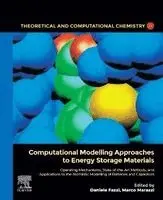
    Computational Modelling Approaches to Energy Storage Materials

    Operating Mechanisms, State-of-the-Art Methods, and Applications to the Atomistic Modelling of Batteries and Capacitors

    AvDaniele Fazzi,Marco Marazzi

    Häftad, Engelska, 2027

    Del 27 i serien Theoretical and Computational Chemistry

    2 020 kr

    Kommande

    Beskrivning

    One of the most important goals in sustainable energy management is the design of new energy storage materials capable of increasing battery performance, durability, and at the same time, taking up the global challenge of increasing the energy saving capabilities through sustainable solutions. Atomistic design has experienced a tremendous boost in the last two decades thanks to the implementation and application of quantum mechanics and molecular dynamics-based approaches coupled, very recently, to artificial intelligent/machine learning algorithms. Such methods pave the way for the discovery and design of new materials for energy storage technologies. Computational Modelling Approaches to Energy Storage Materials: Operating Mechanisms, State-of-the-Art Methods, and Applications to the Atomistic Modelling of Batteries and Capacitors demonstrates how theoretical and computational chemistry methods can be applied in describing and predicting the properties of energy storage materials. Part I of the book introduces the reader to this heterogeneous topic, providing a general overview of the different types of batteries and capacitors, highlighting (from both historical and mechanistic points of view) the physical and operating principles of such systems. Part II contains the methodological core of the book, in terms of theoretical and computational methods. Most existing books includes a similar section where the formalisms of different methods are given, such as by explaining the theoretical concepts. Although this approach is certainly valid, this book goes a step further by giving more relevance to the computational side. Part III concerns the application of the methods described in Part II (as standalones or as a combination of those methods) to study mechanisms, processes, properties, and working principles of several energy storage systems, all based on the initial description in Part I. Computational Modelling Approaches to Energy Storage Materials is written primarily for chemists, physicists and materials scientists at graduate, post-doc, and researcher level (with both theory and experimental background), wishing to apply computational methods to model the complexity of energy storage materials. The book will be highly relevant to researchers interested in applying different atomistic methods to the topic of energy materials, as well as specialists across the fields of physics, chemistry, materials science, and related engineering areas who require a better understanding of materials modelling.

    • Provides a novel introduction and overview of the diverse methodologies and applications of computational chemistry that can be used for investigating and modelling materials for energy storage and addressing the state-of-the art technological and scientific challenges involved
    • Gives concise and easy-to-understand explanations for each methodology with physico-mathematical formalisms, followed by a selection of the most relevant types of calculations and an explanation of the computational protocols that should be followed, helping the reader to understand which strategies and steps must be followed for a certain type of calculation
    • Features up to date results concerning the design and application of energy storage compounds and materials, from both chemical and physical perspectives, including comparisons with experiments where appropriate
    • Includes timely, forward-looking chapters on crucial topic areas such as machine learning approaches and hydrogen storage aspects
    • Shows how atomistic design can improve present energy storage materials, as well as help to create those technologies of the future

    Produktinformation

    • Utgivningsdatum:2027-01-01
    • Mått:191 x 235 x undefined mm
    • Format:Häftad
    • Språk:Engelska
    • Serie:Theoretical and Computational Chemistry
    • Antal sidor:384
    • Förlag:Elsevier Science
    • ISBN:9780443329821

    Utforska kategorier

    • Företagsekonomi inom Ekonomi och Ledarskap
    • Tillverkningsteknik inom Naturvetenskap och teknik
    • Maskinteknik och material inom Naturvetenskap och teknik

    Mer om författaren

    Daniele Fazzi is Senior Assistant Professor at the Department of Chemistry "Giacomo Ciamician" of the University of Bologna, Italy, an appointment he took up in 2021. He earned his PhD in 2010 at Politecnico di Milano (Milan, Italy), in Materials Engineering with a thesis on “Modelling of charge transport properties and photoinduced processes in organic conjugated materials”. From 2010 to 2013 he was Post Doc. at the Italian Institute of Technology (IIT), Center for Nano Science and Technology in Milan (Italy). In 2013 he moved to the Max-Planck Institute fuer Kohlenforschung (MPI-KOFO), at Muelheim an der Rurh, Germany, working in the Department of Theoretical Chemistry. In 2014 he was awarded by the Alexander von Humboldt post-doctoral fellowship with a project focused on modeling non-adiabatic excited state dynamics in organic functional materials. In 2017 he was awarded by a Principle Investigator Grant funded by the DFG (Deutsche Forschungsgemeinschaft), becoming Group Leader at the Institute of Physical Chemistry of the University of Cologne (UoC), Germany, working in the group of Prof. K. Meerholz. At UoC (2018-2021) he worked on multi-scale modelling of charge and energy transport properties of functional materials. He is the author of more than seventy scientific publications and two book chapters.Marco Marazzi is an Associate Professor at the Physical Chemistry Unit of the University of Alcalá, Spain. He obtained his bachelor’s degree in chemistry with a major in Materials Chemistry at the Sapienza University in Rome, Italy, his Masters in Polymer Science in Berlin, Germany and his PhD in Chemistry at the University of Alcalá, Spain in 2013, working on the theoretical development and computational application of photochemical and photophysical tools. After postdoctoral stages at the Karlsruhe Institute of Technology (KIT), Germany, as a Humboldt fellow, the French national research council (CNRS), and the University of La Rioja, Spain, strengthening his skills in excited state molecular dynamics and in different photoinduced processes, he was appointed Assistant Professor at the University of Alcalá in 2019. Since then, his interests have included the design of solar energy storage systems, as well as hydrogen release and photoinduced hydrogen production. He was visiting researcher at the University of Uppsala, Sweden, Bowling Green State University, Ohio, USA, Northwestern University, Illinois, USA, and Université Gustave Eiffel, France. He is the author of more than seventy journal publications, four book chapters, and was co-Editor of Theoretical and Computational Photochemistry (Elsevier, 2023) with Cristina García Iriepa

    Innehållsförteckning

    • Part I: Operating Mechanisms to Store Energy1. Electrochemical Energy Storage Based on Inorganic Redox Couples: An Historical Perspective2. Storing Solar Energy as Chemical Energy: From Principles to Devices3. Hydrogen-Based Energy Storage for Renewables in Stationary ApplicationsPart II: Theoretical and Computational Methods and Protocols4. Electronic Structure Methods: Single- and Multi-Reference Methods5. Molecular Dynamics Strategies6. Machine Learning ApproachesPart III: The Design of Structures and Properties7. Inorganic and organic electrode materials8. Advanced First-Principles Modeling of Electrode–Electrolyte Interfaces in Energy Devices9. Modelling Electrochemical Materials10. Molecular Solar-Thermal Systems: Photocycloaddition Reactions11. Molecular Solar-Thermal Systems: Ring Opening, E/Z Photoisomerization, and Organometallic Reactions12. Hydrogen Storage in Nanofullerene Cages