• Fri frakt över 249 kr
  • •
  • Snabba leveranser
  • •
  • Billiga böcker
Kundservice

Du är på sajten för privatpersoner.

Företag, bibliotek eller offentlig verksamhet?

Du handlar på classic.bokus.com, där alla dina funktioner finns intakta.
Till classic.bokus.com
Bokus logotyp. Gå till startsidan.
  • Erbjudanden
  • Nyheter
  • Student
  • Topplistor
  • Barn & ungdom
  • Bokus Play
  • E-böcker
  • Pocketböcker
  • Spel & pussel

10% rabatt på allt med kod: NYSTART10 →

Sidfot

Mina sidor

    Hjälp

    • Kundservice
    • Vanliga frågor och svar
    • Frakt och leverans
    • Retur vid ångerrätt
    • Reklamera vara
    • Betalning
    • Köpvillkor
    • Allmänna villkor
    • Information om webbplatsens tillgänglighet

    Om Bokus

    • Om oss
    • Pressrum
    • För studenter
    • För företag
    • För bibliotek och offentlig verksamhet
    • För leverantörer
    • Hållbarhet

    Populärt

    • Aktuella erbjudanden
    • Presentkort
    • Studentlitteratur
    • Nya böcker
    • Topplistor
    • Signerade böcker
    • Engelska böcker

    Inspiration

    • Boktips
    • BookTok
    • Populära bokserier
    • Barnbokskaraktärer
    • Populära författare
    Logotyp för Bokus
    Följ oss på Facebook (extern länk)Följ oss på Instagram (extern länk)Följ oss på YouTube (extern länk)Följ oss på TikTok (extern länk)
    bokus @ CookiesAnpassa cookiesIntegritetspolicyKöpvillkor
    Till Citymail hemsida (extern länk)Till Budbee hemsida (extern länk)Till Postnord hemsida (extern länk)Till Schenker hemsida (extern länk)Till Early Bird hemsida (extern länk)Till Walleys hemsida (extern länk)
    1. Naturvetenskap och teknik
    2. Teknik och industri
    3. Tillverkningsteknik

    Biopolymer Applications in 3D Bioprinting for Biomedical Engineering

    AvAufa Adlia Nzaria,Mohamad Zaki Hassan

    Häftad, Engelska, 2026

    2 740 kr

    Kommande

    Beskrivning

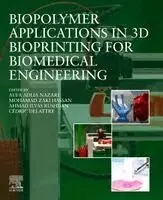
    Biopolymer Applications in 3D Bioprinting for Biomedical Engineering covers the fundamentals of polymer-based bioprinting materials, as well as the latest developments and advancements in 3D bioprinting processes. The book starts with an introduction to the principles of biomedical engineering and discusses the application of additive manufacturing in the biomedical field. This is followed by an overview of cell culture in 3D bioprinting, including in-situ bioprinting and in vitro studies and a review of the use of bio-based polymers and synthetic polymers in 3D bioprinting, with a focus on analyzing their properties and selecting the most suitable polymers for specific 3D bioprinting projects.

    The book's final section explores the applications and challenges of 3D bioprinting in various areas, including anatomical structure, organ bioprinting, skin bioprinting, drug delivery, grafts, blood vessels, orthodontics, ocular and neural tissues, and composite tissues. This book is a valuable reference for industrial and academic researchers, advanced students, and R&D professionals looking for an authoritative overview of biopolymer materials and products prepared by 3D bioprinting.

    • Provides a thorough understanding of polymer preparation techniques and 3D bioprinting processes
    • Analyzes and compares various types of polymers and provides guidance on selecting the most appropriate polymers for specific 3D bioprinting projects
    • Highlights the current challenges and future research directions in the field of polymer and composite application in 3D bioprinting

    Produktinformation

    • Utgivningsdatum:2026-09-15
    • Mått:191 x 235 x undefined mm
    • Vikt:450 g
    • Format:Häftad
    • Språk:Engelska
    • Antal sidor:750
    • Förlag:Elsevier Science
    • ISBN:9780443342073

    Utforska kategorier

    • Tillverkningsteknik inom Naturvetenskap och teknik
    • Maskinteknik och material inom Naturvetenskap och teknik

    Mer om författaren

    Aufa Adlia Nazari is a dedicated researcher in the field of Biomedical Electronic Engineering. She obtained her undergraduate degree in Biomedical Electronic Engineering from Universiti Malaysia Perlis in 2019 and is currently pursuing her Ph.D. studies at Universiti Teknologi Malaysia.Her research focuses on the application of additive manufacturing for bone implants. Specifically, she investigates the mechanical and in vitro behavior of biomaterial samples after undergoing surface treatment and modifications. By evaluating these parameters, Aufa aims to enhance the performance and functionality of bone implants.Dr. Mohamad Zaki Hassan received his bachelor's degree and master's degree in mechanical engineering from Universiti Teknologi Malaysia, which he earned in 1999 and 2003, respectively. In 2012, he obtained his Ph.D. in mechanical engineering from the University of Liverpool, UK. Currently, he serves as an Associate Professor at the renowned Razak Faculty of Technology and Informatics in Universiti Teknologi Malaysia Kuala Lumpur, Malasya. His research interests include the use of natural fibers such as bamboo, banana, hemp, kenaf, and pineapple leaves as reinforcement in composite materials. He is now focusing on these fibers for utilization in additive manufacturing and biological applications. Dr Ahmad Ilyas Rushdan is a senior lecturer in the Faculty of Chemical and Energy Engineering, Universiti Teknologi Malaysia. His expertise includes biodegradable polymers, biopolymers, polymer composites, and polymer gels. Additionally, Dr. Ahmad Ilyas specializes in material engineering, specifically in the areas of natural fiber reinforced polymer composites, biocomposites, cellulose materials, and nano-composites.Cédric Delattre has gained extensive experience in the fields of biochemistry and biotechnology, both in academic and industrial settings. He has worked at respected institutions such as Picardie Jules Verne University in France and Vellore Institute of Technology in India, as well as in the industry with Greentech Company in France.Dr Delattre specializes in areas such as chemical and synthetic biology, biochemistry, phytochemistry, agrochemistry, and enzymology technologies. His expertise also includes the development of immobilized enzymes for industrial reactors, as well as the design and development of functional materials and biomaterials, particularly polysaccharides. He has also conducted research in biorefinery, green chemistry, agrocomposites, food packaging, and 3D bioprinting for tissue engineering.

    Innehållsförteckning

    • Part 1: Principle of Biomedical Engineering1. Introduction to Biomedical Engineering2. Physiological System of the Human Body3. Classification of Scaffold based on Geometry, Biomaterial, and Application4. Application of Laser-based Additive Manufacturing Technique in the Biomedical FielPart 2: Cell Culture of 3D Bioprinting5. In-Situ 3D Bioprinting6. In vitro Studies of 3D Bioprinting for Wound Healing Applications7. 3D Bioprinting in Development and Testing of in vitro and in vivoPart 3: Bio-Based Polymers in 3D Bioprinting8. Silk Fibroin, Chitin and Chitosan in 3D Bioprinting9. Gellan and Derivatives for 3D Bioprinting10. 3D Bioprinting of Gelatine-Based Chondroitin and Dermatan Sulphate11. Bioprinting of Silk Fibroin: From 3D Printing Properties to Biomedical Applications12. Loss of Tissues and Organs Regeneration of 3D Bioprinting using Chitin and Chitosan13. Starch and Cellulose-Based Materials in 3D Bioprinting14. Anionic Polysaccharides for 3D-Bioink in Tissue Engineering15. Design of Poly-3-hydroxybutyrate (P3HB) Scaffolds by 3D Printing for Applications in Tissue EngineeringPart 4: Synthetic Polymer in 3D Bioprinting16. Synthetic Polymers in 3D Bioprinting17. Biocompatible Synthetic Polymers and Composites in 3D Bioprinting18. Bioactive Glass and Reinforcement in 3D BioprintingPart 5: Applications and Challenges of 3D Bioprinting19. Applications of 3D Bioprinting in Structural and Anatomical Models20. 3D Bioprinting in Organs21. 3D Bioprinting in Skin22. 3D Bioprinting in Drug Delivery23. 3D Bioprinting in Grafts24. Processing of 3D Bioprinting in Blood Vessels and Orthodontics25. 3D Bioprinting in Ocular, Neural, and Composite Tissues26. Post-Printing Processes in 3D Bioprinting27. Orthopedic Implant Materials: Processing, Applications, Challenges, and Possible Solutions28. Applications, Challenges, and Future Perspectives of Synthetic Polymers and Composites in 3D Bioprinting