• Fri frakt över 249 kr
  • •
  • Snabba leveranser
  • •
  • Billiga böcker
Kundservice

Du är på sajten för privatpersoner.

Företag, bibliotek eller offentlig verksamhet?

Du handlar på classic.bokus.com, där alla dina funktioner finns intakta.
Till classic.bokus.com
Bokus logotyp. Gå till startsidan.
  • Erbjudanden
  • Nyheter
  • Student
  • Topplistor
  • Barn & ungdom
  • Bokus Play
  • E-böcker
  • Pocketböcker
  • Spel & pussel

Må bättre, för mindre! Upp till 50% rabatt på hälsoböcker

Sidfot

Mina sidor

    Hjälp

    • Kundservice
    • Vanliga frågor och svar
    • Frakt och leverans
    • Retur vid ångerrätt
    • Reklamera vara
    • Betalning
    • Köpvillkor
    • Allmänna villkor
    • Information om webbplatsens tillgänglighet

    Om Bokus

    • Om oss
    • Pressrum
    • För studenter
    • För företag
    • För bibliotek och offentlig verksamhet
    • För leverantörer
    • Hållbarhet

    Populärt

    • Aktuella erbjudanden
    • Presentkort
    • Studentlitteratur
    • Nya böcker
    • Topplistor
    • Signerade böcker
    • Engelska böcker

    Inspiration

    • Boktips
    • BookTok
    • Populära bokserier
    • Barnbokskaraktärer
    • Populära författare
    Logotyp för Bokus
    Följ oss på Facebook (extern länk)Följ oss på Instagram (extern länk)Följ oss på YouTube (extern länk)Följ oss på TikTok (extern länk)
    bokus @ CookiesAnpassa cookiesIntegritetspolicyKöpvillkor
    Till Citymail hemsida (extern länk)Till Budbee hemsida (extern länk)Till Postnord hemsida (extern länk)Till Schenker hemsida (extern länk)Till Early Bird hemsida (extern länk)Till Walleys hemsida (extern länk)
    1. Naturvetenskap och teknik
    2. Teknik och industri
    3. Energiteknik

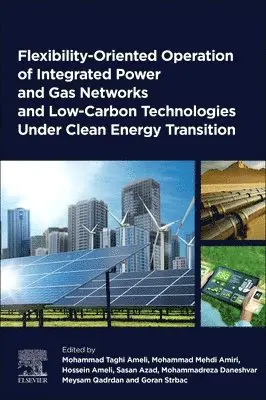
    Flexibility-Oriented Operation of Integrated Power and Gas Networks and Low-Carbon Technologies Under Clean Energy Transition

    AvMohammad Taghi Ameli,Mohammad Mehdi Amiri

    Häftad, Engelska, 2026

    1 970 kr

    Beställningsvara. Skickas inom 10-15 vardagar. Fri frakt över 249 kr.

    Beskrivning

    Flexibility-Oriented Operation of Integrated Power and Gas Networks and Low-Carbon Technologies Under Clean Energy Transition examines the critical role that integrated gas and electricity networks play in achieving a sustainable, low-carbon energy future. Sections cover innovative low-carbon technologies, such as hydrogen and ammonia, while addressing synthesis, storage, and transportation hurdles. Its detailed content covers the flexibility of coupled gas and electricity networks, operational strategies for achieving net-zero carbon emissions, and intelligent methods for assessing network adaptability. Users will find a conceptual overview of decarbonization efforts for integrated energy systems and discussions on the feasibility of integrating artificial intelligence (AI) in these processes.

    Further, the book discusses the decoupling of emissions from economic growth, the role of negative emission technologies (NETs), and the application of innovative energy solutions such as gas carbon capture and storage (CCS) and hydrogen production. Case studies illustrate successful implementations of integrated networks worldwide, highlighting challenges and key lessons learned. It not only highlights the urgent need for flexibility in these interconnected systems, particularly through demand-side management and energy storage systems, but also addresses the pressing challenges posed by climate change and the transition away from fossil fuels.

    • Explores the flexibility mechanisms necessary for the effective integration of gas and electricity networks, focusing on demand response and energy storage solutions that enhance system resilience and grid optimization
    • Examines operational and optimization strategies aimed at achieving net-zero carbon emissions within integrated gas and electricity networks
    • Investigates the feasibility and application of artificial intelligence in the decarbonization of integrated energy networks
    • Discusses the role of negative emission technologies (NETs) in contributing to low-carbon gas and electricity networks
    • Presents real-world case studies of successful integrated gas and electricity networks, showcasing lessons learned and best practices

    Produktinformation

    • Utgivningsdatum:2026-06-17
    • Mått:152 x 229 x 27 mm
    • Vikt:450 g
    • Format:Häftad
    • Språk:Engelska
    • Antal sidor:468
    • Förlag:Elsevier Science
    • ISBN:9780443445262

    Utforska kategorier

    • Energiteknik inom Naturvetenskap och teknik
    • Miljöteknik inom Naturvetenskap och teknik

    Mer om författaren

    Mohammad Taghi Ameli received his B.Sc. degree in electrical engineering from Technical College of Osnabrück, Germany, in 1988, and his M.Sc. and Ph.D. degrees from Technical University of Berlin, Berlin, Germany, in 1992 and 1997, respectively. He is a Professor of Department of Electrical Engineering and Head of Electrical Networks Research Institute at Shahid Beheshti University. He was the General Director of the Iran Research and Technology Institute for Electric Machines for three years. His research interests include power system simulation, operation, planning, and control of power systems, renewable energy in power systems, and smart grids. Mohammad Mehdi Amiri got his PhD degree in electrical engineering department at Shahid Beheshti University. His research is mainly focused on the integrated operation of gas/hydrogen and electricity networks, electricity markets, and decarbonization. He collaborates with the Electrical Networks Research Institute as a research associate and Noursun Energy Company as an optimization and electricity market manager. Hossein Ameli is an advanced research fellow in the Department of Electrical and Electronic Engineering at Imperial College London. He received his PhD from Imperial College London in 2018 and has more than 12 years of experience in integrated energy system modelling. His expertise spans the planning and operation of whole-energy systems, with particular emphasis on electricity, gas and hydrogen interactions, system flexibility,resilience, and pathways to net zero. He has contributed to major research, policy and industry projects, including work for the UK Climate Change Committee (CCC) and the National Energy System Operator (NESO). Heis a contributing author to the IPCC Working Group III and a member of the UNECE Committee on Sustainable Energy Sasan Azad is a research associate in the Electrical Network Research Institute at Shahid Beheshti University, Iran. His main areas of interest are the security and voltage stability of power systems, smart grids, and electric vehicles Mohammadreza Daneshvar, PhD, SMIEEE, is an Assistant Professor, founder and head of the Laboratory of Multi-Carrier Energy Networks Modernization at the Faculty of Electrical and Computer Engineering, University of Tabriz, Tabriz, Iran. Prior to that, he was a postdoctoral research fellow in the field of modern multi-energy networks at the Smart Energy Systems Lab of the University of Tabriz for two years. He obtained his MSc and PhD degrees in Electrical Power Engineering from the University of Tabriz, all with honors. He has (co)authored more than 50 technical journal and conference articles, 10 books, 30 book chapters, and 10 national and international research projects in the field. Dr. Daneshvar is a member of the Editorial Board of the Energy and Built Environment Journal and the Early Career Editorial Board of the Sustainable Cities and Society Journal. He also served as the guest editor for the Sustainable Cities and Society, and Sustainable Energy Technologies and Assessments journals. Moreover, he serves as an active reviewer with more than 130 top journals, and was ranked among the top 1% of reviewers in Engineering and Cross-Field based on Publons global reviewer database. His research interests include Smart Grids, Transactive Energy, Energy Management, Renewable Energy Sources, Integrated Multi-Energy Systems, Grid Modernization, Electrical Energy Storage Systems, Sustainable Cities and Society, Microgrids, Energy Hubs, Machine Learning and Deep Learning, Digital Twin, and Optimization Techniques and AI. Meysam Qadrdan is a Professor of Energy Networks and Systems, and a RAEng Industrial Fellow in Cardiff University, UK. He conducts fundamental and applied research into the modelling and analysis of integrated energy systems (electricity, gas, hydrogen, heat). He collaborates with National Grid Gas, as his Industry Host for the RAEng Fellowship, to study the role of hydrogen in achieving net-zero in the Great Britain. Goran Strbac is a Professor of Energy Systems, with extensive experience in advanced modelling and analysis of operation, planning, security and economics of energy systems. He led the development of novel advanced analysis approaches and methodologies that have been extensively used to inform industry, governments and regulatory bodies about the role and value of emerging new technologies and systems in supporting cost effective evolution to smart low carbon energy future. He is currently Director of the joint Imperial-Tsinghua Research Centre on Intelligent Power and Energy Systems, Leading Author in IPCC WG 3, Member of OFGEM RIIO-2 Challenging Group, Member of the UK Smart System Forum, Member of the European Technology and Innovation Platform for Smart Networks for the Energy Transition, and Member of the Joint EU Programme in Energy Systems Integration of the European Energy Research Alliance.

    Innehållsförteckning

    • 1. Flexibility for the coupled structure of integrated electricity and gas networks2. Understanding flexibility in decarbonizing power systems: Needs, options, and future scenarios3. System-of-Systems Approach to Peer-to-Peer Energy Trading in Integrated Energy Systems4. Investigation and feasibility of artificial intelligence (AI) in decarbonization of integrated gas and electricity network5. Sustainable Multi-Objective Operation of Microgrids: A Flexibility-Driven Approach for Electrical and Thermal Load Management6. Advanced Data-Driven Control for Flexibility and Decarbonization in Integrated Power and Gas Networks7. Role and value of compressor station in facilitating cost-effective energy system decarbonization: A case study8. Applicability of negative emission technologies: Challenges and contributions in low-carbon gas and electricity networks9. Hydrogen electrolyzers as a source of flexibility to power systems10. Net zero energy supply, oxy turbine power cycles, gas carbon capture and hydrogen production technologies11. Coordinated Load Shedding in Integrated Gas and Electricity Networks: Concept, Modeling, Challenges, and Future Directions