• Fri frakt över 249 kr
  • •
  • Snabba leveranser
  • •
  • Billiga böcker
Kundservice

Du är på sajten för privatpersoner.

Företag, bibliotek eller offentlig verksamhet?

Du handlar på classic.bokus.com, där alla dina funktioner finns intakta.
Till classic.bokus.com
Bokus logotyp. Gå till startsidan.
  • Erbjudanden
  • Student
  • Topplistor
  • Barn & ungdom
  • Bokus Play
  • E-böcker
  • Ljudböcker
  • Pocketböcker
  • Spel och pussel

Pocketfynda! Hundratals böcker för 49 kr/st →

Sidfot

Mina sidor

    Hjälp

    • Kundservice
    • Vanliga frågor och svar
    • Frakt och leverans
    • Retur vid ångerrätt
    • Reklamera vara
    • Betalning
    • Köpvillkor
    • Allmänna villkor
    • Information om webbplatsens tillgänglighet

    Om Bokus

    • Om oss
    • Pressrum
    • För studenter
    • För företag
    • För bibliotek och offentlig verksamhet
    • För leverantörer
    • Hållbarhet

    Populärt

    • Aktuella erbjudanden
    • Presentkort
    • Studentlitteratur
    • Nya böcker
    • Topplistor
    • Signerade böcker
    • Engelska böcker

    Inspiration

    • Boktips
    • BookTok
    • Barnbokskaraktärer
    • Populära författare
    Logotyp för Bokus
    Följ oss på Facebook (extern länk)Följ oss på Instagram (extern länk)Följ oss på YouTube (extern länk)Följ oss på TikTok (extern länk)
    bokus @ CookiesAnpassa cookiesIntegritetspolicyKöpvillkor
    Till Citymail hemsida (extern länk)Till Budbee hemsida (extern länk)Till Postnord hemsida (extern länk)Till Schenker hemsida (extern länk)Till Early Bird hemsida (extern länk)Till Walleys hemsida (extern länk)
    1. Naturvetenskap och teknik
    2. Matematik och naturvetenskap
    3. Biologi
    4. Biovetenskap
    • Nyhet

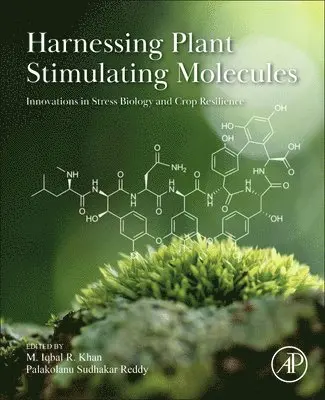
    Harnessing Plant-Stimulating Molecules

    Innovations in Stress Biology and Crop Resilience

    AvM. Iqbal R. Khan,Palakolanu Sudhakar Reddy

    Häftad, Engelska, 2026

    1 970 kr

    Beställningsvara. Skickas inom 10-15 vardagar. Fri frakt över 249 kr.

    Beskrivning

    Harnessing Plant-Stimulating Molecules serves as an authoritative reference on the multifaceted molecular regulators and biotechnological innovations underpinning plant resilience to environmental stressors. This volume delivers an exhaustive treatment of diverse classes of signaling entities-including phytohormones, secondary messengers, secondary messengers, reactive oxygen and nitrogen species, and heterotrimeric G proteins-elucidating their roles in complex stress adaptation pathways.

    In addition to molecular and biochemical foundations, this book explores advanced methodologies such as nanoparticle-facilitated metabolic modulation, RNA interference, and gene-editing strategies aimed at optimizing nutrient utilization. It also highlights the emerging significance of biostimulants in modulating plant-microbe interactions and interplant signaling networks. Detailed discussions on systemic signaling mediated by mobile molecules and photoreceptor-mediated photomorphogenic responses further enrich the scope.

    By integrating cutting-edge approaches, particularly CRISPR-Cas systems, with computational modeling for simulating metabolic networks, the volume facilitates accelerated crop improvement strategies essential for addressing contemporary challenges in food security and agroecosystem sustainability.

    Designed as an indispensable resource for researchers, advanced graduate students, and industry professionals, Harnessing Plant-Stimulating Molecules bridges fundamental plant molecular biology with translational biotechnology, fostering the development of resilient, high-performance crops adapted to the challenges of a changing climate.


    • Provides detailed graphical representations of molecular processes, signaling pathways, and regulatory networks, complemented by quantitative models and mathematical frameworks to enhance practical application and predictive accuracy
    • Presents a comprehensive synthesis of contemporary insights into environment-induced perturbations and the dynamic roles of plant stimulating molecules in stress adaptation
    • Identifies critical knowledge gaps and proposes targeted research directions in plant signaling biology, highlighting emerging opportunities to enhance crop resilience and promote sustainable agriculture

    Produktinformation

    • Utgivningsdatum:2026-07-10
    • Mått:191 x 235 x 20 mm
    • Vikt:450 g
    • Format:Häftad
    • Språk:Engelska
    • Antal sidor:392
    • Förlag:Elsevier Science
    • ISBN:9780443449949

    Utforska kategorier

    • Biovetenskap inom Naturvetenskap och teknik
    • Biokemi inom Naturvetenskap och teknik
    • Växtböcker inom Djur och Natur

    Mer om författaren

    M. Iqbal R. Khan is an Assistant Professor in the Department of Botany and serves as Deputy Director of the Centre for Environment and Sustainable Development (CESD) at Jamia Hamdard, New Delhi, India. He also holds adjunct appointments at Korea University, Seoul, South Korea, and at The University of Western Australia, Perth, Australia. Dr. Khan’s research focuses on major staple crops, particularly wheat, with the objective of reducing their susceptibility to environmental stress under projected future climatic conditions and contributing to the achievement of the Sustainable Development Goals. His work addresses the challenges posed by environmental stressors to agricultural productivity, which remain a critical concern for global food and nutritional security. He has published over 100 research articles and has edited several books and authored multiple book chapters with leading publishers. He has an established citation record, as reflected in widely used bibliometric indicators. Dr. Khan has been recognized as a Clarivate Highly Cited Researcher in the Animal and Plant Science category and has been listed among the top 2% of scientists globally by Elsevier and Stanford University (2021–25). He is a member of the National Academy of Sciences, India (NASI), in Plant and Agricultural Sciences, and a recipient of the Indian National Science Academy (INSA) Young Associates award (2024). His accolades include the R.H. Dastur Gold Medal Award—ISPP (2023), the Young Scientist Platinum Jubilee Award—NASI (2021), and the Young Scientist Award—ISPP (2018). He serves on the editorial boards of many renowned journals, including Plant and Soil, Journal of Plant Growth Regulation, 3-Biotech, and Plant Physiology Reports. He has also served as a guest editor for Agriculture, Frontiers in Plant Science, Sustainability, and Plant Physiology and Biochemistry. Dr. Sudhakar Reddy Palakolanu has more than 14 years of expertise in plant molecular biology, functional genomics, and gene editing. His research focuses on identifying and analyzing genes associated with complex traits using advanced molecular and biotechnological approaches. His work aims to enhance key agronomic traits in dryland crops, particularly millets, through the application of cutting-edge techniques. By integrating modern biotechnological tools, he seeks to validate candidate genes identified through trait dissection, supporting sustainable crop development. Dr. Reddy’s accomplishments have been recognized through several prestigious national awards, including the Young Scientist Award and the INSPIRE Faculty Award from the Department of Science and Technology, Government of India (DST-GOI). He also received a Postdoctoral Fellowship from the German Academic Exchange Service (DAAD), which supported his research in Germany. In addition, he has served as a guest scientist at the International Rice Research Institute (IRRI) in the Philippines, where he worked on CRISPR–Cas9-mediated genome editing to improve rice grain quality. He has an extensive research portfolio that includes numerous peer-reviewed articles, book chapters, books, and patents. He also serves as a reviewer for leading international journals, including Trends in Plant Science, Genome Biology, Frontiers in Plant Science, Physiologia Plantarum, Plant Cell Reports, Plant Biotechnology Journal, and BMC Plant Biology, among others.

    Innehållsförteckning

    • 1. Biostimulants: a sustainable approach to enhancing plant resilience under environmental stress2. Utilizing plant growth regulators for sustainable agricultural intensification under abiotic stress3. Regulation of auxin and cytokinin signaling in plants during salt stress adaptation4. Crosstalk of salicylic acid with other growth regulators and signaling molecules in mediating abiotic stress tolerance in plants5. Exploring the protective effects of abscisic acid against salt stress in rice6. Endophyte-driven strategies for abiotic stress tolerance in plants7. Strigolactone-mediated signaling pathways in sorghum: molecular insights into Striga resistance8. Role of reactive carbonyl compounds in plant stress signaling9. Integrating gene editing and plant stimulants to develop virus-resilient crops10. Biotechnological innovations for sustainable agriculture11. Mobile signals in systemic stress response: RNA, peptides, and hormonal interactions12. Heterotrimeric G-protein subunits in plant signal transduction: roles in plant development and stress responses13. CRISPR–Cas-enabled accelerated breeding pipelines for engineering climate-resilient crops under abiotic stress conditions