• Fri frakt över 249 kr
  • •
  • Snabba leveranser
  • •
  • Billiga böcker
Kundservice

Du är på sajten för privatpersoner.

Företag, bibliotek eller offentlig verksamhet?

Du handlar på classic.bokus.com, där alla dina funktioner finns intakta.
Till classic.bokus.com
Bokus logotyp. Gå till startsidan.
  • Erbjudanden
  • Nyheter
  • Student
  • Topplistor
  • Barn & ungdom
  • Bokus Play
  • E-böcker
  • Pocketböcker
  • Spel & pussel

10% studentrabatt med kod TERM26

Sidfot

Mina sidor

    Hjälp

    • Kundservice
    • Vanliga frågor och svar
    • Frakt och leverans
    • Retur vid ångerrätt
    • Reklamera vara
    • Betalning
    • Köpvillkor
    • Allmänna villkor
    • Information om webbplatsens tillgänglighet

    Om Bokus

    • Om oss
    • Pressrum
    • För studenter
    • För företag
    • För bibliotek och offentlig verksamhet
    • För leverantörer
    • Hållbarhet

    Populärt

    • Aktuella erbjudanden
    • Presentkort
    • Studentlitteratur
    • Nya böcker
    • Topplistor
    • Signerade böcker
    • Engelska böcker

    Inspiration

    • Boktips
    • BookTok
    • Populära bokserier
    • Barnbokskaraktärer
    • Populära författare
    Logotyp för Bokus
    Följ oss på Facebook (extern länk)Följ oss på Instagram (extern länk)Följ oss på YouTube (extern länk)Följ oss på TikTok (extern länk)
    bokus @ CookiesAnpassa cookiesIntegritetspolicyKöpvillkor
    Till Citymail hemsida (extern länk)Till Budbee hemsida (extern länk)Till Postnord hemsida (extern länk)Till Schenker hemsida (extern länk)Till Early Bird hemsida (extern länk)Till Walleys hemsida (extern länk)
    1. Naturvetenskap och teknik
    2. Teknik och industri
    3. Maskinteknik och material

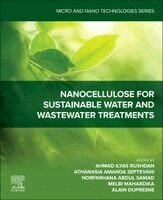
    Nanocellulose for Sustainable Water and Wastewater Treatments

    AvAhmad Ilyas Rushdan,Athanasia Amanda Septevani

    Häftad, Engelska, 2026

    Del i serien Micro and Nano Technologies

    2 206 kr

    Kommande

    Beskrivning

    Nanocellulose for Sustainable Water and Wastewater Treatments provides a comprehensive overview of the role of nanocellulose in addressing challenges in water and wastewater treatment by discussing its fundamental properties, synthesis, modification, and applications in various treatment processes. Structured into four parts, the book begins with an overview of nanocellulose, including its classification, sources, and properties, as well as methods for its synthesis and modification. Following sections review the application of nanocellulose in water treatment processes, such as flocculation, filtration, photocatalysis, and pollutant detection, as well as its use in treating wastewater, including industrial and oily wastewater.

    The final section focuses on sustainable practices and environmental impacts, thoroughly covering the recycling and reusability of nanocellulose, lifecycle assessments, and future advancements in nanocellulose technologies for water and wastewater treatment. This book is a valuable resource for researchers, scientists, and industry professionals interested in the sustainable use of nanocellulose in water treatment, providing insights into state-of-the-art research and advancements in the field.

    • Reviews the unique characteristics of nanocellulose, including its mechanical, chemical, and physical properties, which are crucial for effective water treatment applications
    • Discusses sustainable aspects of recycling and reuse of nanocellulose materials, highlighting environmentally-friendly practices and contributing to waste reduction in water treatment processes
    • Features real-world examples and case studies that demonstrate successful implementations of nanocellulose in various water purification techniques

    Produktinformation

    • Utgivningsdatum:2026-11-01
    • Mått:191 x 235 x undefined mm
    • Vikt:450 g
    • Format:Häftad
    • Språk:Engelska
    • Serie:Micro and Nano Technologies
    • Antal sidor:480
    • Förlag:Elsevier Science
    • ISBN:9780443455629

    Utforska kategorier

    • Maskinteknik och material inom Naturvetenskap och teknik

    Mer om författaren

    Dr Ahmad Ilyas Rushdan is a senior lecturer in the Faculty of Chemical and Energy Engineering, Universiti Teknologi Malaysia. His expertise includes biodegradable polymers, biopolymers, polymer composites, and polymer gels. Additionally, Dr. Ahmad Ilyas specializes in material engineering, specifically in the areas of natural fiber reinforced polymer composites, biocomposites, cellulose materials, and nano-composites.Dr. Athanasia Amanda Septevani is a senior researcher at the National Research and Innovation Agency in Indonesia, specializing in polymers and nanotechnology. Her research focuses on engineering and designing sustainable materials derived from waste, combining both translational and fundamental research expertise. Dr. Septevani earned her PhD from The University of Queensland in Brisbane, Australia, in 2017. She has participated in global research collaborations as a Research Fellow at various institutions, including Oregon State University in the USA (2016), the University of Warwick in the UK (2019), and Politecnico di Torino in Italy (2021).Dr. Septevani's contributions to STEM have been recognized with several prestigious awards, including the L’Oréal UNESCO for Women in Science in 2018, the 1st place Merck Young Scientist Award in 2021, and the Japan International Award for Young Agricultural Researchers in 2022. In 2019, she was named one of the 99 Most Inspiring Women in Indonesia by Globe Asia, and in 2023, she was recognized as one of Asia's 100 Most Outstanding Researchers by Asian Scientist Magazine.Norfarhana Abdul Samad is a lecturer in the Department of Petrochemical Engineering at Politeknik Tun Syed Nasir Syed Ismail in Pagoh, Malaysia. She holds a Master of Science degree in Chemistry from Universiti Kebangsaan Malaysia (UKM), where her research focused on rubber composite membranes. Her research interests span a variety of disciplines, including polymer sciences, material science, natural fibers, bio-composites, thermoplastic elastomer composites, and membrane polymers. With her extensive expertise, she is dedicated to advancing knowledge and skills in her field.Dr. Melbi Mahardika is an Associate Researcher at the Research Center for Biomass and Bioproducts within the National Research and Innovation Agency (BRIN), Indonesia. He completed his doctoral research in the Department of Mechanical Engineering at Andalas University in Indonesia. His areas of expertise include packaging technology, nanocellulose, biocomposites, natural fiber reinforced polymers, nanotechnology for agroindustry, advanced material technology, nanomaterials Synthesis, and biomaterials.Dr. Alain Dufresne is a Professor at The International School of Paper, Print Media and Biomaterials (Pagora) at Grenoble Institute of Technology in France. He holds a PhD in Electronics from the National Institute of Applied Sciences in Toulouse, as well as a MSc in Chemical Engineering from Ecole Polytechnique de Montreal and in Solid State Physics from Paul Sabatier University in Toulouse. Dr. Dufresne is an expert in polysaccharide nanofibrils and nanocrystals, including cellulose, chitin, and starch. His research focuses on the processing and characterization of nanocomposites based on renewable resources and the valorization of biomass. Previously, he served as an Associate Professor in the Physical Metallurgy & Materials Physics Lab at INSA Lyon and was a professor at the Research Center on Vegetable Macromolecules (CERMAV) at Joseph Fourier University in Grenoble.

    Innehållsförteckning

    • Part I: Fundamentals of NanocelluloseChapter 1: Nanocellulose: Structure–Process–Property Relationships and Sustainable Environmental ApplicationsChapter 2: Classification, Source, Type, Structural, and Intrinsic Properties of NanocelluloseChapter 3: Synthesis, Modification, and Functionalization of NanocellulosePart II: Nanocellulose for Water TreatmentChapter 4: Water Treatment Processes and Mechanisms Using Nanocellulose MaterialsChapter 5: Nanocellulose-Based Electrochemical Systems for Water PurificationChapter 6: Nanocellulose-Based Materials for Filtration and DesalinationChapter 7: Engineering Nanocellulose–TiO₂ Hybrid Photocatalysts for Sustainable Water PurificationChapter 8: Nanocellulose-Based Sensing Systems for Detection of Water ContaminantsPart III: Nanocellulose for Wastewater TreatmentChapter 9: Nanocellulose-Based Materials for Industrial Wastewater TreatmentChapter 10: Nanocellulose-Based Materials for Heavy Metal RemovalChapter 11: Nanocellulose-Based Materials for Dye Wastewater TreatmentChapter 12: Synergistic Zinc Sulfide–Nanocellulose Composites for Oily Wastewater Treatment: A Comprehensive Review on Synthesis, Mechanisms, and Future FrontiersChapter 13: Nanocellulose-Based Membranes as Multifunctional Wastewater TreatmentPart IV: Sustainability and PerspectivesChapter 14: Recycling and Reusability of Nanocellulose-Based Materials in Wastewater TreatmentChapter 15: Life Cycle Assessment of Bacterial NanocelluloseChapter 16: Environmental and Toxicological Impact of Nanocellulose in Water and Wastewater TreatmentChapter 17: Future Perspectives of Nanocellulose Advancements for Water and Wastewater Treatment