• Fri frakt över 249 kr
  • •
  • Snabba leveranser
  • •
  • Billiga böcker
Kundservice

Du är på sajten för privatpersoner.

Företag, bibliotek eller offentlig verksamhet?

Du handlar på classic.bokus.com, där alla dina funktioner finns intakta.
Till classic.bokus.com
Bokus logotyp. Gå till startsidan.
  • Erbjudanden
  • Nyheter
  • Student
  • Topplistor
  • Barn & ungdom
  • Bokus Play
  • E-böcker
  • Pocketböcker
  • Spel & pussel

10% rabatt på allt med kod: NYSTART10 →

Sidfot

Mina sidor

    Hjälp

    • Kundservice
    • Vanliga frågor och svar
    • Frakt och leverans
    • Retur vid ångerrätt
    • Reklamera vara
    • Betalning
    • Köpvillkor
    • Allmänna villkor
    • Information om webbplatsens tillgänglighet

    Om Bokus

    • Om oss
    • Pressrum
    • För studenter
    • För företag
    • För bibliotek och offentlig verksamhet
    • För leverantörer
    • Hållbarhet

    Populärt

    • Aktuella erbjudanden
    • Presentkort
    • Studentlitteratur
    • Nya böcker
    • Topplistor
    • Signerade böcker
    • Engelska böcker

    Inspiration

    • Boktips
    • BookTok
    • Populära bokserier
    • Barnbokskaraktärer
    • Populära författare
    Logotyp för Bokus
    Följ oss på Facebook (extern länk)Följ oss på Instagram (extern länk)Följ oss på YouTube (extern länk)Följ oss på TikTok (extern länk)
    bokus @ CookiesAnpassa cookiesIntegritetspolicyKöpvillkor
    Till Citymail hemsida (extern länk)Till Budbee hemsida (extern länk)Till Postnord hemsida (extern länk)Till Schenker hemsida (extern länk)Till Early Bird hemsida (extern länk)Till Walleys hemsida (extern länk)
    1. Naturvetenskap och teknik
    2. Teknik och industri
    3. Teknik: allmänt

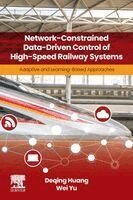
    Network-Constrained Data-Driven Control of High-Speed Railway Systems

    Adaptive and Learning-Based Approaches

    AvDeqing Huang,Wei Yu

    Häftad, Engelska, 2026

    1 677 kr

    Beställningsvara. Skickas inom 10-15 vardagar. Fri frakt över 249 kr.

    Beskrivning

    Network-Constrained Data-Driven Control of High-Speed Rail Systems: Adaptive and Learning-Based Approaches addresses critical challenges in high-speed railway (HSR) operational control systems, focusing on enhancing safety, efficiency, and automation in an era of rapid network expansion. The book introduces a transformative framework for data-driven adaptive control and multi-train cooperative control under dynamic network constraints. It integrates next-generation 5G-R communication to enable real-time train-to-train (T2T) coordination, reducing dependency on fixed infrastructure and addressing vulnerabilities like faded channels and interference. By combining rigorous theoretical analysis with simulations, the book proposes solutions to improve operational precision, resilience against disruptions, and transportation capacity.

    This resource is helpful for researchers, engineers, and graduate students in high speed railway control systems, offering innovative strategies to advance autonomous operations and meet the demands of high-density, high-speed rail networks

    • Presents a data-driven adaptive and learning control framework for high-speed trains under network constraints
    • Discusses the theory and method of multi-train cooperative control in detail: particularly, how to realize real-time information interaction and dynamic adjustment between trains with the support of train-to-train communication
    • Discusses the influence of network constraints (such as fading measurement, malicious attacks, etc.) on train cooperative control, and proposes a series of compensation strategies
    • Focuses on current, high-speed rail control technology, but also contains a forward-looking discussion of future high-speed rail communication and control technology, such as the application of 5G-R communication system and autonomous driving technology

    Produktinformation

    • Utgivningsdatum:2026-02-18
    • Mått:152 x 229 x undefined mm
    • Vikt:450 g
    • Format:Häftad
    • Språk:Engelska
    • Antal sidor:276
    • Förlag:Elsevier Science
    • ISBN:9780443489945

    Utforska kategorier

    • Teknik: allmänt inom Naturvetenskap och teknik

    Mer om författaren

    Professor Deqing Huang received the B.S. and Ph.D. degrees from Sichuan University, Chengdu, China, in 2002 and 2007, respectively, and the second Ph.D. degree with a major in control engineering from the Department of Electrical and Computer Engineering, National University of Singapore (NUS), Singapore, in 2011. From January 2010 to February 2013, he was a Research Fellow with the Department of Electrical and Computer Engineering, NUS. From March 2013 to January 2016, he was a Research Associate with the Department of Aeronautics, Imperial College London, London, U.K. In January 2016, he joined the Department of Electronic and Information Engineering, Southwest Jiaotong University, Chengdu, China, as a Professor and the Department Head. His current research interests include modern control theory, artificial intelligence, and fault diagnosis as well as robotics Dr Wei Yu received the B.S. degree in rail transportation signal and control from Henan Polytechnic University, Jiaozuo, China, in 2018, the M.S. degree in control science and engineering from the School of Electric Engineering and Automation, Henan Polytechnic University, Jiaozuo, China, in 2021 and the Ph.D. degree in control science and engineering with Southwest Jiaotong University, Chengdu, China, in 2024. He is currently conducting Boya postdoctoral research at Peking University. His research interests include high-speed train control, data-driven control, iterative learning control and networked system control

    Innehållsförteckning

    • 1. Introduction2. Preliminaries3. Coordinated MFAC of MHSTs Under Faded Channels and DoS Attacks4. DD Consensus of MHSTs Via Random Topologies with Recovery Mechanism5. Weighted T2T Communication-Based DD Consensus of MHSTs Under DA6. Active Quantizer-Based DMFAC for MHSTs Against Sensor Bias7. HOIM Based Data-Driven ILC of HSTs Subject to Faded Channels8. Fading-Based Coordinated MFAILC of MHSTs Against DoS Attacks9. Attack Recovery-Based DMFAILC for MHSTs with Fading Compensation10. Event-Triggered DMFAILC for MHSTs with Switching Topologies11. DMFAILC for MHSTs under Weighted Communication and Saturations12. DMFAILC for MHSTs Considering Quantizations and Measurement Bias