

Closed and Open Photobioreactor Systems for Wastewater Treatment
Design Principles and Operational Mechanisms
Häftad, Engelska, 2027
2 306 kr
Kommande
Beskrivning
Closed and Open Photobioreactor Systems for Wastewater Treatment: Design Principles and Operational Mechanisms offers a comprehensive examination of the scientific foundations, engineering mechanisms, and practical designs that drive modern algal-based wastewater treatment technologies. Bridging fundamental bioprocess principles with real-world reactor configurations, the book presents a unified resource that addresses both closed and open photobioreactor systems, including light distribution, hydrodynamics, nutrient kinetics, and scale-up strategies. Through mechanistic modeling and performance evaluation frameworks, it consolidates scattered knowledge and emerging innovations into a single, authoritative reference. The book unfolds in three parts: Part I explores closed photobioreactor systems, detailing the design and optimization of horizontal, vertical, and flat-panel reactors. Part II deals with open systems, covering circular ponds, raceway ponds, and hybrid configurations, with a focus on natural flow, modeling, and integration. Part III investigates innovative designs, the role of artificial intelligence and digital twins, and the future of sustainable, circular wastewater management.
Closed and Open Photobioreactor Systems for Wastewater Treatment: Design Principles and Operational Mechanisms is an essential guide for researchers, engineers, environmental scientists, graduate students, and industry professionals in biotechnology, wastewater management, environmental engineering, and sustainable process development. It provides critical insights for advancing resource recovery, carbon capture, and sustainable development in both academic and applied settings.
Closed and Open Photobioreactor Systems for Wastewater Treatment: Design Principles and Operational Mechanisms is an essential guide for researchers, engineers, environmental scientists, graduate students, and industry professionals in biotechnology, wastewater management, environmental engineering, and sustainable process development. It provides critical insights for advancing resource recovery, carbon capture, and sustainable development in both academic and applied settings.
- Explains the mechanisms of closed and open PBR systems, including the role of individual components
- Combines biological, chemical, and hydrodynamic perspectives on agitation, mass transfer, and light utilization
- Provides scale-up guidelines, benchmarks, and pilot-scale case studies
- Links wastewater valorisation, carbon capture, and biomass utilization to sustainable development goals
- Offers insights on process intensification, technology readiness levels, and industrial pathways from laboratory to commercial scale
Produktinformation
Utforska kategorier
Mer om författaren
Innehållsförteckning
Hoppa över listan




Mer från samma författare
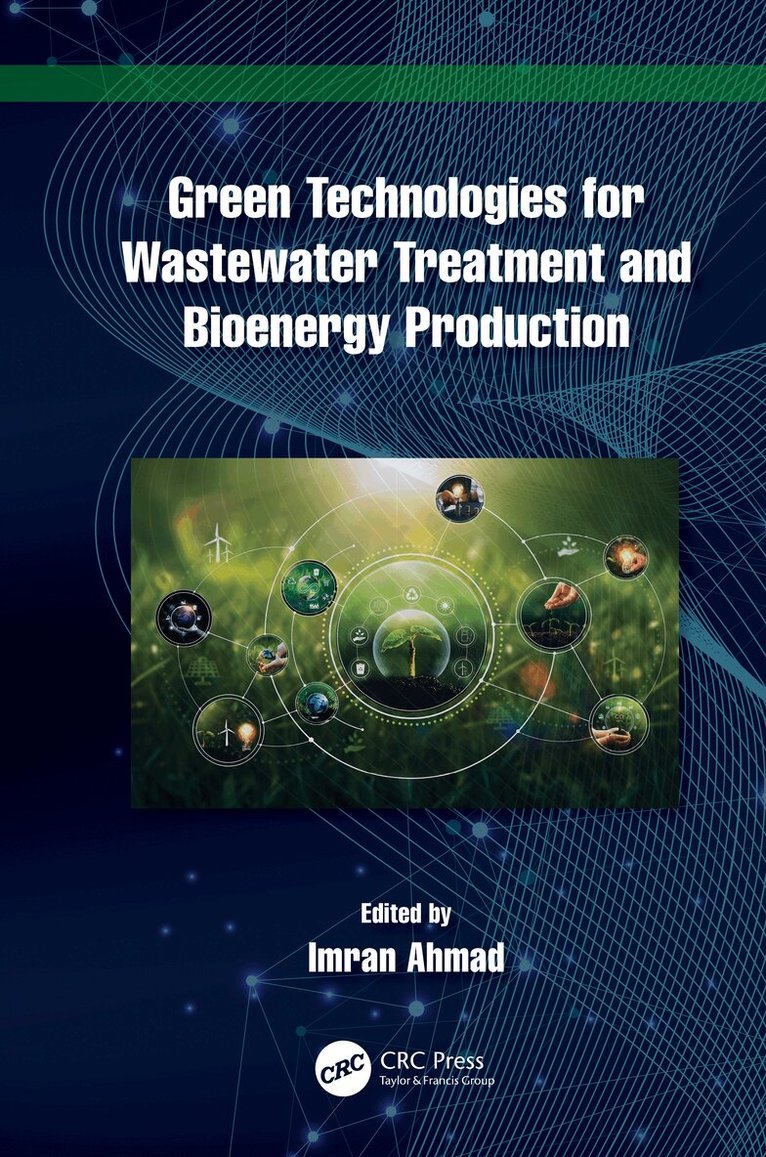
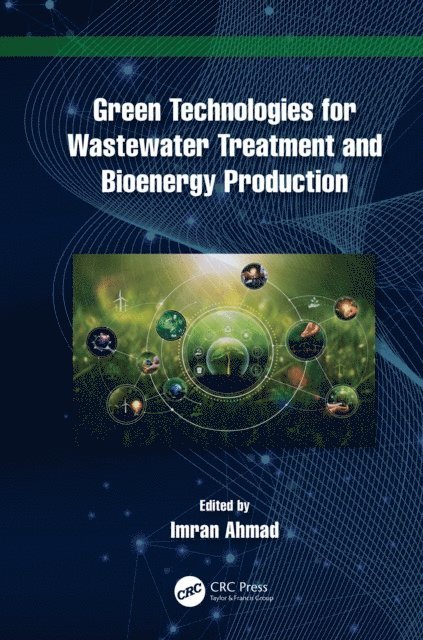
Green Technologies for Wastewater Treatment and Bioenergy Production
Imran Ahmad
Inbunden, 2025
2 695 kr
Functional Foods and Dietary Supplements
Anil Kumar Anal, Imran Ahmad, Athapol Noomhorm
E-bok
20142 512 kr
Functional Foods and Dietary Supplements
Anil Kumar Anal, Imran Ahmad, Athapol Noomhorm
E-bok
20142 512 kr
Functional Foods and Dietary Supplements
Athapol Noomhorm, Imran Ahmad, Anil Kumar Anal
Inbunden, 2014
2 192 kr
Hoppa över listan




Du kanske också är intresserad av
- Nyhet
Microalgae for Carbon Sequestration and Wastewater Valorization
Imran Ahmad, Faizal Bux, Nilamjyoti Kalita
Inbunden, 2026
3 387 kr
Microalgae for Wastewater Treatment and Resource Recovery: Pathways to a Circular Bioeconomy
Imran Ahmad, Faizal Bux
Häftad, 2026
2 526 kr
Microalgae for Wastewater Treatment and Resource Recovery
Imran Ahmad, Faizal Bux, Nilamjyoti Kalita
Inbunden, 2026
3 004 kr
Microalgae for Carbon Sequestration and Wastewater Valorization: Pathways to a Sustainable Bioeconomy
Imran Ahmad, Faizal Bux
Häftad, 2026
2 944 kr
Functional Foods and Dietary Supplements
Anil Kumar Anal, Imran Ahmad, Athapol Noomhorm
E-bok
20142 512 kr