• Fri frakt över 249 kr
  • •
  • Snabba leveranser
  • •
  • Billiga böcker
Kundservice

Du är på sajten för privatpersoner.

Företag, bibliotek eller offentlig verksamhet?

Du handlar på classic.bokus.com, där alla dina funktioner finns intakta.
Till classic.bokus.com
Bokus logotyp. Gå till startsidan.
  • Erbjudanden
  • Nyheter
  • Student
  • Topplistor
  • Barn & ungdom
  • Bokus Play
  • E-böcker
  • Pocketböcker
  • Spel & pussel

10% rabatt på allt med kod: NYSTART10 →

Sidfot

Mina sidor

    Hjälp

    • Kundservice
    • Vanliga frågor och svar
    • Frakt och leverans
    • Retur vid ångerrätt
    • Reklamera vara
    • Betalning
    • Köpvillkor
    • Allmänna villkor
    • Information om webbplatsens tillgänglighet

    Om Bokus

    • Om oss
    • Pressrum
    • För studenter
    • För företag
    • För bibliotek och offentlig verksamhet
    • För leverantörer
    • Hållbarhet

    Populärt

    • Aktuella erbjudanden
    • Presentkort
    • Studentlitteratur
    • Nya böcker
    • Topplistor
    • Signerade böcker
    • Engelska böcker

    Inspiration

    • Boktips
    • BookTok
    • Populära bokserier
    • Barnbokskaraktärer
    • Populära författare
    Logotyp för Bokus
    Följ oss på Facebook (extern länk)Följ oss på Instagram (extern länk)Följ oss på YouTube (extern länk)Följ oss på TikTok (extern länk)
    bokus @ CookiesAnpassa cookiesIntegritetspolicyKöpvillkor
    Till Citymail hemsida (extern länk)Till Budbee hemsida (extern länk)Till Postnord hemsida (extern länk)Till Schenker hemsida (extern länk)Till Early Bird hemsida (extern länk)Till Walleys hemsida (extern länk)
    1. Naturvetenskap och teknik
    2. Teknik och industri
    3. Biokemisk teknik

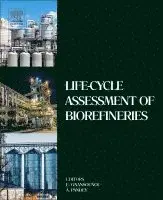
    Life-Cycle Assessment of Biorefineries

    AvEdgard Gnansounou,Ashok Pandey

    Inbunden, Engelska, 2017

    1 647 kr

    Beställningsvara. Skickas inom 10-15 vardagar. Fri frakt över 249 kr.

    Beskrivning

    Life-Cycle Assessment of Biorefineries, the sixth and last book in the series on biomass-biorefineries discusses the unprecedented growth and development in the emerging concept of a global bio-based economy in which biomass-based biorefineries have attained center stage for the production of fuels and chemicals.

    It is envisaged that by 2020 a majority of chemicals currently being produced through a chemical route will be produced via a bio-based route. Agro-industrial residues, municipal solid wastes, and forestry wastes have been considered as the most significant feedstocks for such bio-refineries. However, for the techno-economic success of such biorefineries, it is of prime and utmost importance to understand their lifecycle assessment for various aspects.


    • Provides state-of-art information on the basics and fundamental principles of LCA for biorefineries
    • Contains key features for the education and understanding of integrated biorefineries
    • Presents models that are used to cope with land-use changes and their effects on biorefineries
    • Includes relevant case studies that illustrate main points

    Produktinformation

    • Utgivningsdatum:2017-01-12
    • Mått:191 x 235 x 19 mm
    • Vikt:820 g
    • Format:Inbunden
    • Språk:Engelska
    • Antal sidor:322
    • Förlag:Elsevier Science
    • ISBN:9780444635853

    Utforska kategorier

    • Biokemisk teknik inom Naturvetenskap och teknik

    Mer om författaren

    Edgard Gnansounou is Professor of modelling and planning of Energy Systems at the Swiss Federal Institute of Technology Lausanne (EPFL) where he is Director of the Bioenergy and Energy Planning Research Group. His current research works comprise techno-economic and environmental assessment of bio-refinery schemes based on conversion of agricultural residues. He is leading research projects in that field in several countries including Brazil, Colombia and South Africa. Edgard Gnansounou is credited with numerous papers in high impact scientific journals. He is member of the editorial board of Bioresource Technology. He graduated with a M.S. in Civil Engineering and Ph.D. in Energy Systems at the Swiss Federal Institute of Technology Lausanne. He was a visiting researcher at the Thayer College, Dartmouth School of Engineering with Professor Charles Wyman (USA), at Polytech of Clermont-Ferrand, University Blaise Pascal (France) and at the Center of Biofuels, the National Institute for Interdisciplinary Science and Technology, Trivandrum (India). He was also a visiting Professor of the African University of Science of Technology (Abuja, Nigeria). He is a citizen of Benin (Africa) and Switzerland. Professor Ashok Pandey is Deputy Director at CSIR’s National Institute for Interdisciplinary Science and Technology at Trivandrum and heading the Centre for Biofuels and Biotechnology Division there. Professor Pandey’s research interests are on bio-based economy development (biomass-based biorefinery) for the production of fuels and chemicals. He has >1000 publications/communications, which include 14 patents & design copyright, 34 books, 100 book chapters, 380 original and review papers, etc with h index of 62 and >16,800 citation (Goggle scholar). Prof. Ashok Pandey is currently Executive Director, Centre for Energy and Environmental Sustainability-India, Lucknow. His major research and technological development interests are industrial and environmental biotechnology and energy biosciences, focusing on biomass to biofuels and chemicals, waste to wealth and energy, etc.

    Innehållsförteckning

    • 1. Classification of Biorefineries Taking into Account Sustainability Potentials and Flexibility2. Fundamentals of Life Cycle Assessment and Specificity of Biorefineries3. Life-Cycle Assessment of Agricultural Feedstock for Biorefineries4. Life Cycle Assessment of Sugar Crops and Starch-Based Integrated Biorefineries5. Life Cycle Assessment of Vetiver-Based Biorefinery With Production of Bioethanol and Furfural6. Life Cycle Assessment of Thermochemical Conversion of Empty Fruit Bunch of Oil Palm to Bio-Methane7. Life Cycle Assessment of Algal Biorefinery8. Life Cycle Assessment and Land-Use Changes: Effectiveness and Limitations9. Modeling Land-Use Change Effects of Biofuel Policies: Coupling Economic Models and LCA10. Towards an Integrated Sustainability Assessment of Biorefineries