• Fri frakt över 249 kr
  • •
  • Snabba leveranser
  • •
  • Billiga böcker
Kundservice

Du är på sajten för privatpersoner.

Företag, bibliotek eller offentlig verksamhet?

Du handlar på classic.bokus.com, där alla dina funktioner finns intakta.
Till classic.bokus.com
Bokus logotyp. Gå till startsidan.
  • Erbjudanden
  • Student
  • Topplistor
  • Barn & ungdom
  • Bokus Play
  • E-böcker
  • Ljudböcker
  • Pocketböcker
  • Spel & pussel

Upp till 25% på utvalda nyheter →

Sidfot

Mina sidor

    Hjälp

    • Kundservice
    • Vanliga frågor och svar
    • Frakt och leverans
    • Retur vid ångerrätt
    • Reklamera vara
    • Betalning
    • Köpvillkor
    • Allmänna villkor
    • Information om webbplatsens tillgänglighet

    Om Bokus

    • Om oss
    • Pressrum
    • För studenter
    • För företag
    • För bibliotek och offentlig verksamhet
    • För leverantörer
    • Hållbarhet

    Populärt

    • Aktuella erbjudanden
    • Presentkort
    • Studentlitteratur
    • Nya böcker
    • Topplistor
    • Signerade böcker
    • Engelska böcker

    Inspiration

    • Boktips
    • BookTok
    • Populära bokserier
    • Barnbokskaraktärer
    • Populära författare
    Logotyp för Bokus
    Följ oss på Facebook (extern länk)Följ oss på Instagram (extern länk)Följ oss på YouTube (extern länk)Följ oss på TikTok (extern länk)
    bokus @ CookiesAnpassa cookiesIntegritetspolicyKöpvillkor
    Till Citymail hemsida (extern länk)Till Budbee hemsida (extern länk)Till Postnord hemsida (extern länk)Till Schenker hemsida (extern länk)Till Early Bird hemsida (extern länk)Till Walleys hemsida (extern länk)
    1. Naturvetenskap och teknik
    2. Teknik och industri
    3. Tillverkningsteknik

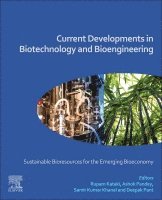
    Current Developments in Biotechnology and Bioengineering

    Sustainable Bioresources for the Emerging Bioeconomy

    AvRupam Kataki,Ashok Pandey

    Häftad, Engelska, 2020

    2 119 kr

    Beställningsvara. Skickas inom 10-15 vardagar. Fri frakt över 249 kr.

    Beskrivning

    Current Developments in Biotechnology and Bioengineering: Sustainable Bioresources for the Emerging Bioeconomy outlines recent advances in bioenergy, biorefinery and the bioeconomy, an essential element for a 21st century bio-based society. The book provides information on biomass and various conversion technologies with different parameters that affect the conversion process. Sections cover different bioproducts, biorefinery systems, energy and greenhouse gas emission balances of bioenergy and biorefinery, and environmental and economic footprints of bioeconomy. Finally, different strategies adopted by developed and developing countries for the promotion and implementation of a bioeconomy concept for a bio-based society are systematically covered.

    The book provides comprehensive information starting from early progress to the latest trends on bioenergy, biorefinery and bioeconomy with special reference to the developed and the developing countries and the linkage between bioeconomy and climate change mitigation in simple scientific language to appeal to a wider audience.


    • Includes the fundamentals and concepts of biomass and bioenergy
    • Outlines recent technology development for biomass conversion
    • Provides concept for different bioproducts
    • Covers global strategies and policies on the development of bioeconomies

    Produktinformation

    • Utgivningsdatum:2020-07-10
    • Mått:191 x 235 x 27 mm
    • Vikt:1 110 g
    • Format:Häftad
    • Språk:Engelska
    • Antal sidor:536
    • Förlag:Elsevier Science
    • ISBN:9780444643094

    Utforska kategorier

    • Tillverkningsteknik inom Naturvetenskap och teknik

    Mer om författaren

    Dr Rupam Kataki is a Professor in the Department of Energy, Tezpur University, Tezpur, Assam, India. He is currently heading the Department. His major research interests are in the fields of utilization of bioresources for biofuels and biomaterials. Dr Kataki has 134 publications, which includes 2 books, 20 book chapters, 41 original research papers, 06 conference full papers and 65 conference publications. He has been an editorial board members of Journal of Biofuels and Bioenergy, International Journal of Energy and Power, International Journal of Renewable Energy Development, Review Editor of Frontiers in Environmental Science. He has been a reviewer of about 30 journals and was Top Reviewer of the journal, Bioresource Technology in the 2017. He has already completed a number of nationally and Internationally collaborative research projects, notable among them is SAHYOG, an Indo-EU project jointly funded by DST and EU under Seventh Framework Programme of EU. He has been a regular proposal reviewer of Government of India’s Department of Science and Technology, DSIR, CSIR-NISTADS. He has been supervising PhD and Master of Technology (MTech) students and has so guided two PhD student and 27 MTech thesis. Prof. Ashok Pandey is currently Executive Director, Centre for Energy and Environmental Sustainability-India, Lucknow. His major research and technological development interests are industrial and environmental biotechnology and energy biosciences, focusing on biomass to biofuels and chemicals, waste to wealth and energy, etc.Dr. Samir Kumar Khanal is a Professor of Biological Engineering at the University of Hawai‘i at Mānoa. Previously, he was a post-doctoral research associate and Research Assistant Professor at Iowa State University for 6 years. Dr. Khanal obtained Ph.D. in Civil Engineering with a focus in Environmental Biotechnology from the Hong Kong University of Science and Technology (HKUST), Hong Kong in 2002. He obtained in M.S. in environmental engineering from Asian Institute of Technology, Thailand in 1997. Dr. Khanal is a leading researcher, internationally in the field of anaerobic digestion, waste-to-resources and environmental biotechnology. Dr. Khanal, to date, has published over 90 refereed papers in high quality international journals. He also delivered over 90 keynote/invited presentation internationally. In addition, he also wrote and published a book entitled “Anaerobic Biotechnology for Bioenergy Production: Principles and Applications” (Wiley-Blackwell, 2008). Dr. Khanal edited another book, as the Lead Editor, entitled “Bioenergy and Biofuel from Biowastes and Biomass” (American Society of Civil Engineers (ASCE), 2010). Both books have become the best-sellers in the respective field. Recently he also published a bioenergy textbook entitled Bioenergy: Principles and Application (Wiley-Blackwell, 2016). He has supervised 11 Ph.D., 16 M.S., 17 undergraduate and 12 high school students, 13 post-docs and 14 visiting scholars. Dr. Khanal is also an editorial board member of the highly prestigious international journal, Bioresource Technology and Korean Journal of Environmental Engineering. He is also a recipient of CTAHR Dean’s Award for Excellence in Research (2016), University of Hawaii at Manoa. Dr. Khanal is a professional engineer (environmental engineering) in the state of Iowa. Deepak Pant is a Senior Scientist at the Flemish Institute for Technological Research (VITO), Belgium, leading the research linked to electrochemical and bioelectrochemical conversion systems with a focus on CO2 conversion in recent years. He has co-authored 194 publications in peer-reviewed journals (13 of which are “highly cited” on Web of Science), 40 book chapters, 6 patents and has edited 6 books on topics as Microbial electrochemistry, LCA, Bioeconomy and Applied Biotechnology. Current h-index is 75 (>16800 citations; Google Scholar). He was recently awarded the Highly Cited Researcher 2022 from Clarivate for multiple highly cited papers in last decade. He is a member of several scientific communities including ISMET, ISE, BES, BRSI, IFIBiop and AMI and was made a fellow of the Biotechnology Research Society of India (BRSI) in 2018 and Royal Society of Chemistry (RSC) in 2021.He is a member of the editorial board of 10 journals, Editor for ‘Bioresource Technology Reports’ (Elsevier) and acts as a peer reviewer for numerous journals. He has participated/participates in >25 projects of which 14 are European projects (FP7/H2020/Horizon Europe) on CO2 conversion, electrode development and resource recovery. He has a wide international network of active collaboration, among them from several European ongoing projects as coordinator, work package leader or partner (E2C, PERFORM, Bac-To-Fuel, VIVALDI, CLUE, CATCHY, ECOMATES, BeHyFe). Dr. Pant supervised 7 researchers in their postdoc position (of which 2 were Marie Curie Fellows), supervised/supervising 8 researchers towards their PhD, supervised 18 master students for their thesis and 6 bachelor students.

    Innehållsförteckning

    • SECTION A: Potential Bioresources1. Bioresources and their significance: prospects and obstacles2. Valorization of agricultural wastes for multi-dimensional use3. Vermicomposting: Earthworms as potent bioresources for biomass conversion4. Unconventional bioresources and their prospects: focus on spent-straw and biochar5. Agro-based industrial wastes as potent sources of alternative energy and organic fertilizers6. Biowaste to Biogas Production: Recent Microbial and Technological Updates7. Merging the margins for beneficial biofuels: An Indian perspective8. An evaluation of different climate matrices used in biomass energy research9. Resource recovery from wastewater: a new approach with alkaline dehydration of urine at source10. Circular Economy: Transforming Useless Solid-Wastes to Useful ProductsSECTION B: Economics of bioresources11. Industrial Perspective of Food Preservatives from Microbial Origin12. Gasification Technologies and Their Energy PotentialsSECTION C: Economic sustainability of the bioresources13. Sustainability analysis of large scale composting of food-wastes14. Valorization of Municipal Solid Waste in Bio-refineries for the Creation of a Circular Economy: Role of Emerging Technologies15. Sustainable agriculture, fishery and forestry for a bioeconomy16. Bio-economy and Environmental Sustainability: A Social, Political and Scientific Nexus Framework for Life Cycle Sustainability Assessment17. Biomass energy with carbon capture and storage (BECCS)SECTION D: Alternative approaches in bioeconomy of bioresources18. Ayurveda and its role in Indian bioeconomy19. Bio-village as a model for bioeconomy 20. Aquaponics for Resource Recovery and Organic Food Productions21. Traditional bioeconomy versus modern technology-based bioeconomy