• Fri frakt över 249 kr
  • •
  • Snabba leveranser
  • •
  • Billiga böcker
Kundservice

Du är på sajten för privatpersoner.

Företag, bibliotek eller offentlig verksamhet?

Du handlar på classic.bokus.com, där alla dina funktioner finns intakta.
Till classic.bokus.com
Bokus logotyp. Gå till startsidan.
  • Erbjudanden
  • Nyheter
  • Student
  • Topplistor
  • Barn & ungdom
  • Bokus Play
  • E-böcker
  • Pocketböcker
  • Spel & pussel

10% rabatt på allt med kod NYSTART10 →

Sidfot

Mina sidor

    Hjälp

    • Kundservice
    • Vanliga frågor och svar
    • Frakt och leverans
    • Retur vid ångerrätt
    • Reklamera vara
    • Betalning
    • Köpvillkor
    • Allmänna villkor
    • Information om webbplatsens tillgänglighet

    Om Bokus

    • Om oss
    • Pressrum
    • För studenter
    • För företag
    • För bibliotek och offentlig verksamhet
    • För leverantörer
    • Hållbarhet

    Populärt

    • Aktuella erbjudanden
    • Presentkort
    • Studentlitteratur
    • Nya böcker
    • Topplistor
    • Signerade böcker
    • Engelska böcker

    Inspiration

    • Boktips
    • BookTok
    • Populära bokserier
    • Barnbokskaraktärer
    • Populära författare
    Logotyp för Bokus
    Följ oss på Facebook (extern länk)Följ oss på Instagram (extern länk)Följ oss på YouTube (extern länk)Följ oss på TikTok (extern länk)
    bokus @ CookiesAnpassa cookiesIntegritetspolicyKöpvillkor
    Till Citymail hemsida (extern länk)Till Budbee hemsida (extern länk)Till Postnord hemsida (extern länk)Till Schenker hemsida (extern länk)Till Early Bird hemsida (extern länk)Till Walleys hemsida (extern länk)
    1. Naturvetenskap och teknik
    2. Teknik och industri
    3. Teknik: allmänt

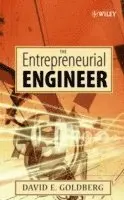
    Entrepreneurial Engineer

    Personal, Interpersonal, and Organizational Skills for Engineers in a World of Opportunity

    AvDavid E. Goldberg

    Inbunden, Engelska, 2006

    762 kr

    Beställningsvara. Skickas inom 5-8 vardagar. Fri frakt över 249 kr.

    Fler format och utgåvor

    E-bok

    883 kr

    Beskrivning

    "Informative, provocative, and practical...developing the skills outlined in The Entrepreneurial Engineer is a necessity for a productive engineering career."—Raymond L. Price, William H. Severns Professor of Human Behavior Director, Illinois Leadership(r) Center, University of Illinois at Urbana-Champaign "I believe that The Entrepreneurial Engineer has the potential to change the landscape of what engineers learn and do."—John R. Koza, former CEO and chairman, Scientific Games Inc. and Consulting Professor, Stanford University"Dr. Goldberg provides the road map for engineers of the future to stay at the front of the wave by learning to think more like entrepreneurs. . . Consider this book your survival handbook for the rest of your life."—From the Foreword by Tim Schigel, Director Blue Chip Venture CompanyEntrepreneurial times call for The Entrepreneurial EngineerIn an age when technology and business are merging as never before, today's engineers need skills matched with the times. Today, career success as an engineer is determined as much by an ability to communicate with coworkers, sell ideas, and manage time as by talent at manipulating a Laplace transform, coding a Java(r) object, or analyzing a statically indeterminate structure.This book covers those nontechnical skills needed by today's entrepreneurial engineers who mix strong technical know-how, business and organizational prowess, and an alert eye for opportunity. Author David Goldberg unlocks the keys to ten core competencies at the heart of what entrepreneurial engineers need to master to be effective in a fast-moving world of deals, teams, startups, and innovating corporations. You'll discover how to: Feel the essence-and the joys-of engineeringExamine personal motivation and set goalsMaster time management and organizationWrite fast and well under pressurePrepare and deliver effective presentationsUnderstand and practice good human relationsAct ethically in matters large, small, and engineeringAssess technology opportunitiesUnderstand teams, leadership, culture, and the organization of organizations

    Produktinformation

    • Utgivningsdatum:2006-10-03
    • Mått:163 x 243 x 17 mm
    • Vikt:454 g
    • Format:Inbunden
    • Språk:Engelska
    • Antal sidor:224
    • Förlag:John Wiley & Sons Inc
    • ISBN:9780470007235

    Utforska kategorier

    • Teknik: allmänt inom Naturvetenskap och teknik

    Mer om författaren

    DAVID E. GOLDBERG is Jerry S. Dobrovolny Distinguished Professor in Entrepreneurial Engineering at the University of Illinois at Urbana-Champaign, where he also serves as the Director of the Illinois Genetic Algorithms Laboratory. He received his BSE, MSE, and PhD, all in civil engineering, from the University of Michigan. From 1976 to 1980 he held a number of positions at Stoner Associates of Carlisle, Pennsylvania, including project engineer and marketing manager.?In 2004, Dr. Goldberg cofounded Nextumi, Inc. (www.nextumi.com), a Web-infrastructure firm, and now serves as Nextumi's Chief Scientist.

    Recensioner i media

    "Although this book is primarily intended for undergraduate engineering students, it may be good for continuing education courses for practicing engineers…recommended." (CHOICE, March 2007) "The author of the book... should be commended…" (The Hebrew University of Jerusalem, January 2007)"…conversational and highly readable…a worthy read for anyone thinking of striking out on their own as an entrepreneurial engineer." (Electronic Design Online, September 11, 2006)"…I recommend this book. There are many fine practical ideas on how to improve oneself." (Computing Reviews.com, February 16, 2006)

    Innehållsförteckning

    • 1. The Entrepreneurial Engineer: Ready for the 21st Century. 1.1 21ST Century Engineers Moving at Internet Time.1.2 Engineering Education, Common Sense & the Real World.1.3 Ten Competencies for the Entrepreneurial Engineer.1.4 Three Principles.1.5 Three Cautions.Exercises.2. The Joy of Engineering.2.1 A Joyous Confession.2.2 Engineering as Liberal Education, Launch Pad & Lifelong Love.2.2.1 Who is Getting a “Liberal Arts” Education Today?.2.2.2 Engineering as Launch Pad.2.2.3 10 ways to Love Engineering.2.3 The Fundamental Tug-of-War.2.4 Science and its Little Secret.2.5 Engineers: First Masters of Modern Enterprise.2.6 Economy of Intellection: Separating Science from Engineering.2.6.1 The Modeling Plane.2.6.2 Spectrum of Models.2.7 Four Tensions Facing the Entrepreneurial Engineer.Summary.Exercises.3. Money, Work, and You.3.1 Money, Moola, the Big Bucks.3.2 The Roads to Wealth: 4 Dinner Table Platitudes.3.3 Hidden Lesson #1: Engagement.3.3.1 Why Engagement Matters.3.3.2 Matching Your Vocational Impedance.3.4 Hidden Lesson #2: Courage.3.4.1 Locus of Control: Internal versus External .3.4.2 Exploring Courage.3.5 Tactical Lessons of Handling Money.3.5.1 Spending and Earning Styles.3.5.2 Spending-Earning Impedance.3.5.3 Investing, Saving, and Thrift.3.6 Get a Life .3.7 Plotting Your Course: Values, Mission, and Goals.3.7.1 Creating a Personal Values Statement .3.7.2 Writing a Personal Mission Statement.3.7.3 Setting Goals .Summary.Exercises.4. Getting Organized and Finding Time.4.1 Time and Its Lack.4.2 Effective Ways to Waste Time.4.3 Seven Keys to Time Management .4.3.1 A Place for Everything.4.3.2 Work for Mr. To Do.4.3.3 Sam Knows: Just Do It.4.3.4 A Trash Can Is a Person’s Best Friend.4.3.5 Tuning Your Reading.4.3.6 Managing Interruptions.4.3.7 Getting Help.Summary.Exercises.5. Write for Your Life.5.1 Engineers, Root Canal, and Writing.5.2 Why Many Engineers Don’t Like to Write.5.3 The Prime Directive of Writing: Just Write.5.3.1 Freewriting.5.3.2 Directed Writing for the Real World.5.4 Getting the Content and Organization Right.5.4.1 The Primary Structure of Business Writing: B-P-R.5.4.2 Lists and Amplification: A Technical Writer’s Best Friend.5.4.3 Sectioning, Titles, and Headings .5.4.4 Summaries, Conclusions, and Distinguishing the Difference.5.5 Edifying Editing .5.6 Improving Your Writing.Summary.Exercises.6. Present, Don’t Speak.6.1 Speeches versus Presentations.6.2 Why Present?.6.3 Preparation Makes the Presentation.6.3.1 Audience Analysis.6.3.2 Subject Selection.6.3.3 Elements of a Presentation.6.3.4 Preparation Process.6.3.5 Transparency Design and Preparation.6.4 Delivery .Summary.Exercises.7. The Human Side of Engineering.7.1 The Human Challenges of Engineering.7.2 Through the Eyes of Others.7.3 Anatomy of a Disagreement.7.4 We Are All Salesmen on this Bus.7.5 The Role of Questions .7.5.1 Questions in Conversation.7.5.2 Questions in Conflict Resolution and Negotiation.7.5.3 Questions in Sales and Persuasion.7.6 Praise .7.7 Criticism.7.8 Engineering is Sometimes Having to Say You’re Sorry.7.9 Wear a Little Passion.Summary.Exercises .8. Ethics in Matters Small, Large, and Engineering.8.1 Is Engineering Ethics Necessarily a Dreadful Bore?.8.2 Ethics: The Systematic Study of Right and Wrong.8.2.1 Golden Rules: Positive and Negative   .8.2.2 Whence Right and Wrong?.8.2.3 An Engineer’s Synthesis of Ethical Theory.8.3 From Ethical Theory to Practice.8.3.1 Self-Interest.8.3.2 Obedience to Authority.8.3.3 Conformity to the Group.8.3.4 Practice Makes Perfect.8.4 From Personal to Engineering Ethics.8.4.1 What is a Profession?.8.4.2 A Tale of Two Codes .8.4.3 Conflicts of Interest.8.4.4 Whistleblowing is Not a First Resort.Summary.Exercises.9. Pervasive Teamwork.9.1 Our Love-Hate Relationship with Teams.9.2 Working Together in Groups to Teams.9.2.1 Groups and Teams: What’s the Difference?.9.2.2 Team Basics.9.2.3 Team Ground Rules ant Their Enforcement.9.3 Understanding the Difficulties of Teamwork.9.3.1 A Little Model of Teamwise Deciding and Doing.9.3.2 A Little Model of Teamwise Conflict (and Creativity).9.4 Why Cooperation Isn’t Easy.9.5 Meetings, Meetings, and More Meetings.9.5.1 Three Little Keys to Meeting Happiness.9.5.2 A Day in the Life of a Typical Problem-Solving Meeting.9.5.3 What’s Wrong?.9.5.4 Structured Brainstorming .9.5.5 Putting Structured Brainstorming to Work.Summary.Exercise.10. Organizations and Leadership.10.1 Organizations and Leadership Matter.10.2 Understanding Human Behavior and Motivation.10.2.1 Bounds on Human Nature.10.2.2 A Unifying Model: Maslow’s Hierarchy of Needs.10.2.3 Theory X and Theory Y.10.2.4 Case of the Sluggish Secretary.10.3 Human Organizations and their Leaders.10.3.1 From Good to Great.10.3.2 The Leadership Challenge.10.4   Organizational Culture: The Gods of Management.10.5 Why Form or Join Organizations?.10.5.1 Optimizing Transactions: A Quantitative Model.10.5.2 An Aside on Free Agency.Summary.Exercises.11. Assessing Technology Opportunities.11.1 Entrepreneurial Engineers Seek Opportunity.11.2 What is an Opportunity?11.3 Sustainable Competitive Advantage: The Making of a Good Opportunity.11.3.1 The Four Ps of Competitive Advantage.11.3.2 The Five Forces of Sustainability.11.4 What is Your Niche?.11.5 Three Financial Mysteries of Opportunity Assessment.11.5.1 Overcoming the Fear of Financials.11.5.2 Prices, Margins, and Breaking Even.11.5.3 The Time Value of Money.11.6 Writing the Technology Opportunity Assessment.11.6.1 Executive Summary.11.6.2 Technology Description.11.6.3 Market Analysis.11.6.4 Preliminary Financial Analysis.11.6.5 Action Plan.Summary.Exercises.References.