• Fri frakt över 249 kr
  • •
  • Snabba leveranser
  • •
  • Billiga böcker
Kundservice

Du är på sajten för privatpersoner.

Företag, bibliotek eller offentlig verksamhet?

Du handlar på classic.bokus.com, där alla dina funktioner finns intakta.
Till classic.bokus.com
Bokus logotyp. Gå till startsidan.
  • Erbjudanden
  • Nyheter
  • Student
  • Topplistor
  • Barn & ungdom
  • Bokus Play
  • E-böcker
  • Pocketböcker
  • Spel & pussel

10% rabatt på allt med kod: NYSTART10 →

Sidfot

Mina sidor

    Hjälp

    • Kundservice
    • Vanliga frågor och svar
    • Frakt och leverans
    • Retur vid ångerrätt
    • Reklamera vara
    • Betalning
    • Köpvillkor
    • Allmänna villkor
    • Information om webbplatsens tillgänglighet

    Om Bokus

    • Om oss
    • Pressrum
    • För studenter
    • För företag
    • För bibliotek och offentlig verksamhet
    • För leverantörer
    • Hållbarhet

    Populärt

    • Aktuella erbjudanden
    • Presentkort
    • Studentlitteratur
    • Nya böcker
    • Topplistor
    • Signerade böcker
    • Engelska böcker

    Inspiration

    • Boktips
    • BookTok
    • Populära bokserier
    • Barnbokskaraktärer
    • Populära författare
    Logotyp för Bokus
    Följ oss på Facebook (extern länk)Följ oss på Instagram (extern länk)Följ oss på YouTube (extern länk)Följ oss på TikTok (extern länk)
    bokus @ CookiesAnpassa cookiesIntegritetspolicyKöpvillkor
    Till Citymail hemsida (extern länk)Till Budbee hemsida (extern länk)Till Postnord hemsida (extern länk)Till Schenker hemsida (extern länk)Till Early Bird hemsida (extern länk)Till Walleys hemsida (extern länk)
    1. Data och IT
    2. Systemvetenskap och AI

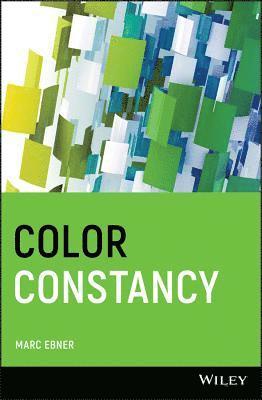
    Color Constancy

    AvMarc Ebner

    Inbunden, Engelska, 2007

    Del 7 i serien Wiley-IS&T Series in Imaging Science and Technology

    1 636 kr

    Beställningsvara. Skickas inom 5-8 vardagar. Fri frakt över 249 kr.

    Fler format och utgåvor

    E-bok

    1 877 kr

    Beskrivning

    A human observer is able to recognize the color of objects irrespective of the light used to illuminate them. This is called color constancy. A digital camera uses a sensor to measure the reflected light, meaning that the measured color at each pixel varies according to the color of the illuminant. Therefore, the resulting colors may not be the same as the colors that were perceived by the observer. Obtaining color constant descriptors from image pixels is not only important for digital photography, but also valuable for computer vision, color-based automatic object recognition, and color image processing in general. This book provides a comprehensive introduction to the field of color constancy, describing all the major color constancy algorithms, as well as presenting cutting edge research in the area of color image processing. Beginning with an in-depth look at the human visual system, Ebner goes on to: examine the theory of color image formation, color reproduction and different color spaces;discuss algorithms for color constancy under both uniform and non-uniform illuminants;describe methods for shadow removal and shadow attenuation in digital images;evaluate the various algorithms for object recognition and color constancy and compare this to data obtained from experimental psychology;set out the different algorithms as pseudo code in an appendix at the end of the book.Color Constancy is an ideal reference for practising engineers, computer scientists and researchers working in the area of digital color image processing. It may also be useful for biologists or scientists in general who are interested in computational theories of the visual brain and bio-inspired engineering systems.

    Produktinformation

    • Utgivningsdatum:2007-04-20
    • Mått:175 x 252 x 25 mm
    • Vikt:1 007 g
    • Format:Inbunden
    • Språk:Engelska
    • Serie:Wiley-IS&T Series in Imaging Science and Technology
    • Antal sidor:408
    • Förlag:John Wiley & Sons Inc
    • ISBN:9780470058299

    Utforska kategorier

    • Systemvetenskap och AI inom Data och IT
    • Övrig teknik och tillämpad vetenskap inom Naturvetenskap och teknik

    Mer om författaren

    MARC EBNER, Lecturer (Privatdozent), Universität Würzburg, Lehrstuhl für Informatik, Am Hubland, 97074 Würzburg, Germany MARC EBNER, is currently a lecturer at the Department of Computer Science, Programming Languages and Programming Methodology, University of Würzburg, Germany. He has been at the university since 1999, recently having completed his habilitation dissertation, on which this book is based. He teaches courses on computer graphics and virtual reality and his research interests are in colour constancy, computer vision, self-reproducing programs, neutral networks, and evolutionary algorithms. Previous to this post, he has gained qualifications from Stuttgart University, New York University and Tubingen University. To date, he has authored 8 published journal articles, 29 refereed conference papers.

    Recensioner i media

    "I think Ebner's Color Constancy is an excellent summary of current algorithms, and provides empirical tests in a womanlike manner … As an inclusive time capsule, it has no parallel, and therefore is a valuable contribution to the field." (Color Research and Application, June 2008)

    Innehållsförteckning

    • Series Preface xiPreface xiii1 Introduction 11.1 What is Color Constancy? 11.2 Classic Experiments 31.3 Overview 72 The Visual System 92.1 Eye and Retina 92.2 Visual Cortex 162.3 On the Function of the Color Opponent Cells 302.4 Lightness 312.5 Color Perception Correlates with Integrated Reflectances 322.6 Involvement of the Visual Cortex in Color Constancy 353 Theory of Color Image Formation 393.1 Analog Photography 413.2 Digital Photography 463.3 Theory of Radiometry 473.4 Reflectance Models 523.5 Illuminants 563.6 Sensor Response 603.7 Finite Set of Basis Functions 634 Color Reproduction 674.1 Additive and Subtractive Color Generation 684.2 Color Gamut 694.3 Computing Primary Intensities 694.4 CIE XYZ Color Space 704.5 Gamma Correction 794.6 Von Kries Coefficients and Sensor Sharpening 835 Color Spaces 875.1 RGB Color Space 875.2 sRGB 875.3 CIE L∗u∗v∗Color Space 895.4 CIE L∗a∗b∗Color Space 925.5 CMY Color Space 935.6 HSI Color Space 935.7 HSV Color Space 965.8 Analog and Digital Video Color Spaces 996 Algorithms for Color Constancy under Uniform Illumination 1036.1 White Patch Retinex 1046.2 The Gray World Assumption 1066.3 Variant of Horn’s Algorithm 1136.4 Gamut-constraint Methods 1156.5 Color in Perspective 1216.6 Color Cluster Rotation 1286.7 Comprehensive Color Normalization 1296.8 Color Constancy Using a Dichromatic Reflection Model 1347 Algorithms for Color Constancy under Nonuniform Illumination 1437.1 The Retinex Theory of Color Vision 1437.2 Computation of Lightness and Color 1547.3 Hardware Implementation of Land’s Retinex Theory 1667.4 Color Correction on Multiple Scales 1697.5 Homomorphic Filtering 1707.6 Intrinsic Images 1757.7 Reflectance Images from Image Sequences 1887.8 Additional Algorithms 1908 Learning Color Constancy 1938.1 Learning a Linear Filter 1938.2 Learning Color Constancy Using Neural Networks 1948.3 Evolving Color Constancy 1988.4 Analysis of Chromatic Signals 2048.5 Neural Architecture based on Double Opponent Cells 2058.6 Neural Architecture Using Energy Minimization 2099 Shadow Removal and Brightening 2139.1 Shadow Removal Using Intrinsic Images 2139.2 Shadow Brightening 21510 Estimating the Illuminant Locally 21910.1 Local Space Average Color 21910.2 Computing Local Space Average Color on a Grid of Processing Elements 22110.3 Implementation Using a Resistive Grid 23010.4 Experimental Results 23711 Using Local Space Average Color for Color Constancy 23911.1 Scaling Input Values 23911.2 Color Shifts 24111.3 Normalized Color Shifts 24611.4 Adjusting Saturation 24911.5 Combining White Patch Retinex and the Gray World Assumption 25112 Computing Anisotropic Local Space Average Color 25512.1 Nonlinear Change of the Illuminant 25512.2 The Line of Constant Illumination 25712.3 Interpolation Methods 25912.4 Evaluation of Interpolation Methods 26212.5 Curved Line of Constant Illumination 26512.6 Experimental Results 26713 Evaluation of Algorithms 27513.1 Histogram-based Object Recognition 27513.2 Object Recognition under Changing Illumination 27913.3 Evaluation on Object Recognition Tasks 28213.4 Computation of Color Constant Descriptors 29013.5 Comparison to Ground Truth Data 29914 Agreement with Data from Experimental Psychology 30314.1 Perceived Color of Gray Samples When Viewed under Colored Light 30314.2 Theoretical Analysis of Color Constancy Algorithms 30514.3 Theoretical Analysis of Algorithms Based on Local Space Average Color 31214.4 Performance of Algorithms on Simulated Stimuli 31614.5 Detailed Analysis of Color Shifts 31914.6 Theoretical Models for Color Conversion 32014.7 Human Color Constancy 32415 Conclusion 327Appendix A Dirac Delta Function 329Appendix B Units of Radiometry and Photometry 331Appendix C Sample Output from Algorithms 333Appendix D Image Sets 339Appendix E Program Code 349Appendix F Parameter Settings 363Bibliography 369List of Symbols 381Index 385Permissions 391