• Fri frakt över 249 kr
  • •
  • Snabba leveranser
  • •
  • Billiga böcker
Kundservice

Du är på sajten för privatpersoner.

Företag, bibliotek eller offentlig verksamhet?

Du handlar på classic.bokus.com, där alla dina funktioner finns intakta.
Till classic.bokus.com
Bokus logotyp. Gå till startsidan.
  • Erbjudanden
  • Nyheter
  • Student
  • Topplistor
  • Barn & ungdom
  • Bokus Play
  • E-böcker
  • Pocketböcker
  • Spel & pussel

10% rabatt på allt med kod NYSTART10 →

Sidfot

Mina sidor

    Hjälp

    • Kundservice
    • Vanliga frågor och svar
    • Frakt och leverans
    • Retur vid ångerrätt
    • Reklamera vara
    • Betalning
    • Köpvillkor
    • Allmänna villkor
    • Information om webbplatsens tillgänglighet

    Om Bokus

    • Om oss
    • Pressrum
    • För studenter
    • För företag
    • För bibliotek och offentlig verksamhet
    • För leverantörer
    • Hållbarhet

    Populärt

    • Aktuella erbjudanden
    • Presentkort
    • Studentlitteratur
    • Nya böcker
    • Topplistor
    • Signerade böcker
    • Engelska böcker

    Inspiration

    • Boktips
    • BookTok
    • Populära bokserier
    • Barnbokskaraktärer
    • Populära författare
    Logotyp för Bokus
    Följ oss på Facebook (extern länk)Följ oss på Instagram (extern länk)Följ oss på YouTube (extern länk)Följ oss på TikTok (extern länk)
    bokus @ CookiesAnpassa cookiesIntegritetspolicyKöpvillkor
    Till Citymail hemsida (extern länk)Till Budbee hemsida (extern länk)Till Postnord hemsida (extern länk)Till Schenker hemsida (extern länk)Till Early Bird hemsida (extern länk)Till Walleys hemsida (extern länk)
    1. Naturvetenskap och teknik
    2. Teknik och industri
    3. Miljöteknik

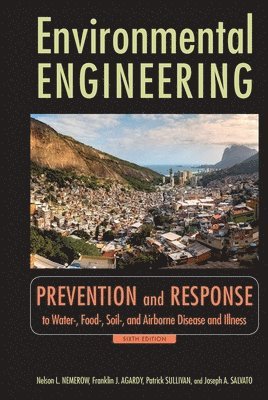
    Environmental Engineering

    Prevention and Response to Water-, Food-, Soil-, and Air-borne Disease and Illness

    AvNelson L. Nemerow,Franklin J. Agardy

    Inbunden, Engelska, 2009

    1 718 kr

    Beställningsvara. Skickas inom 5-8 vardagar. Fri frakt över 249 kr.

    Fler format och utgåvor

    Inbunden

    1 718 kr

    Inbunden

    1 760 kr

    Beskrivning

    Environmental ENGINEERING Environmental ENGINEERINGPREVENTION and RESPONSE to Water-, Food-, Soil-, and Airborne Disease and IllnessSixth Edition First published in 1958, Salvato’s Environmental Engineering has long been the definitive reference for generations of sanitation and environmental engineers. Approaching its fiftieth year of continual publication in a rapidly changing field, the Sixth Edition has been fully reworked and reorganized into three separate, succinct volumes to adapt to a more complex and scientifically demanding field with dozens of specializations. Updated and reviewed by leading experts in the field, this revised edition offers new coverage of appropriate technology for developing countries. Stressing the practicality and appropriateness of treatment, the Sixth Edition provides realistic solutions for the practicing public health official or environmental engineer. This volume, Environmental Engineering: Prevention and Response to Water-, Food-, Soil-, and Airborne Disease and Illness, Sixth Edition covers: Disease transmission by contaminated waterFood-borne diseasesControl of diseases of the air and landAppropriate technology for developing countriesEnvironmental emergencies and emergency preparednessAlso available: Environmental Engineering, Sixth Edition: Water, Wastewater, Soil and Groundwater Treatment and Remediation 978-0-470-08303-1 Environmental Engineering, Sixth Edition: Environmental Health and Safety for Municipal Infrastructure, Land Use & Planning, and Industry 978-0-470-08305-5

    Produktinformation

    • Utgivningsdatum:2009-02-06
    • Mått:158 x 239 x 25 mm
    • Vikt:567 g
    • Format:Inbunden
    • Språk:Engelska
    • Antal sidor:400
    • Upplaga:6
    • Förlag:John Wiley & Sons Inc
    • ISBN:9780470083048

    Utforska kategorier

    • Miljöteknik inom Naturvetenskap och teknik

    Mer om författaren

    The Late NELSON L. NEMEROW, PHD, was an environmental engineering and water consultant. He was a professor at the University of Miami and the former head of Environmental Engineering at Syracuse University. He published over 210 technical papers and twenty-three textbooks.FRANKLIN J. AGARDY, PHD, is founding partner of Forensic Management Associates. As a civil engineering professor, he developed San Jose State’s graduate program in sanitary engineering. He has written, coauthored, or coedited seven textbooks. PATRICK SULLIVAN, PHD, is founding partner of Forensic Management Associates. Prior to his forensics career, he was a senior environmental analyst at the Jet Propulsion Laboratory at the California Institute of Technology. He has written, coauthored, or coedited five textbooks. The Late JOSEPH A. SALVATO served as a sanitary and public health engineer consultant and assistant commissioner in the Division of Sanitary Engineering for the New York State Department of Health. He was also a Fellow of the ASCE and the APHA, and adjunct associate professor at Rensselaer Polytechnic Institute.

    Innehållsförteckning

    • PREFACE xvCONTRIBUTORS xviiCHAPTER 1 DISEASE TRANSMISSION BY CONTAMINATED WATER 1Richard F. UnzIntroduction / 1Control of Source (Agent Factors) / 3Control of Mode of Transmission / 5Control of Susceptibles (Host Factors) / 6Typical Epidemic Control / 8Waterborne Diseases / 12General / 12Survival of Pathogens / 13Substance Dose to Cause Illness / 15Summary of Characteristics and Control of Water- and Foodborne Diseases / 17Vehicle or Means by Which Waterborne Diseases Are Spread / 44Historical Waterborne Disease Background / 45Control and Prevention of Waterborne Diseases / 55Prevention of Waterborne Diseases / 56Schistosomiasis / 58Bioterrorism / 59Smallpox / 61Anthrax / 62Plague / 64Tularemia / 65Glanders / 65Botulism / 66Tetanus or Lockjaw / 67Noninfectious and Noncommunicable Diseases andConditions Associated with the Water Environment / 67Background / 67Prevention and Control / 71Investigation of a Water Disease Outbreak / 72General / 72Samples and Specimens / 81Epidemiology and Risk / 83Molecular Detection of Waterborne Pathogens / 86References / 90Bibliography / 98CHAPTER 2 CONTROL OF DISEASES OF THE AIR AND LAND 99Nabarun DasguptaCommunicable Diseases / 99Background / 99Life Expectancy and Mortality / 101Framework for Disease Transmission / 106Regulatory Authorities in Health / 108Epidemic Control at the Individual Level / 109Behavioral Change / 110Antibiotics and Antivirals / 111Vaccination (or Immunization) / 111Control of Infectious Agents and Vectors / 113Environmental Control of Infectious Diseases / 114Arthropodborne Diseases / 116Zoonoses and Their Spread / 127Infectious Respiratory Diseases / 138Bioterrorism / 141Smallpox / 142Anthrax / 143Noncommunicable Diseases and Conditions Associated with the Environment / 143Background / 143Prevention and Control / 146Environmental Control Legislation / 147Lead Poisoning / 151Carbon Monoxide Poisoning / 154Mercury Poisoning / 155Illnesses Associated with Air Pollution—Lung Diseases / 157Asbestos Diseases / 159Malignant Neoplasms (Cancer) / 160Cardiovascular Diseases / 160Methemoglobinemia / 162Dental Caries / 162Hypothermia / 163High Environmental Temperatures / 163Skin Damage from Sunlight / 164Tap Water Scalds / 165Sporotrichosis / 165Definitions / 165Useful Internet Web Sites / 169References / 169CHAPTER 3 FOODBORNE DISEASES 175Nabarun DasguptaIntroduction / 175Survival of Pathogens / 176Infectious Dose / 177Reservoir or Source of Disease Agents / 178Humans as Reservoirs / 178Animals as Reservoirs / 180Food Spoilage / 181Burden and Cost of Foodborne Illness / 183Foodborne Disease Outbreak Surveillance / 184Poultry / 185Milk and Other Dairy Products / 186Fruits and Vegetables / 188Meat and Seafood / 188Control and Prevention of Foodborne Diseases / 188Prevention of Foodborne Diseases / 188Mercury Poisoning / 197Methemoglobinemia / 199Dental Caries / 200Sporotrichosis / 201Nutritional Deficiency and Related Diseases / 201References / 207CHAPTER 4 APPROPRIATE TECHNOLOGY FOR DEVELOPING COUNTRIES 213Harvey F. LudwigAbbreviations / 213Introduction / 215Background / 215History / 215Problem of Developing Countries / 216Summary of DC Problem / 217Purpose of This Chapter / 219Specific Subjects Included in This Chapter / 220Environmental Governance / 223Introduction / 223Situation in DCs versus United States/ICs / 223What DC and IAA Practitioners Can Do to Correct This Problem / 224Role of the Private Sector / 225Urban Water Supply / 225Situation in United States/ICs / 225Situation in Typical DCs / 226Suggested Approach for Improving IAA Assistance to DCs / 227Appropriate Water Quality Standards / 229Water and Sewer Pipes in Same Trench / 229Reuse of Treated Wastewater / 231IAA-Sponsored Community Water Supply Programs / 231Other Considerations / 232Water Hyacinths / 233Water Quality Analyses / 234Water Quality Monitoring / 238Role of Private Sector / 238Integrated Economic-cum-Environmental Development Planning (IEEDP) / 240Water Resources Management / 240Reducing Water Irrigation Requirement / 241China Studies Sponsored by World Bank / 241Watershed Management / 242Urban Sewerage and Excreta Management (USEM) / 242Situation in ICs / 243Situation in Typical DCs / 245Sewerage-cum-Sanitation Systems for 100 PercentExcreta Management / 247Sewage Treatment Systems / 247Sewage Collection (Including Interceptors, Pumping, Transmission) / 248Sewage Characteristics and Needs for Treatment and Point Source Control / 250Sewage Flow Measurement / 250Appropriate Standards / 251Marine Sewage Disposal / 251Buffer Area Requirements aroundTreatment/Pumping Plants / 253Regional Water Pollution Control / 253Industrial Wastewater Management / 253Situation in ICs versus DCs / 253Discharge into Municipal Sewerage Systems (MSSs) / 255Discharge Directly to Environment / 256Appropriate Standards / 257Cleaner Production (CP) / 257Industrial Estates / 258Marine Disposal / 258Abstract / 260Urban Solid Waste Management / 261Situation in United States versus DCs / 261Practical Sanitary Landfilling Technology for DCs / 261Experience in Asian DCs / 262Alternative Disposal Methods / 264Reclamation of Swamp Lowlands by Refuse Landfilling / 264Urban Air Pollution Control / 269Background / 269Thailand: General Situation / 269Thailand: Sharing of Controls for Multiple Industries / 270Air Pollution Control Experience in India / 272Hazardous Wastes Management / 276Background / 276Guidelines Manual for DCs / 276Megacities: Rural to Urban Migration / 282Background / 282Economic Policies for Sustainable Development (ADB) / 282Existing Situation in the DCs / 283Urban Growth Management/Action Strategy / 285Effective Control of Environmental Degradation / 287Follow-up Evaluation of ADB Study / 288Essay on Urban Population Growth in DCs / 290Urban Slums / 292Background / 292Indonesia Kampung Improvement Projects (KIPs) / 292Urban Sanitation / 295Ports and Harbors / 295Coastal City of Chonburi in Thailand / 296Public Water Supply Taps / 296Rural Sanitation / 298Very Low Priority for Attention / 298WHO Manuals / 298Xiaolangdi Resettlement / 298Farm Animal Manures / 300Handwashing / 300School Sanitation / 301Hazard of Flies / 301Septic Tanks for Coastal Homes on Stilts / 301Water Treatment for Homes Using Surface Waters / 301Public Health / 302Assessment by Asian Development Bank / 302Water Supply and Sanitation / 302Disease Reporting / 303Environmental Impact Assessment (EIA) / 305Difficulties in Application of EIA Process to DCs / 305Effective Use of EIA Process in DCs / 306Recommended EIA Report Components / 309Constraints for Construction Contractors / 310Need for Effective Training / 312Environmental Economics and Financing / 313Inclusion of Environmental Values in ProjectEconomic Analysis (PEA) / 313Effect of EPMs on Project Economic and Financial Analyses / 313Human Greed Parameter / 313Economic-cum-Environmental Development Planning / 314Value of Human Life / 314Protecting Precious Eco-Resources / 314Emergencies Management / 315Technology Transfer (TT) / 315Problem / 315Recommendation / 317Development Planning for DCs / 317Social Parameters: Attention to Rural Poverty Poor / 317Eco-Resources Protection / 319Affordability of Environmental Improvements / 322Integrated Economic-cum-Environmental Development Planning (IEEDP) / 322Global Warming / 323Problem / 323Future of Environment in Developing Countries / 325Problem of DCs / 325Changes in Environmental Policy in the ICs / 325Glimpse of Future / 326Recommendations / 326References / 326CHAPTER 5 ENVIRONMENTAL EMERGENCIES AND EMERGENCY PREPAREDNESS 335Piero M. Armenante and James P. MackIntroduction / 335Emergency Planning for Industrial Facilities / 339Resources / 340Emergency Operations Centers (EOCs) / 341Media Center / 341Communication Equipment and Alarm Systems / 342Firefighting Facilities, Equipment, and Supplies / 344Spill and Vapor Release Control Equipment / 345Medical Facilities, Equipment, and Supplies / 345Meteorological Equipment / 346Security and Access Control Equipment / 346Environmental Testing Systems / 346Emergency Action Levels / 347Emergency Response Organization / 347Initial-Response Organization / 348Full Emergency Response Organization / 349Emergency Director (Site Emergency Coordinator) / 349Response Operations Coordinator / 349Incident Response Commander (IRC, Field Operations Coordinator) / 351Incident Response Team / 351Emergency Functions / 352Emergency Response Actions / 353Concept of Operations / 353Emergency Response Implementing Procedures / 353Environmental Considerations / 354Recovery, Reentry, and Restoration / 354Training, Exercises, and Plan Maintenance / 355Emergency Planning at the Local Level / 356Emergency Management / 356Leadership Commitment / 356Planning Team / 357Planning Process / 358Hazards Analysis / 358Damage Assessment and Recovery Operations / 360Resources / 360Content of the Plan and Procedures / 361Plan Integration / 362Public Information / 363Public Education / 363Public Emergency Notification / 364Conclusion / 364References / 364INDEX 367