• Fri frakt över 249 kr
  • •
  • Snabba leveranser
  • •
  • Billiga böcker
Kundservice

Du är på sajten för privatpersoner.

Företag, bibliotek eller offentlig verksamhet?

Du handlar på classic.bokus.com, där alla dina funktioner finns intakta.
Till classic.bokus.com
Bokus logotyp. Gå till startsidan.
  • Erbjudanden
  • Nyheter
  • Student
  • Topplistor
  • Barn & ungdom
  • Bokus Play
  • E-böcker
  • Pocketböcker
  • Spel & pussel

10% rabatt på allt med kod: NYSTART10 →

Sidfot

Mina sidor

    Hjälp

    • Kundservice
    • Vanliga frågor och svar
    • Frakt och leverans
    • Retur vid ångerrätt
    • Reklamera vara
    • Betalning
    • Köpvillkor
    • Allmänna villkor
    • Information om webbplatsens tillgänglighet

    Om Bokus

    • Om oss
    • Pressrum
    • För studenter
    • För företag
    • För bibliotek och offentlig verksamhet
    • För leverantörer
    • Hållbarhet

    Populärt

    • Aktuella erbjudanden
    • Presentkort
    • Studentlitteratur
    • Nya böcker
    • Topplistor
    • Signerade böcker
    • Engelska böcker

    Inspiration

    • Boktips
    • BookTok
    • Populära bokserier
    • Barnbokskaraktärer
    • Populära författare
    Logotyp för Bokus
    Följ oss på Facebook (extern länk)Följ oss på Instagram (extern länk)Följ oss på YouTube (extern länk)Följ oss på TikTok (extern länk)
    bokus @ CookiesAnpassa cookiesIntegritetspolicyKöpvillkor
    Till Citymail hemsida (extern länk)Till Budbee hemsida (extern länk)Till Postnord hemsida (extern länk)Till Schenker hemsida (extern länk)Till Early Bird hemsida (extern länk)Till Walleys hemsida (extern länk)
    1. Ekonomi och Ledarskap
    2. Företagsekonomi
    3. Redovisning och finansiering
    4. Finansiering

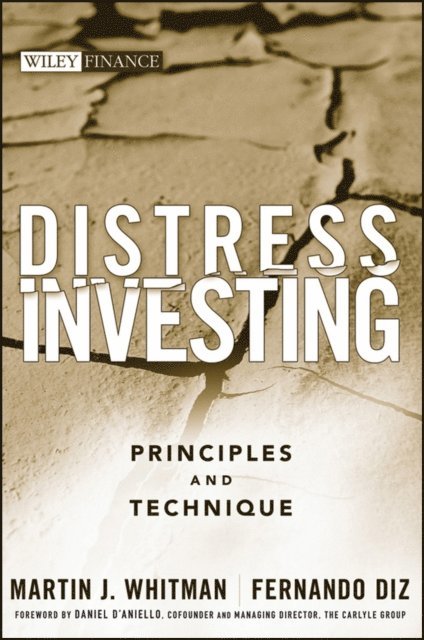
    Distress Investing

    Principles and Technique

    AvMartin J. Whitman,Fernando Diz

    Inbunden, Engelska, 2009

    Del 397 i serien Wiley Finance

    532 kr

    Beställningsvara. Skickas inom 5-8 vardagar. Fri frakt över 249 kr.

    Beskrivning

    Financial innovation, new laws and regulations, and the financial meltdown of 2007–2008 are just a few of the forces that have shaped, and continue to shape, today's distress investment environment. Combine this with the fact that the discipline of distress investing doesn't always follow what conventional wisdom says, and you can see why it is one of the most challenging areas in finance. Nobody understands this better than Martin Whitman—the legendary founder of Third Avenue Management LLC and a pioneer in the field of distressed markets—and leading academic Dr. Fernando Diz of Syracuse University. That's why they decided to write Distress Investing. As an outgrowth of annual distress and value investing seminars the two have taught together at Syracuse University's Martin J. Whitman School of Management, this reliable resource will help you gain a better understanding of the essential principles and techniques associated with distress investing and show you how to effectively apply them in the real world. Divided into four comprehensive parts—the General Landscape of Distress Investing, Restructuring Troubled Issuers, the Investment Process, and Cases and Implications for Public Policy—this book comprehensively covers the practice of buy-and-hold investing in distressed credits, whether it be performing loans or the reinstated issues of a reorganized issuer. From the recent changes to U.S. bankruptcy code and creditor rights to cash bailouts, you'll quickly learn how to analyze distressed situations such as pricing issues, arbitrage opportunities, tax disadvantages, and the reorganization of funding plans. Along the way, case studies of both large and small distress investing deals—from Kmart to Home Products International—will give you a better perspective of the business. Critical topics addressed throughout these pages include: Chapter 11 bankruptcy and why it's not considered an ending, but rather a beginning when it comes to distress investingThe "Five Basic Truths" of distress investingThe difficulty of due diligence for distressed issuesDistress investing risks—from reorganization risk to risk associated with the alteration of priority of payments in bankruptcyValuing companies by both going concern as well as their resource conversion attributesIn today's turbulent economic environment, distress investing presents some enticing opportunities. Put yourself in a better position to excel at this endeavor with Distress Investing as your guide.

    Produktinformation

    • Utgivningsdatum:2009-04-29
    • Mått:155 x 229 x 33 mm
    • Vikt:454 g
    • Format:Inbunden
    • Språk:Engelska
    • Serie:Wiley Finance
    • Antal sidor:272
    • Förlag:John Wiley & Sons Inc
    • ISBN:9780470117675

    Utforska kategorier

    • Finansiering inom Ekonomi och Ledarskap

    Mer om författaren

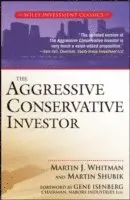
    MARTIN J. WHITMAN is Chairman and co-CIO of Third Avenue Management LLC. He has taught courses in value investing and distressed investing for the past thirty years at the Schools of Management at both Syracuse University and Yale University. Whitman is also the author of the Wiley titles Value Investing and The Aggressive Conservative Investor. FERNANDO DIZ is the Martin J. Whitman Associate Professor of Finance and Director of the Ballentine Investment Institute at Syracuse University. His research specialties are in the areas of trading, derivative securities, and value and distress investing. Diz has written for the Journal of Futures Markets, the Review of Financial Studies, and the Journal of Alternative Investments.

    Recensioner i media

    “…this is the best book that I have read since The Black Swan…do yourself a favor and pick up a copy; you'd be crazy not to.” (SeekingAlpha.com, June 11, 2009)

    Innehållsförteckning

    • Foreword xiiiPreface xvAcknowledgments xxiiPart One The General Landscape Of Distress InvestingChapter 1 The Changed Environment 3Trends in Corporate Debt Growth and Leverage before the Financial Meltdown of 2007–2008 4Junk Bonds and the Levering-Up Period 6The Syndicated Loan Market and Leveraged Loans 12Financial Meltdown of 2007–2008 16Principal Provisions of the 2005 Bankruptcy Act as They Affect Chapter 11 Reorganizations of Businesses 22Chapter 2 The Theoretical Underpinning 27What Market? 27Toward a General Theory of Market Efficiency 29External Forces Influencing Markets Explained 32What Risk? 34Capital Structure and Credit Risk 38Valuation 39The Company as a Stand-Alone Entity 41Control and Its Vital Importance 42Chapter 3 The Causes of Financial Distress 43Lack of Access to Capital Markets 44Deterioration of Operating Performance 46Deterioration of GAAP Performance 48Large Off-Balance-Sheet Contingent Liabilities 51Chapter 4 Deal Expenses and Who Bears Them 53Attorneys and Financial Advisers’ Compensation Structure and the Distribution of the Fee Pie 54Time in Chapter 11 and Number of Legal Firms Retained 66Determinants of Legal Fees and Expenses 67Determinants of Financial Advisers’ Fees and Expenses 68Can Professional Costs Be Excessive? 68Appendix 69Chapter 5 Other Important Issues 71Management Compensation and Entrenchment 71Tax and Political Disadvantages 73Chapter 6 The Five Basic Truths of Distress Investing 77Truth 1: No One Can Take Away a Corporate Creditor’s Right to a Money Payment Outside of Chapter 11 or Chapter 7 78Truth 2: Chapter 11 Rules Influence All Reorganizations 82Truth 3: Substantive Characteristics of Securities 84Truth 4: Restructurings Are Costly for Creditors 86Truth 5: Creditors Have Only Contractual Rights 87Part Two Restructuring Troubled IssuersChapter 7 Voluntary Exchanges 91Problems with Voluntary Exchanges 92The Holdout Problem Illustrated 93Making a Voluntary Exchange Work 94Tax Disadvantages of a Voluntary Exchange versus Chapter 11 Reorganization 95Chapter 8 A Brief Review of Chapter 11 99Liquidations and Reorganizations 100Starting a Case: Voluntary versus Involuntary Petitions 100Forum Shopping 101Parties in a Chapter 11 Case 101Administration of a Chapter 11 Case 103The Chapter 11 Plan 109Chapter 9 The Workout Process 117Parties and Their Differing Needs and Desires 117Types of Chapter 11 Cases 120Leverage Factors in Chapter 11 125Part Three The Investment ProcessChapter 10 How to Analyze: Valuation 133Strict Going Concern Valuation 134Resource Conversion Valuation 146Liquidation Valuations 148Chapter 11 Due Diligence for Distressed Issues 151Chapter 12 Distress Investing Risks 157Risks Associated with the Alteration of Priorities 158Risks Associated with Collateral or Enterprise Valuation 165Reorganization Risks 168Other Risks 168Chapter 13 Form of Consideration Versus Amount Of Consideration 171Part Four Cases and Implications for Public PolicyChapter 14 Brief Case Studies of Distressed Securities, 2008–2009 177Performing Loans Likely to Remain Performing Loans 178Small Cases 182Large Cases 184Capital Infusions into Troubled Companies 184Chapter 15 A Small Case : Home Products International 187The Early Years 188Growth by Acquisitions 189Retail Industry Woes 192The Fight for Control 195Amendment of Indenture and Event of Default 196The Decision: Prepackaged Chapter 11 197Treatment of Impaired Classes under the Plan 198Financial Means for Implementation of the Plan 199Going-Concern and Liquidation Valuations 199Chapter 16 A Large Reorganization Case: Kmart Corporation 203Landlords and Unexpired Leases 204Vendors and Critical Vendor Motions 206Management and KERPs Pre-2005 BAPCPA 208Fraudulent Transfers 209Subsidiary Guarantees and Substantive Consolidation 210Chapter 11 Committees and Out-of-Control Professional Costs 211Blocking Positions 211Buying Claims in Chapter 11 214Debtor-in-Possession Financing 215Kmart’s Plan of Reorganization and Plan Investors 218Investment Performance 222Chapter 17 An Ideal Restructuring System 225Feasibility and Cash Bailouts 226Good Enough Rather Than Ideal 226Highly Beneficial Elements in the U.S. Restructuring System 226Goals of an Ideal Restructuring System 228Suggested Reforms 229Notes 233About the Authors 238Index 239