• Fri frakt över 249 kr
  • •
  • Snabba leveranser
  • •
  • Billiga böcker
Kundservice

Du är på sajten för privatpersoner.

Företag, bibliotek eller offentlig verksamhet?

Du handlar på classic.bokus.com, där alla dina funktioner finns intakta.
Till classic.bokus.com
Bokus logotyp. Gå till startsidan.
  • Erbjudanden
  • Nyheter
  • Student
  • Topplistor
  • Barn & ungdom
  • Bokus Play
  • E-böcker
  • Pocketböcker
  • Spel & pussel

Må bättre, för mindre! Upp till 50% rabatt på hälsoböcker

Sidfot

Mina sidor

    Hjälp

    • Kundservice
    • Vanliga frågor och svar
    • Frakt och leverans
    • Retur vid ångerrätt
    • Reklamera vara
    • Betalning
    • Köpvillkor
    • Allmänna villkor
    • Information om webbplatsens tillgänglighet

    Om Bokus

    • Om oss
    • Pressrum
    • För studenter
    • För företag
    • För bibliotek och offentlig verksamhet
    • För leverantörer
    • Hållbarhet

    Populärt

    • Aktuella erbjudanden
    • Presentkort
    • Studentlitteratur
    • Nya böcker
    • Topplistor
    • Signerade böcker
    • Engelska böcker

    Inspiration

    • Boktips
    • BookTok
    • Populära bokserier
    • Barnbokskaraktärer
    • Populära författare
    Logotyp för Bokus
    Följ oss på Facebook (extern länk)Följ oss på Instagram (extern länk)Följ oss på YouTube (extern länk)Följ oss på TikTok (extern länk)
    bokus @ CookiesAnpassa cookiesIntegritetspolicyKöpvillkor
    Till Citymail hemsida (extern länk)Till Budbee hemsida (extern länk)Till Postnord hemsida (extern länk)Till Schenker hemsida (extern länk)Till Early Bird hemsida (extern länk)Till Walleys hemsida (extern länk)
    1. Psykologi och pedagogik
    2. Psykologi
    3. Biologisk psykologi och neuropsykologi

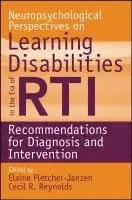
    Neuropsychological Perspectives on Learning Disabilities in the Era of RTI

    Recommendations for Diagnosis and Intervention

    AvElaine Fletcher-Janzen,Cecil R. Reynolds

    Häftad, Engelska, 2008

    795 kr

    Beställningsvara. Skickas inom 5-8 vardagar. Fri frakt över 249 kr.

    Beskrivning

    An insightful look at the role of neuroscience and neuropsychology as it relates to Response to Intervention (RTI) in learning disability diagnosis, treatment, and policy reform Neuropsychological Perspectives on Learning Disabilities in the Era of RTI is a revolutionary new volume presenting the latest research—in question-and-answer format—from leading scholars about the contributions of neuroscience and neuropsychology as it relates to Response to Intervention (RTI) in learning disability identification, diagnosis, and recommended interventions. This collective work includes contributions from more than thirty neuroscientists, neuropsychologists, clinical psychologists, and school psychologists with training in brain-behavior relationships, who explore the answers to questions including: How do you reconcile RTI as a means of diagnosis of learning disability with knowledge from the clinical neurosciences??What do you think neuroscience has to offer laws and policies associated with learning disability determination?What do you think neuroscience has to offer the assessment and identification of learning disabilities?What role does neurocognitive science play in designing interventions in the context of RTI?What role does neuropsychology have to play in the diagnosis of learning disability?Featuring contributions from leaders in the field of neuropsychology and school psychology, and with a Foreword from Sally Shaywitz, Neuropsychological Perspectives on Learning Disabilities in the Era of RTI illuminates the contributions of neuro-science and neuropsychology to learning disability identification and current educational reform.

    Produktinformation

    • Utgivningsdatum:2008-03-07
    • Mått:160 x 234 x 24 mm
    • Vikt:494 g
    • Format:Häftad
    • Språk:Engelska
    • Antal sidor:352
    • Förlag:John Wiley & Sons Inc
    • ISBN:9780470225271

    Utforska kategorier

    • Biologisk psykologi och neuropsykologi inom Psykologi och pedagogik
    • Neurologi och klinisk neurofysiologi inom Medicin

    Mer om författaren

    Elaine Fletcher-Janzen, EdD, NCSP, has been a school psychologist in the public schools and neuropsychiatric inpatient settings for the past twenty-four years. She has coedited and authored fourteen books and reference works. Cecil R. Reynolds, PhD, is the author of more than 300 scholarly publications and author or editor of forty-five books including the Encyclopedia of Special Education, Third Edition (Wiley) with Elaine Fletcher-Janzen. He is Editor of Applied Neuropsychology and author of several widely used tests of personality and behavior.

    Recensioner i media

    "In summary, this is an excellent book that meets a real need in the field as it seeks to meld two opposing viewpoints to further the field of learning disabilities. Rather than continue the endless debate, it recommends taking the best of both techniques. It is an excellent resource for practitioners, particularly neuropsychologists and school psychologists." (PsycCRITIQUES, September 3rd, 2008)

    Innehållsförteckning

    • Chapter 1. Neuropsychology and Specific Learning Disabilities: Lessons from the Past as a Guide to Present Controversies and Future Clinical Practice (By Alan S. Kaufman). Chapter 2. RTI, Neuroscience, and Sense: Chaos in the Diagnosis and Treatment of Learning Disabilities (By Cecil R. Reynolds).Chapter 3. Neuroscience and RTI: A Complementary Role (By H. Lee Swanson).Chapter 4. The Education Empire Strikes Back: Will RTI Displace Neuropsychology and Neuroscience from the Realm of Learning Disabilities (By Merrill Hiscock and Marcel Kinsbourne)?Chapter 5. Nature-Nurture Perspectives in Diagnosing and Treating Learning Disabilities: Response to Questions Begging Answers That See the Forest and the Trees (By Virginia W. Berninger and James A. Holdnack).Chapter 6. Compatibility of Neuropsychology and RTI in the Diagnosis and Assessment of Learning Disabilities (By Cynthia A. Riccio).Chapter 7. Assessment versus Testing and its Importance in Learning Disability Diagnosis (By Julie A. Suhr).Chapter 8. Comprehensive Assessment Must Play a Role in RTI (By Steven J. Hughes).Chapter 9. The Need to Integrate Cognitive Neuroscience and Neuropsychology into a RTI Model (By Daniel C. Miller).Chapter 10. Neuropsychological Assessment and RTI in the Assessment of Learning Disabilities: Are They Mutually Exclusive (By David Breiger and Lawrence V. Majovski)?Chapter 11. Learning Disabilities: Complementary Views from Neuroscience, Neuropsychology, and Public Health (By Ronald T. Brown, Brian P. Daly, and Gerry A. Stefanatos).Chapter 12. Integrating Science and Practice in Education (By Richard Boada, Margaret Riddle, and Bruce F. Pennington).Chapter 13. Perspectives on RTI from Neuropsychology (By Scott L. Decker, Jessica A. Carboni, and Kimberly B. Oliver).Chapter 14. Neuropsychological Aspects of Learning Disabilities Determination: Scientific and Cultural Considerations (By Sangeeta Dey).Chapter 15. Identifying a Learning Disability: Not Just Product, but Process (By Colin D. Elliott).Chapter 16. Integrating RTI with Cognitive Neuroscience in the Assessment of Learning Disabilities (By Steven G. Feifer).Chapter 17. Neuropsychology and the Implications for Policy, Diagnosis, and RTI By Lisa A. Pass and Raymond S. Dean).Chapter 18. Neuroscience, Neuropsychology, and Education: Learning to Work and Play Well with Each Other (By Michael D. Franzen).Chapter 19. Diagnosing Learning Disabilities in Non-Majority Groups: The Challenges and Problems of Applying Non-Neuropsychological Approaches (By Javier Gontier and Antonio E. Puente).Chapter 20. The Role of Neuroscience and Neuropsychology in the Diagnosis of Learning Differences and the RTI Paradigm (By Sally L. Kemp and Marit Korkman).Chapter 21. Q & A about the Role of Neuroscience and Neuropsychology in the Assessment and Treatment of Learning Disorders (By Rosemarie Scolaro Moser).Chapter 22. RTI and Neuropsychology: Antithesis or Synthesis (By Andrew L. Schmitt, Ronald B. Livingston, and Owen Carr).Chapter 23. Utilizing RTI as an Opportunity to Identify and Plan More Effective Educational Interventions for Children with Learning Disabilities (By Amy Nilson Connery).Chapter 24. Neuropsychology, Neuroscience, and Learning Disabilities: Brain Behavior Relationships (By Arthur MacNeill Horton, Jr.).Chapter 25. Knowing Is Not Enough -- We Must Apply. Willing Is Not Enough – We Must Do (By Elaine Fletcher-Janzen).