• Fri frakt över 249 kr
  • •
  • Snabba leveranser
  • •
  • Billiga böcker
Kundservice

Du är på sajten för privatpersoner.

Företag, bibliotek eller offentlig verksamhet?

Du handlar på classic.bokus.com, där alla dina funktioner finns intakta.
Till classic.bokus.com
Bokus logotyp. Gå till startsidan.
  • Erbjudanden
  • Nyheter
  • Student
  • Topplistor
  • Barn & ungdom
  • Bokus Play
  • E-böcker
  • Pocketböcker
  • Spel & pussel

10% rabatt på allt med kod NYSTART10 →

Sidfot

Mina sidor

    Hjälp

    • Kundservice
    • Vanliga frågor och svar
    • Frakt och leverans
    • Retur vid ångerrätt
    • Reklamera vara
    • Betalning
    • Köpvillkor
    • Allmänna villkor
    • Information om webbplatsens tillgänglighet

    Om Bokus

    • Om oss
    • Pressrum
    • För studenter
    • För företag
    • För bibliotek och offentlig verksamhet
    • För leverantörer
    • Hållbarhet

    Populärt

    • Aktuella erbjudanden
    • Presentkort
    • Studentlitteratur
    • Nya böcker
    • Topplistor
    • Signerade böcker
    • Engelska böcker

    Inspiration

    • Boktips
    • BookTok
    • Populära bokserier
    • Barnbokskaraktärer
    • Populära författare
    Logotyp för Bokus
    Följ oss på Facebook (extern länk)Följ oss på Instagram (extern länk)Följ oss på YouTube (extern länk)Följ oss på TikTok (extern länk)
    bokus @ CookiesAnpassa cookiesIntegritetspolicyKöpvillkor
    Till Citymail hemsida (extern länk)Till Budbee hemsida (extern länk)Till Postnord hemsida (extern länk)Till Schenker hemsida (extern länk)Till Early Bird hemsida (extern länk)Till Walleys hemsida (extern länk)
    1. Naturvetenskap och teknik
    2. Matematik och naturvetenskap
    3. Kemi

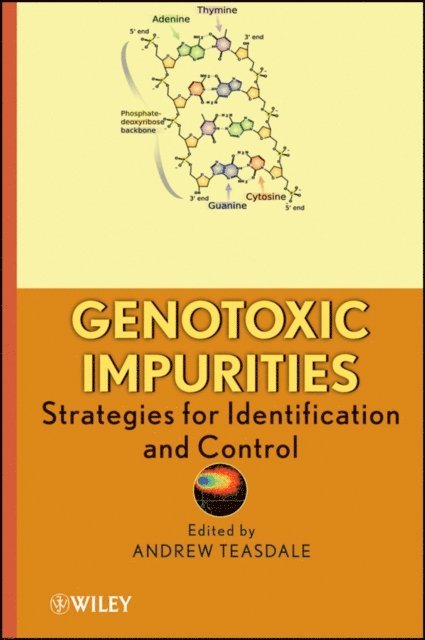
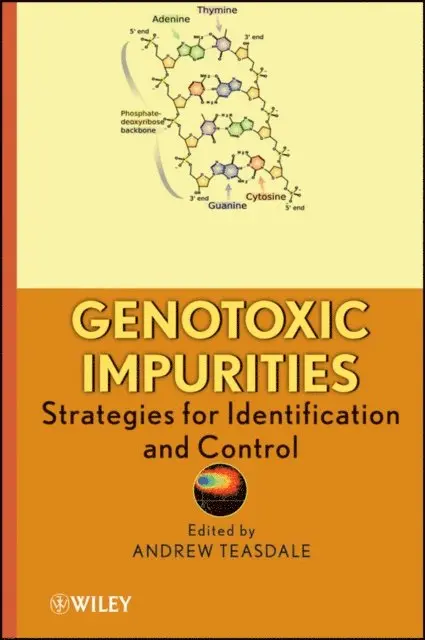
    Genotoxic Impurities

    Strategies for Identification and Control

    AvAndrew Teasdale

    Inbunden, Engelska, 2011

    1 843 kr

    Beställningsvara. Skickas inom 5-8 vardagar. Fri frakt över 249 kr.

    Beskrivning

    This book examines genotoxic impurities and their impact on the pharmaceutical industry. Specific sections examine this from both a toxicological and analytical perspective. Within these sections, the book defines appropriate strategies to both assess and ultimately control genotoxic impurities, thus aiding the reader to develop effective control measures. An opening section covers the development of guidelines and the threshold of toxicological concern (TTC) and is followed by a section on safety aspects, including safety tests in vivo and vitro, and data interpretation. The second section addresses the risk posed by genotoxic impurities from outside sources and from mutagens within DNA. In the final section, the book deals with the quality perspective of genotoxic impurities focused on two critical aspects, the first being the analysis and the second how to practically evaluate the impurities.

    Produktinformation

    • Utgivningsdatum:2011-02-15
    • Mått:163 x 241 x 28 mm
    • Vikt:758 g
    • Format:Inbunden
    • Språk:Engelska
    • Antal sidor:448
    • Förlag:John Wiley & Sons Inc
    • ISBN:9780470499191

    Utforska kategorier

    • Kemi inom Naturvetenskap och teknik
    • Medicinsk genetik inom Medicin

    Mer om författaren

    ANDREW TEASDALE, PhD, is a senior QA executive with AstraZeneca and chairs the company's internal genotoxic impurities advisory group. With over fifteen years of experience in analytical chemistry and quality assurance, Dr. Teasdale has published a number of papers relating to GIs and has been a speaker on genotoxic impurities at a number of conferences. Dr. Teasdale has also led two expert groups working in the field of genotoxic impurities, including an analytical group in the UK and a Project Quality Research Institute (PQRI) working group, which focused on the critical area of sulfonate ester formation and control.

    Recensioner i media

    “This book is a valuable resource when dealing with genotoxic impurities. Its publication is timely considering the new ICH M7 guideline under discussion. I highly recommend the book to toxicology and CMC professionals and to anyone with a general interest in genotoxic impurities.”  (Drug Information Journal, 1 March 2012)"This is an unmatched resource for understanding current regulations that guide the development of pharmaceuticals with respect to genotoxic substances, including the foundational principles upon which these guidelines were established. Armed with this knowledge, readers will appreciate the assessment of analytical techniques to control genotoxic impurities to a level that preserves both drug safety and quality throughout the development process." (Doody's, 26 August 2011)"This is a very good book and addresses the issue in a very sensible, dare I say it, pragmatic approach." (The British Toxicology Society Journal, 1 May 2011)"Overall, a valuable addition to a pharmaceutical scientists' library. The topics covered are relevant and of interest to various ‘stake-holders' in the drug development arena, including chemists, analysts and programme managers. I can recommend it." (Journal of Organic Process Research & Development, 2011)"The style throughout is easy to read and content readily digested, especially those chapters [on] chemical process development and early-phase API development ... From a more practical point of view, the contents are well set out, and indexing appeared appropriate. ... Overall, a valuable addition to a pharmaceutical scientist's library. The topics covered are relevant and of interest to various ‘stake-holders' in the drug development arena, including chemists, analysts, and programme managers. I can recommend it." (American Chemical Society, 2011)

    Innehållsförteckning

    • Foreword ixPreface xiContributors xiiiPart 1 Development of Genotoxic Impurities Guidelines and the Threshold of Toxicological Concern ConceptChapter 1 Historical Overview of the Development of Genotoxic Impurities Guidelines and TheirImpact 3Ron Ogilvie and Andrew TeasdaleChapter 2 Development of the Threshold of Toxicological Concern Concept and Its Relationship toDuration of Exposure 27Alessandro Brigo and Lutz MüllerPart 2 Evaluation of Genotoxic Risk from a Preclinical PerspectiveChapter 3 Genetic Toxicity Testing to Qualify Alerting Impurities 67Mike O’DonovanChapter 4 Use of Structure Activity Relationship (SAR) Evaluation as a Critical Tool in the Evaluation ofthe Genotoxic Potential of Impurities 97Susanne Glowienke and Catrin HasselgrenChapter 5 Compound-specific Risk Assessments for Genotoxic Impurities: Examples and Issues 121Andrew Teasdale and Charles HumfreyChapter 6 Human Genotoxic Metabolites: Identification and Risk Management 151Krista Dobo, Don Walker, and Andrew TeasdalePart 3 Perspective on Risk Posed by Genotoxic ImpuritiesChapter 7 Genotoxic Thresholds 171Gareth J.S. Jenkins, George E. Johnson, James M. Parry, and Shareen H. DoakChapter 8 Genotoxic Impurities: A Risk in Perspective 193Dave Elder and Jim HarveyPart 4 Assessment of Genotoxic Risk: Quality PerspectiveChapter 9 Strategies for the Evaluation of Genotoxic Impurity Risk 221Andrew Teasdale, Dave Elder, and Simon FennerChapter 10 Analysis of Genotoxic Impurities: Review of Approaches 249Dave ElderChapter 11 Development of a Strategy for Analysis of Genotoxic Impurities 281Andrew BakerChapter 12 Strategic Approaches to the Chromatographic Analysis of Genotoxic Impurities 305Frank David, Karine Jacq, Gerd Vanhoenacker, and Pat SandraChapter 13 Analysis of Genotoxic Impurities by Nuclear Magnetic Resonance Spectroscopy 351Andrew PhillipsChapter 14 Mechanism and Processing Parameters Affecting the Formation of Sulfonate Esters:Summary of the Product Quality Research Institute Studies 385Andrew TeasdaleChapter 15 Aspects to Consider When Low-level Active Pharmaceutical Ingredient/Drug ProductDegradants Have the Potential for Genotoxicity 409Alan P. McKeown and Andrew Teasdale Index 423