• Fri frakt över 249 kr
  • •
  • Snabba leveranser
  • •
  • Billiga böcker
Kundservice

Du är på sajten för privatpersoner.

Företag, bibliotek eller offentlig verksamhet?

Du handlar på classic.bokus.com, där alla dina funktioner finns intakta.
Till classic.bokus.com
Bokus logotyp. Gå till startsidan.
  • Erbjudanden
  • Nyheter
  • Student
  • Topplistor
  • Barn & ungdom
  • Bokus Play
  • E-böcker
  • Pocketböcker
  • Spel & pussel

10% rabatt på allt med kod NYSTART10 →

Sidfot

Mina sidor

    Hjälp

    • Kundservice
    • Vanliga frågor och svar
    • Frakt och leverans
    • Retur vid ångerrätt
    • Reklamera vara
    • Betalning
    • Köpvillkor
    • Allmänna villkor
    • Information om webbplatsens tillgänglighet

    Om Bokus

    • Om oss
    • Pressrum
    • För studenter
    • För företag
    • För bibliotek och offentlig verksamhet
    • För leverantörer
    • Hållbarhet

    Populärt

    • Aktuella erbjudanden
    • Presentkort
    • Studentlitteratur
    • Nya böcker
    • Topplistor
    • Signerade böcker
    • Engelska böcker

    Inspiration

    • Boktips
    • BookTok
    • Populära bokserier
    • Barnbokskaraktärer
    • Populära författare
    Logotyp för Bokus
    Följ oss på Facebook (extern länk)Följ oss på Instagram (extern länk)Följ oss på YouTube (extern länk)Följ oss på TikTok (extern länk)
    bokus @ CookiesAnpassa cookiesIntegritetspolicyKöpvillkor
    Till Citymail hemsida (extern länk)Till Budbee hemsida (extern länk)Till Postnord hemsida (extern länk)Till Schenker hemsida (extern länk)Till Early Bird hemsida (extern länk)Till Walleys hemsida (extern länk)
    1. Naturvetenskap och teknik
    2. Teknik och industri
    3. Maskinteknik och material

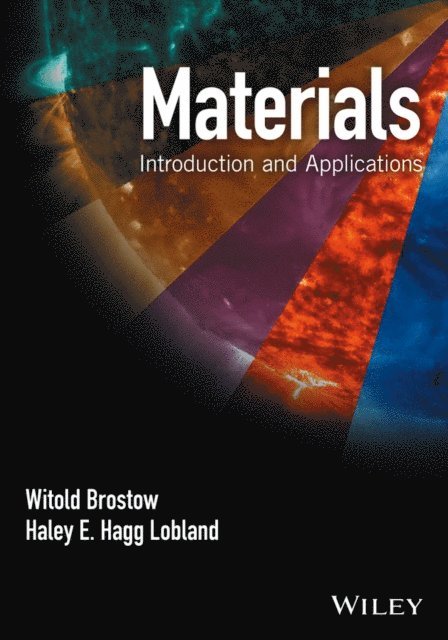
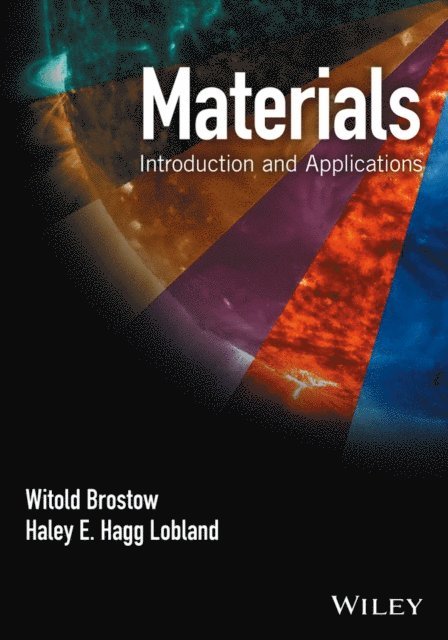
    Materials

    Introduction and Applications

    AvWitold Brostow,Haley E. Hagg Lobland

    Inbunden, Engelska, 2016

    1 539 kr

    Beställningsvara. Skickas inom 11-20 vardagar. Fri frakt över 249 kr.

    Beskrivning

    Presents a fully interdisciplinary approach with a stronger emphasis on polymers and composites than traditional materials booksMaterials science and engineering is an interdisciplinary field involving the properties of matter and its applications to various areas of science and engineering. Polymer materials are often mixed with inorganic materials to enhance their mechanical, electrical, thermal, and physical properties. Materials: Introduction and Applications addresses a gap in the existing textbooks on materials science.This book focuses on three Units. The first, Foundations, includes basic materials topics from Intermolecular Forces and Thermodynamics and Phase Diagrams to Crystalline and Non-Crystalline Structures. The second Units, Materials, goes into the details of many materials including Metals, Ceramics, Organic Raw Materials, Polymers, Composites, Biomaterials, and Liquid Crystals and Smart Materials. The third and final unit details Behavior and Properties including Rheological, Mechanical, Thermophysical, Color and Optical, Electrical and Dielectric, Magnetic, Surface Behavior and Tribology, Materials, Environment and Sustainability, and Testing of Materials.Materials: Introduction and Applications features: Basic and advanced Materials conceptsInterdisciplinary information that is otherwise scattered consolidated into one workLinks to everyday life application like electronics, airplanes, and dental materialsCertain topics to be discussed in this textbook are more advanced. These will be presented in shaded gray boxes providing a two-level approach. Depending on whether you are a student of Mechanical Engineering, Electrical Engineering, Engineering Technology, MSE, Chemistry, Physics, etc., you can decide for yourself whether a topic presented on a more advanced level is not important for you—or else essential for you given your professional profileWitold Brostow is Regents Professor of Materials Science and Engineering at the University of North Texas. He is President of the International Council on Materials Education and President of the Scientific Committee of the POLYCHAR World Forum on Advanced Material (42 member countries). He has three honorary doctorates and is a Member of the European Academy of Sciences, Member of the National Academy of Sciences of Mexico, Foreign Member of the National Academy of Engineering of Georgia in Tbilisi and Fellow of the Royal Society of Chemistry in London. His publications have been cited more than 7200 times.Haley Hagg Lobland is the Associate Director of LAPOM at the University of North Texas. She is a Member of the POLYCHAR Scientific Committeee. She has received awards for her research presented at conferences in: Buzios, Rio de Janeiro, Brazil;  NIST, Frederick, Maryland;  Rouen, France;  and Lviv, Ukraine. She has lectured in a number of countries including Poland and Spain. Her publications include joint ones with colleagues in Egypt, Georgia, Germany, India, Israel, Mexico, Poland, Turkey and United Kingdom.

    Produktinformation

    • Utgivningsdatum:2016-11-22
    • Mått:180 x 257 x 28 mm
    • Vikt:1 089 g
    • Format:Inbunden
    • Språk:Engelska
    • Antal sidor:480
    • Förlag:John Wiley & Sons Inc
    • ISBN:9780470523797

    Utforska kategorier

    • Maskinteknik och material inom Naturvetenskap och teknik

    Mer om författaren

    Witold Brostow is Regents Professor of Materials Science and Engineering at the University of North Texas. He is President of the International Council on Materials Education and President of the Scientific Committee of the POLYCHAR World Forum on Advanced Material (42 member countries). He has three honorary doctorates and is a Member of the European Academy of Sciences, Member of the National Academy of Sciences of Mexico, Foreign Member of the National Academy of Engineering of Georgia in Tbilisi and Fellow of the Royal Society of Chemistry in London. His publications have been cited more than 7200 times. Haley Hagg?Lobland is the Associate Director of LAPOM at the University of North Texas. She is a Member of the POLYCHAR Scientific Committeee. She has received awards for her research presented at conferences in: Buzios, Rio de Janeiro, Brazil; NIST, Frederick, Maryland; Rouen, France; and Lviv, Ukraine. She has lectured in a number of countries including Poland and Spain. Her publications include joint ones with colleagues in Egypt, Georgia, Germany, India, Israel, Mexico, Poland, Turkey and United Kingdom.
    Recensioner i media

    “This book is an excellent introduction to the field of materials science and engineering for students and newcomers. It covers a combination of basic and advanced materials concepts and applications … This textbook is a good resource that provides the fundamentals of materials science and engineering supported by examples, problems, and adequate references for students. It will also serve as an important addition to the libraries of those interested in understanding materials science and engineering and their advanced applications.” Walid M. Daoush of Helwan University, Egypt in MRS Bulletin, 42:12 (2017)

    Innehållsförteckning

    • Foreword by Ulf W. Gedde xvPreface xviiAcknowledgments xixPart 1 Foundations 11 Introduction 31.1 History of Materials Science and Engineering (MSE), 31.2 Role of MSE in Society, 41.3 Teaching MSE, 51.4 Basic Rules of MSE, 51.5 States of Matter, 61.6 Materials in Everyday Life, 71.7 How to Make New Materials, 81.8 How to Use this Book, 91.9 Self-Assessment Questions, 9References, 92 Intermolecular Forces 112.1 Interactions: The First Vertex of the Triangle, 112.2 Primary Chemical Bonds, 122.3 Physical Interactions, 122.4 Force and Energy, 152.5 Interactions and States of Matter, 162.6 Contactless Transport, 182.7 Self-Assessment Questions, 19References, 193 Thermodynamics and Phase Diagrams 213.1 What is Thermodynamics and Why is it Useful? 213.2 Definitions, 223.3 Zeroth Law of Thermodynamics, 233.4 First Law of Thermodynamics, 233.5 Second Law of Thermodynamics, 243.6 The So-Called Third Law of Thermodynamics, 253.7 Still More Laws of Thermodynamics? 263.8 Thermodynamic Potentials, 263.9 Thermodynamic Stability Criteria, 283.10 Unary Phase Diagrams and Supercritical States, 293.11 Liquid-Vapor Equilibria, 323.12 Liquid-Liquid Equilibria, 373.13 Solid-Liquid Equilibria, 383.14 Self-Assessment Questions, 42References, 434 Crystal Structures 454.1 The Nature of Solid Phases, 454.2 Formation of Solid Phases, 484.3 Crystal Structures, 504.4 Defects in Crystals, 604.5 Self-Assessment Questions, 65References, 665 Non-Crystalline and Porous Structures 675.1 Quasicrystals, 675.2 Mineraloids, 685.3 Diffractometry, 695.4 The Binary Radial Distribution Function, 705.5 Voronoi Polyhedra, 735.6 The Glass Transition, 765.7 Glasses and Liquids, 795.8 Aging of Glasses, 815.9 Porous Materials and Foams, 825.10 Self-Assessment Questions, 86References, 86Part 2 Materials 896 Metals 916.1 History and Composition, 916.2 Methods of Metallurgy, 946.3 Alloys, 1046.4 Phase Diagrams of Metal Systems, 1056.5 Ferrous Metals: Iron and Steel, 1056.6 Non-Ferrous Metallic Engineering Materials, 1076.7 Structures of Metals in Relation to Properties, 1096.8 Glassy Metals and Liquid Metals, 1106.9 Self-Assessment Questions, 116References, 1167 Ceramics 1197.1 Classification of Ceramic Materials, 1197.2 History of Ceramics, 1207.3 Crystalline Ceramics, 1217.4 Network Ceramics: Silicates and Sialons, 1277.5 Carbon, 1297.6 Glassy Ceramics, 1337.7 Glass-Bonded Ceramics, 1367.8 Cements, 1397.9 Advanced and Engineering Ceramics, 1417.10 General Properties of Ceramics, 1467.11 Self-Assessment Questions, 147References, 1488 Organic Raw Materials 1518.1 Introduction, 1518.2 Natural Gas, 1528.3 Petroleum, 1548.4 Coal and Coal Tar, 1588.5 General Remarks, 1608.6 Self-Assessment Questions, 161References, 1629 Polymers 1639.1 Polymers among other Classes of Materials, 1659.2 Inorganic and Organic Polymers, 1669.3 Thermoplastics and Thermosets, 1679.4 Polymerization Processes, 1729.5 Molecular Mass Distribution, 1779.6 Molecular Structures of Important Polymers, 1789.7 Spatial Structures of Macromolecules and Associated Properties, 1789.8 Computer Simulation of Polymers, 1839.9 Polymer Solutions, 1849.10 Polymer Processing and the Role of Additives, 1859.11 Applications of Specialty Polymers, 1879.12 Self-Assessment Questions, 188References, 18810 Composites 19110.1 Introduction, 19110.2 Fiber Reinforced Composites, 19310.3 Cermets and other Metal Matrix Composites (MMCs), 19610.4 Ceramic Matrix Composites (CMCs), 19810.5 Carbon–Carbon Composites, 19910.6 Polymer Matrix Composites (PMCs), 19910.7 Hybrid Composites, 20010.8 Laminar and Sandwich Composites, 20010.9 Concretes and Asphalts, 20210.10 Natural Composites, 20510.11 A Comparison of Composites, 20810.12 Self-Assessment Questions, 209References, 20911 Biomaterials 21111.1 Definitions, 21111.2 Overview of Biomaterials and Applications, 21311.3 Joint Replacements, 21411.4 Dental Materials, 21811.5 Vascularization in Cardiac and other Applications, 21911.6 Intraocular Lenses and Contact Lenses, 22211.7 Drug Delivery Systems, 22411.8 Biological and Natural Materials, 22611.9 Bio-Based Materials, 23111.10 Other Aspects of Biomaterials, 23311.11 Self-Assessment Questions, 236References, 23612 Liquid Crystals and Smart Materials 24112.1 Introduction, 24112.2 Liquid Crystals, 24212.3 Field-Responsive Composites, 24812.3.1 Magnetorheological Fluids, 24912.3.2 Electrorheological (ER) Fluids, 25212.3.3 Electrorheological and Magnetorheological Elastomers, 25412.4 Electrochromic Materials, 25512.5 Piezoelectric and Pyroelectric Materials, 25612.6 Shape-Memory Materials, 26012.7 Self-Assessment Questions, 263References, 263Part 3 Behavior and Properties 26713 Rheological Properties 26913.1 Introduction, 26913.2 Laminar and Turbulent Flow and the Melt Flow Index, 27013.3 Viscosity and How it is Measured, 27313.4 Linear and Nonlinear Viscoelasticity, 27713.5 Drag Reduction, 28113.6 Suspensions, Slurries, and Flocculation, 28513.7 Self-Assessment Questions, 287References, 28814 Mechanical Properties 28914.1 Mechanics at the Forefront, 28914.2 Quasi-Static Testing, 29014.3 Properties: Strength, Stiffness, and Toughness, 29814.4 Creep and Stress Relaxation, 29914.5 Viscoelasticity, Dynamic Mechanical Analysis, and Brittleness, 30214.6 Fracture Mechanics, 30514.7 Impact Testing, 30914.8 Hardness and Indentation, 31214.9 Self-Assessment Questions, 315References, 31615 Thermophysical Properties 31915.1 Introduction, 31915.2 Volumetric Properties and Equations of State, 32015.3 Differential Scanning Calorimetry (DSC) and Differential Thermal Analysis (DTA), 32315.4 Thermogravimetric Analysis, 32615.5 Thermal Conductivity, 32715.6 Negative Temperatures, 33015.7 Self-Assessment Questions, 333References, 33416 Color and Optical Properties 33516.1 Introduction, 33516.2 Atomic Origins of Color, 33516.3 Color and Energy Diagrams, 33916.4 Light and Bulk Matter, 34416.5 Optical Properties and Testing Methods, 34516.6 Lasers, 34816.7 Electro-Optical Effects and Luminescence, 34816.8 Photoinduction, 35116.9 Invisibility, 35216.10 Self-Assessment Questions, 355References, 35517 Electronic Properties 35717.1 Introduction, 35717.2 Conductivity, Resistivity, and Band Theory, 35817.3 Conductivity in Metals, Semiconductors, and Insulators, 36317.4 Semiconductors: Types and Electronic Behavior, 36417.5 Superconductivity, 37117.6 Phenomena of Dielectrical Polarization, 37117.7 Self-Assessment Questions, 375References, 37518 Magnetic Properties 37918.1 Magnetic Fields and their Creation, 37918.2 Classes of Magnetic Materials, 38318.3 Diamagnetic Materials, 38418.4 Paramagnetic Materials, 38418.5 Ferromagnetic and Antiferromagnetic Materials, 38418.6 Ferrimagnetic Materials, 38618.7 Applications of Magnetism, 38618.8 Self-Assessment Questions, 389References, 38919 Surface Behavior and Tribology 39119.1 Introduction and History, 39119.2 Surfaces: Topography and Interactions, 39319.3 Oxidation, 39519.4 Corrosion, 39919.5 Adhesion, 40019.6 Friction, 40419.7 Scratch Resistance, 41119.8 Wear, 41819.9 Lubrication and Nanoscale Tribology, 41919.10 Final Comments, 42119.11 Self-Assessment Questions, 422References, 42320 Materials Recycling and Sustainability 42720.1 Introduction, 42720.2 Water, 42820.3 Nuclear Energy, 43020.4 Energy Generation from Sunlight, 43220.5 Energy Generation from Thermoelectricity, 43520.6 Degradation of Materials, 43720.7 Recycling, 43820.8 Final Thoughts, 43920.9 Self-Assessment Questions, 440References, 44121 Materials Testing and Standards 44321.1 Introduction, 44321.2 Standards and Metrics, 44321.3 Testing, 44421.4 Microscopy Testing, 44521.5 Sensors in Testing, 44721.6 Summary, 44821.7 Self-Assessment Questions, 448References, 448Numerical Values of Important Physical Constants 449Name Index 451Subject Index 455