• Fri frakt över 249 kr
  • •
  • Snabba leveranser
  • •
  • Billiga böcker
Kundservice

Du är på sajten för privatpersoner.

Företag, bibliotek eller offentlig verksamhet?

Du handlar på classic.bokus.com, där alla dina funktioner finns intakta.
Till classic.bokus.com
Bokus logotyp. Gå till startsidan.
  • Erbjudanden
  • Nyheter
  • Student
  • Topplistor
  • Barn & ungdom
  • Bokus Play
  • E-böcker
  • Pocketböcker
  • Spel & pussel

10% studentrabatt med kod TERM26

Sidfot

Mina sidor

    Hjälp

    • Kundservice
    • Vanliga frågor och svar
    • Frakt och leverans
    • Retur vid ångerrätt
    • Reklamera vara
    • Betalning
    • Köpvillkor
    • Allmänna villkor
    • Information om webbplatsens tillgänglighet

    Om Bokus

    • Om oss
    • Pressrum
    • För studenter
    • För företag
    • För bibliotek och offentlig verksamhet
    • För leverantörer
    • Hållbarhet

    Populärt

    • Aktuella erbjudanden
    • Presentkort
    • Studentlitteratur
    • Nya böcker
    • Topplistor
    • Signerade böcker
    • Engelska böcker

    Inspiration

    • Boktips
    • BookTok
    • Populära bokserier
    • Barnbokskaraktärer
    • Populära författare
    Logotyp för Bokus
    Följ oss på Facebook (extern länk)Följ oss på Instagram (extern länk)Följ oss på YouTube (extern länk)Följ oss på TikTok (extern länk)
    bokus @ CookiesAnpassa cookiesIntegritetspolicyKöpvillkor
    Till Citymail hemsida (extern länk)Till Budbee hemsida (extern länk)Till Postnord hemsida (extern länk)Till Schenker hemsida (extern länk)Till Early Bird hemsida (extern länk)Till Walleys hemsida (extern länk)
    1. Naturvetenskap och teknik
    2. Teknik och industri
    3. Biokemisk teknik

    Intelligent Surfaces in Biotechnology

    Scientific and Engineering Concepts, Enabling Technologies, and Translation to Bio-Oriented Applications

    AvH. Michelle Grandin,Marcus Textor

    Inbunden, Engelska, 2012

    1 612 kr

    Beställningsvara. Skickas inom 11-20 vardagar. Fri frakt över 249 kr.

    Beskrivning

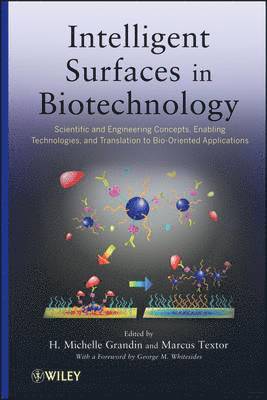
    A comprehensive overview of smart and responsive surfaces in biotechnology and their applications A wave of recent advances in cell biology, biophysics, chemistry, and materials science has enabled the development of a new generation of smart biomaterials. Intelligent Surfaces in Biotechnology: Scientific and Engineering Concepts, Enabling Technologies, and Translation to Bio-Oriented Applications provides readers with a comprehensive overview of surface modifications and their applications, including coverage of the physico-chemical properties, characterization methods, smart coating technologies, and demonstration of performance in vitro and in vivo.The first part of the book covers applications in the fields of biosensing and biodiagnostics, while the second part focuses more on coatings for medical devices, drug delivery, and tailored cell-surface interactions. The book explores intelligent surface applications such as tissue engineering, drug targeting and delivery, wound healing and anti-infection strategies, biosensors, nanopatterning, and bioinspired design of novel responsive materials and multifunctional surfaces.Designed to aid scientists and engineers in understanding the rapidly developing field of biofunctional surfaces, Intelligent Surfaces in Biotechnology is an edited volume with each chapter written by a respected expert and featuring examples taken from the most state-of-the-art developments in the discipline.Cover Image: Design concept for a diagnostic microfluidic system based on responsive polymer- and antibody-conjugated nanobeads (see Chapter 2 of this book, Figure 2.5; reproduced by permission from the Royal Society of Chemistry).

    Produktinformation

    • Utgivningsdatum:2012-03-23
    • Mått:158 x 234 x 28 mm
    • Vikt:703 g
    • Format:Inbunden
    • Språk:Engelska
    • Antal sidor:400
    • Förlag:John Wiley & Sons Inc
    • Medarbetare:GeorgeM. Whitesides
    • ISBN:9780470536506

    Utforska kategorier

    • Biokemisk teknik inom Naturvetenskap och teknik

    Mer om författaren

    H. Michelle Grandin currently works as a scientific writer and consultant in the field of tissue regeneration and implant surfaces for dental applications. Previously, she worked as a senior research scientist in the biointerface group of Marcus Textor at ETH Zurich. There, she developed a waveguide fluorescence microscope for the study of bio-interactions in the near-field as well as leading a group in the development of 3D single cellular microwell arrays for application in stem cell and cancer research. Marcus Textor is a Professor Emeritus at ETH Zurich, Department of Materials. He was head of a research group dedicated to surfaces and interfaces in bio-related fields of material science. His research interests cover both fundamental aspects of the behavior of materials in contact with biological milieus and the design and development of surfaces that elicit biospecific responses.

    Recensioner i media

    “The present book with its 350 pages is not a textbook but reading for experts and inspires scientists and engineers to further investigations to tackle the transition from synthetic to living materials, äs it is meant by the term "intelligent interfaces".  The presented "smart" biosensors and medical devices demonstrate nicely, how we can learn from nature and make profit of its impressive "inventions" in our modern life.”  (Tenside Surfactants Detergents, 1 May 2012)

    Innehållsförteckning

    • Foreword xv Preface xixContributors xxiii1. Stimulus-Responsive Polymers as Intelligent Coatings for Biosensors: Architectures, Response Mechanisms, and Applications 1Vinalia Tjong, Jianming Zhang, Ashutosh Chilkoti, and Stefan Zauscher1.1 Introduction 11.2 SRP Architectures for Biosensor Applications 21.2.1 Cross-Linked Polymer Networks (Hydrogels) 21.2.2 End-Grafted Polymer Chains (Polymer Brushes) 51.2.3 Self-Assembled Polyelectrolyte (PEL) Multilayers (LBL Thin Films) 51.2.4 Molecularly Imprinted Polymers 61.2.5 Hybrid Coatings 61.3 Mechanisms of Response 61.3.1 Sensing Selectivity 61.3.2 Conformational Reorganization of SRP Coatings 71.3.2.1 Changes in Osmotic Swelling Pressure 71.3.2.2 Changes in Apparent Cross-Link Density 81.4 Sensing and Transduction Mechanisms 91.4.1 Optical Transduction 91.4.1.1 Examples of SRP Sensors That Use Optical Transduction Principles 111.4.2 Electrochemical Transduction 141.4.2.1 Examples of SRP Sensors That Use Electrochemical Transduction Principles 151.4.3 Mechanical Transduction 171.4.3.1 Examples of SRP Sensors That Use Mechanical Transduction Principles 181.5 Limitations and Challenges 191.5.1 LOD and Sensitivity 191.5.2 Selectivity 201.5.3 Working Range 201.5.4 Response Time 201.5.5 Reliability and Long-Term Stability 211.6 Conclusion and Outlook 22Acknowledgements 22References 222. Smart Surfaces for Point-of-Care Diagnostics 31Michael A. Nash, Allison L. Golden, John M. Hoffman, James J. Lai, and Patrick S. Stayton2.1 Introduction 312.1.1 POC Testing Challenges 322.2 Standard Methods for Biomarker Purification, Enrichment, and Detection 332.3 Smart Reagents for Biomarker Purification and Processing 342.3.1 IgG Antibody–pNIPAAm Conjugates 382.3.2 Single-Chain Antibody–pNIPAAm Conjugates 392.3.3 Nucleotide–pNIPAAm Conjugates 402.3.4 Magnetic Nanoparticle (mNP)–pNIPAAm Conjugates 402.3.5 Gold Nanoparticle (AuNP)–pNIPAAm Conjugates 422.4 Sample-Processing Modules for Smart Conjugate Bioassays 442.4.1 Grafting of pNIPAAm from Microchannel Surfaces 452.4.2 Grafting of pNIPAAm from Porous Membranes 482.4.3 Magnetic Processing Modules 512.5 Devices for Use in Smart Conjugate Bioassays 542.5.1 Lateral-Flow Immunochromatography Devices 552.5.2 Wicking Membrane Flow-Through Devices 562.5.3 Polylaminate Microfl uidic Devices 572.5.4 Multilayer PDMS Smart Microfl udic Devices 582.6 Conclusions 60References 613. Design of Intelligent Surface Modifications and Optimal Liquid Handling for Nanoscale Bioanalytical Sensors 71Laurent Feuz, Fredrik Höök, and Erik Reimhult3.1 Introduction 713.2 Orthogonal Small (Nano)-Scale Surface Modification Using Molecular Self-Assembly 753.2.1 Surface Anchor: How to Define and Retain a Molecular Pattern 773.2.1.1 Weak Anchors: “Physisorption” 773.2.1.2 Strong Anchors: “Chemisorption” 793.2.1.3 Weak versus Strong Anchors for Nanoscale Sensors 803.2.2 Spacer: How to Suppress Binding 833.2.3 Recognizing and Capturing Analytes on an Intelligent Nanostructure 863.2.3.1 Antibodies 863.2.3.2 Antibody Fragments 873.2.3.3 Aptamers 873.2.3.4 General Considerations for Recognition Element Immobilization 873.3 Alternative Surface Patterning Strategies 893.3.1 Lithographic Patterning of Physisorbed Macromolecules 893.3.2 Nanoscale Molecular Surface Modification through Printing 903.3.3 Nanoscale Molecular Surface Modification through Direct Writing 913.3.4 Multivalency and the Intelligent Fluid Biointerface 923.3.5 Summary Functionalization of Nanoscale Biosensors 953.4 The Challenge of Analyte Transport 953.4.1 Convective versus Diffusive Flux ( jC vs. jD) 983.4.1.1 Scenario A ( jC = 0) 993.4.1.2 Scenario B ( jC = jD) 1013.4.1.3 Scenario C ( jC > jD) 1023.4.1.4 Summary of Scenarios A, B, and C 1033.4.2 Reactive versus Diffusive Flux ( jR vs. jD) 1063.4.3 Design and Operation Criteria for Efficient Mass Transport 1083.5 Concluding Remarks 112References 1134. Intelligent Surfaces for Field-Effect Transistor-Based Nanobiosensing 123Akira Matsumoto, Yuji Miyahara, and Kazunori Kataoka4.1 Introduction 1234.2 FET-Based Biosensors 1244.2.1 Metal–Insulator–Semiconductor (MIS) Capacitors 1244.2.2 Principles of bio-FETs 1254.2.3 Ion-Sensitive Field-Effect Transistors (ISFETs) and Their Direct Coupling with Various Biorecognition Elements as a Conventional Approach to bio-FETs 1264.3 Intelligent Surfaces for Signal Transduction and Amplification of bio-FETs 1284.3.1 CNT-Mediated Signal Transduction 1284.3.2 SAM-Assisted Detection 1294.3.3 Stimuli-Responsive Polymer Gel-Based Interfaces for “Debye Length-Free” Detection 1304.4 New Targets of bio-FETs 1324.4.1 Carbohydrate Chain Sialic Acid (SA) Detection Using PBA SAM-Modifi ed FETs 1324.4.2 Scent Detection Using “Beetle/Chip” FETs 1344.4.3 Aptamer-Modifi ed Biorecognition Surfaces for a Universal Platform of bio-FETs 1344.5 Future Perspective 135References 1365. Supported Lipid Bilayers: Intelligent Surfaces for Ion Channel Recordings 141Andreas Janshoff and Claudia Steinem5.1 Introduction 1415.2 Supported Lipid Bilayers 1425.2.1 SSMs on Flat Interfaces 1425.2.1.1 Lipid Bilayers on Transparent Surfaces 1435.2.1.2 Lipid Bilayers on Gold Surfaces 1435.2.1.3 Lipid Bilayers on Silicon 1455.2.2 SSMs on Porous/Aperture Containing Surfaces 1465.2.2.1 Lipid Bilayers on Micromachined Apertures 1465.2.2.2 Lipid Bilayers on Porous Materials 1475.2.3 Patterning of SSMs 1485.2.3.1 Patterning of Hybrid SSMs 1495.2.3.2 Patterning of Nonhybrid SSMs 1495.3 Characteristics of SSMs 1515.3.1 Thermomechanical Properties of SSMs 1515.3.2 Mechanical Stability 1545.4 Ion Channels in SSMs 1575.4.1 Carriers 1585.4.2 Channel-Forming Peptides 1585.4.3 Channel-Forming Proteins 1625.5 Future Perspective: Ion Channels in Micropatterned Membranes 163References 1726. Antimicrobial and Anti-Inflammatory Intelligent Surfaces 183Hans J. Griesser, Heike Hall, Toby A. Jenkins, Stefani S. Griesser, and Krasimir Vasilev6.1 Introduction 1836.2 Antibacterial Strategies 1846.2.1 The Infection Problem 1846.2.2 Approaches to Antibacterial Device Surfaces 1866.2.3 Release of Antimicrobial Compounds from Polymers and Polymeric Coatings 1906.2.4 Silver-Releasing Coatings 1916.2.5 Nonfouling Coatings 1966.2.6 Surface-Grafted Antibacterial Molecules 1966.3 Bioactive Antibacterial Surfaces 1986.3.1 Established, Commercially Available Antibiotics 1986.3.2 Experimental Antibiotics 2016.4 Stimulus-Responsive Antibacterial Coatings for Wound Dressings 2046.5 Anti-Infl ammatory Surfaces 2086.5.1 The Infl ammatory Response 2086.5.2 Contact Activation of the Complement System 2096.5.3 Foreign Body Reaction 2116.5.4 Anti-infl ammatory Medication 2126.5.5 Local Prevention of the Infl ammatoryReaction on Medical Device/Implant Surfaces 2156.5.5.1 Prevention of Contact Activation of the Complement System 2156.5.5.2 Prevention of the Foreign Body Reaction by Preventing Macrophage Adhesion and Fusion 2166.5.5.3 Prevention of Inflammation on Material Surfaces by the Release of NO 2176.5.5.4 Reduction of the Inflammatory Response by Increasing Hemocompatibility 2206.6 Conclusions and Outlook 224References 2267. Intelligent Polymer Thin Films and Coatings for Drug Delivery 243Alexander N. Zelikin and Brigitte Städler7.1 Introduction 2437.2 Surface-Mediated Drug Delivery 2467.2.1 Controlled Cell Adhesion and Proliferation 2477.2.2 Small Cargo 2547.2.3 Delivery and Presentation of Protein and Peptide Cargo 2577.2.4 Delivery of Gene Cargo 2617.3 Drug Delivery Vehicles with Functional Polymer Coatings 2687.3.1 Core–Shell Particles 2687.3.2 Polymer Capsules 2717.4 Concluding Remarks 280References 2808. Micro- and Nanopatterning of Active Biomolecules and Cells 291Daniel Aydin, Vera C. Hirschfeld-Warneken, Ilia Louban, and Joachim P. Spatz8.1 Introduction 2918.2 Chemical Approaches for Protein Immobilization 2918.3 Biomolecule Patterning by “Top-Down” Techniques 2948.3.1 Microcontact Printing (μCP) 2948.3.2 Nanoimprint Lithography (NIL) 2948.3.3 Electron Beam Lithography (EBL) 2958.3.4 Dip-Pen Nanolithography (DPN) 2958.4 Biomolecule Nanoarrays by Block Copolymer Nanolithography 2968.4.1 Block Copolymer Nanolithography 2978.4.2 Biofunctionalization of Nanostructures 2998.4.3 Hierarchically Nanostructured Biomolecule Arrays 3008.4.4 Fabrication of Nanoscale Distance Gradients 3028.4.5 Soft Polymeric Biomolecule Arrays 3038.5 Application of Nanostructured Surfaces to Study Cell Adhesion 3058.5.1 Mimicking the Extracellular Environment 3058.5.2 Nanoscale Control of Cellular Adhesion 3058.5.3 Micro-Nanopatterns to Uncouple Local from Global Density 3078.5.4 Nanoscale Gradients to Induce Cell Polarization and Directed Migration 3098.5.5 Substrate Elasticity Determines Cell Fate 3118.6 Conclusion 313References 3139. Responsive Polymer Coatings for Smart Applications in Chromatography, Drug Delivery Systems, and Cell Sheet Engineering 321Rogério P. Pirraco, Masayuki Yamato, Yoshikatsu Akiyama, Kenichi Nagase, Masamichi Nakayama, Alexandra P. Marques, Rui L. Reis, and Teruo Okano9.1 Introduction 3219.2 Temperature-Responsive Chromatography 3229.2.1 Hydrophobic Chromatography 3229.2.2 Ion-Exchange Chromatography 3249.2.3 Affinity Chromatography 3279.3 Temperature-Responsive Polymer Micelles 3289.3.1 Temperature-Responsive Corona 3299.3.2 Temperature-Responsive Core 3329.4 Temperature-Responsive Culture Surfaces 3339.4.1 Temperature-Responsive Culture Dishes 3339.4.2 Temperature-Responsive Surfaces on Porous Substrates 3369.4.3 Functionalization of Temperature-Responsive Surfaces 3369.4.4 Temperature-Responsive Surface Patterning 3389.5 Cell Sheet Engineering 3399.5.1 Characterization of Harvested Cell Sheets 3399.5.2 Applications in Regenerative Medicine 3409.5.3 Thick Tissue Reconstruction 3439.6 Conclusions 345References 346Index 355