• Fri frakt över 249 kr
  • •
  • Snabba leveranser
  • •
  • Billiga böcker
Kundservice

Du är på sajten för privatpersoner.

Företag, bibliotek eller offentlig verksamhet?

Du handlar på classic.bokus.com, där alla dina funktioner finns intakta.
Till classic.bokus.com
Bokus logotyp. Gå till startsidan.
  • Erbjudanden
  • Nyheter
  • Student
  • Topplistor
  • Barn & ungdom
  • Bokus Play
  • E-böcker
  • Pocketböcker
  • Spel & pussel

Må bättre, för mindre! Upp till 50% rabatt på hälsoböcker

Sidfot

Mina sidor

    Hjälp

    • Kundservice
    • Vanliga frågor och svar
    • Frakt och leverans
    • Retur vid ångerrätt
    • Reklamera vara
    • Betalning
    • Köpvillkor
    • Allmänna villkor
    • Information om webbplatsens tillgänglighet

    Om Bokus

    • Om oss
    • Pressrum
    • För studenter
    • För företag
    • För bibliotek och offentlig verksamhet
    • För leverantörer
    • Hållbarhet

    Populärt

    • Aktuella erbjudanden
    • Presentkort
    • Studentlitteratur
    • Nya böcker
    • Topplistor
    • Signerade böcker
    • Engelska böcker

    Inspiration

    • Boktips
    • BookTok
    • Populära bokserier
    • Barnbokskaraktärer
    • Populära författare
    Logotyp för Bokus
    Följ oss på Facebook (extern länk)Följ oss på Instagram (extern länk)Följ oss på YouTube (extern länk)Följ oss på TikTok (extern länk)
    bokus @ CookiesAnpassa cookiesIntegritetspolicyKöpvillkor
    Till Citymail hemsida (extern länk)Till Budbee hemsida (extern länk)Till Postnord hemsida (extern länk)Till Schenker hemsida (extern länk)Till Early Bird hemsida (extern länk)Till Walleys hemsida (extern länk)
    1. Medicin
    2. Omvårdnad och medicinska stödfunktioner
    3. Omvårdnad

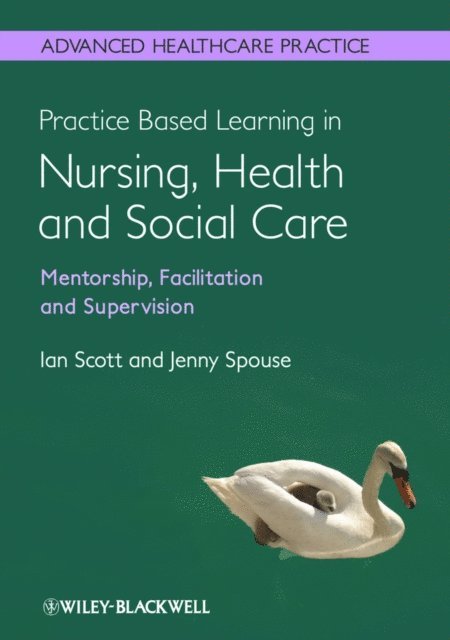
    Practice Based Learning in Nursing, Health and Social Care: Mentorship, Facilitation and Supervision

    AvIan Scott,Jenny Spouse

    Häftad, Engelska, 2013

    476 kr

    Beställningsvara. Skickas inom 11-20 vardagar. Fri frakt över 249 kr.

    Beskrivning

    Work-based learning facilitation, mentoring and coaching are all integral to the healthcare professions.Practice Based Learning in Nursing, Health and Social Care promotes effective professional learning in the workplace and helps healthcare professionals to develop, enhance, reflect on and change their practice and perceptions of mentoring, facilitating, and supervision.Aimed at the health and social care practitioner who is involved in facilitating learning, teaching and assessing learners in practice, this essential, comprehensive text explores several key themes, including: The nature of facilitating (coaching, supervision, mentoring) within professional contextsLearning in communities of practiceBecoming an effective facilitator/mentorUnderstand and supporting work-based learningManaging the unusual, such as failing learners or those with special needsGiving and documenting feedbackManaging workloads in busy environmentsProfessional development issuesSpecial features: A clear, accessible guide for new and experienced practice educators/facilitators alikeA comprehensive, applied text for practitioners of all levels of experience in facilitation and supervisionWritten by authors with extensive experience in the fieldUniquely focuses on the professional development of the mentor/facilitator themselvesProvides case studies throughout showing illustrating common issues and how to engage in formal theories of professional practiceMultiprofessional focus - aimed at all health and social care practitioners

    Produktinformation

    • Utgivningsdatum:2013-04-05
    • Mått:175 x 244 x 12 mm
    • Vikt:377 g
    • Format:Häftad
    • Språk:Engelska
    • Antal sidor:240
    • Förlag:John Wiley and Sons Ltd
    • ISBN:9780470656068

    Utforska kategorier

    • Omvårdnad inom Medicin

    Mer om författaren

    Dr. Ian Scott is Head of Academic Practice and Development Unit at University of Worcester. Dr. Jenny Spouse is Associate Dean for Practice Education at City University.

    Recensioner i media

    “The reviewer recommends this accessible and user-friendly style book to all nurses, midwives and healthcare professionals who are responsible for students and learners in their clinical environment”.  (Nursing Times, 13 March 2014)

    Innehållsförteckning

    • About the authors xi 1 Mentoring and supervision and other facilitative relationships 1Ian Scott and Jenny SpouseIntroduction 1Exploring the role of the practitioner teacher 1Mentor 2Supervisor 3Coach 4Apprenticeship and its relationship to mentorship and supervision 5Why learning facilitators are important 9What about the learner perspective? 12Attributes and knowledge for the learning and teaching role 13The workplace and learning 14Summary 162 Personal and professional aspects of supervising others 17Jenny SpouseIntroduction 17Creating a learning partnership: ways in which relationships between learner and facilitator enhance learning 17Being a newcomer 17Establishing the relationship 19Professional boundaries including duty of care, professional accountability and educational responsibility 20Duty of care 20Educational responsibility 24Professional accountability 28Learners’ perspective on supportive relationships 30Models of mentoring/supervision 31One-to-one mentoring 32Team mentoring 32Peer mentorship 33Approaches to mentoring 33Emotional labour and mentoring 34Summary 363 The workplace as a learning environment: structures and sources of support and supervision 38Jenny SpouseIntroduction 38Concept of a learning environment, micro and macro factors 39What is a learning environment? 39Influence of geography on the learning environment 39Policies and protocols and the learning environment 43Staffing and skill mix 43Supporting visiting learners 47Protocols 50Collaborative learning among the professions 53Summary 544 Practice settings as a learning resource 58Jenny SpouseIntroduction 58External influences on professional education 59Commissioning and developing professional programmes 61Collaborative curriculum design 61Curriculum planning for placements 64Creating a curriculum for practice and a learning agenda 66Developing learning resources and making them accessible 71Quality assurance 72Summary 745 Identifying your learner’s needs and documenting a working learning plan 75Jenny SpouseIntroduction 75Sponsorship to a community of practice 75Identifying and assessing learning needs – the components and some strategies 80Writing a working learning plan, its uses and abuses 82Exploring and explaining theories of how people learn 84Meeting the needs of learners with special needs: promoting diversity, inclusivity and equality 86Disability in the workplace 87Supporting learners with dyslexia 88Supporting learners with sensory impairment 90Supporting learners with mental-health needs 92Summary 946 Facilitating professional development 96Jenny SpouseIntroduction 96What learners want to know 97Learning to relate to patients and their carers 98Developing technical knowledge 100Explaining and exploring using the Model of Practical Skill Performance 103Legitimate peripheral participation 104Explaining and exploring social theories of learning 106Learning to bundle practice activities together 110Developing craft knowledge 113Managing personal feelings 114Developing the essence of professional practice: therapeutic action – caring comportment 116Working in a community of practice 117Exploring and explaining the value of being welcomed to an unfamiliar social environment 120Summary 1227 Reporting on progress: assessing performance and keeping evidence 123Ian ScottIntroduction 123Assessing and assessment 123Types of assessment 124Formative assessment 124Summative assessment 125Informal and formal assessment 126Continuous assessment 126Some assessment principles 127Learning outcome 133Doing the assessing 134Pre-practice assessment: assessment through simulation 136Pre-practice assessment: using reflection and analysis 138Pre-practice assessment: discussion of practice prior to practice 139Pre-practice assessment: case studies 140Pre-practice assessment: challenge scenarios 141Pre-practice assessment: witness testimonials 142Assessments during practice: direct observation 143Using an assessment tool 143Keeping records 146Assessment during practice: by patients, users and clients 147Assessments during practice: direct observation of group activities 148Assessments during practice: discussion of practice as it occurs 148Assessment after practice: reflective analyses or commentaries 149Assessment after practice debrief with mentor 150Self-assessment 151Role of an assessment strategy 153Failing learners 154Improving your assessment skills 155Summary 1568 Giving feedback and documenting progress 157Ian ScottIntroduction 157Feedback: some basics from theory 158Feedback and systems 158Feedback in practice 160Responses to your feedback 163Giving feedback some general guidance 163Suggestions for successful feedback: some dos and don’ts 164Models for giving feedback 165Documents 171Professional implications of documented records 172Improving your feedback 173Summary 1749 Inquiring into personal professional practice 175Ian ScottIntroduction 175Inquiring into personal professional practice 175What is action inquiry? 176Using action inquiry in everyday practice 177Role of reflection in action inquiry 178What is reflection? 178Using other models of reflective practice 183Role of empirical evidence in action inquiry 186Sources of empirical data 186Group approaches to action inquiry 190Action learning sets 191Appreciative inquiry 192Summary 19310 Personal and professional development planning 194Ian ScottIntroduction 194Personal and professional development planning 194Defining professional development 195Professional development planning and appraisal systems 195Differences in purpose 196Goal setting 196Finding a vision of you 197Other visioning techniques 198Importance of values 200Where are you now? 200Goal setting 201Professional recognition as a clinical educator 202Becoming a mentor, facilitator or supervisor 203Priority setting 204Importance 204Challenging the barriers 206Recording your goals 207Professional development opportunities 208Recording your achievements 210Closing the circle: finding your own mentor/facilitator 212Questions to use when choosing a mentor/facilitator 212Summary 213References 214Index 223