• Fri frakt över 249 kr
  • •
  • Snabba leveranser
  • •
  • Billiga böcker
Kundservice

Du är på sajten för privatpersoner.

Företag, bibliotek eller offentlig verksamhet?

Du handlar på classic.bokus.com, där alla dina funktioner finns intakta.
Till classic.bokus.com
Bokus logotyp. Gå till startsidan.
  • Erbjudanden
  • Nyheter
  • Student
  • Topplistor
  • Barn & ungdom
  • Bokus Play
  • E-böcker
  • Pocketböcker
  • Spel & pussel

10% rabatt på allt med kod NYSTART10 →

Sidfot

Mina sidor

    Hjälp

    • Kundservice
    • Vanliga frågor och svar
    • Frakt och leverans
    • Retur vid ångerrätt
    • Reklamera vara
    • Betalning
    • Köpvillkor
    • Allmänna villkor
    • Information om webbplatsens tillgänglighet

    Om Bokus

    • Om oss
    • Pressrum
    • För studenter
    • För företag
    • För bibliotek och offentlig verksamhet
    • För leverantörer
    • Hållbarhet

    Populärt

    • Aktuella erbjudanden
    • Presentkort
    • Studentlitteratur
    • Nya böcker
    • Topplistor
    • Signerade böcker
    • Engelska böcker

    Inspiration

    • Boktips
    • BookTok
    • Populära bokserier
    • Barnbokskaraktärer
    • Populära författare
    Logotyp för Bokus
    Följ oss på Facebook (extern länk)Följ oss på Instagram (extern länk)Följ oss på YouTube (extern länk)Följ oss på TikTok (extern länk)
    bokus @ CookiesAnpassa cookiesIntegritetspolicyKöpvillkor
    Till Citymail hemsida (extern länk)Till Budbee hemsida (extern länk)Till Postnord hemsida (extern länk)Till Schenker hemsida (extern länk)Till Early Bird hemsida (extern länk)Till Walleys hemsida (extern länk)
    1. Kultur
    2. Konstböcker
    3. Konstteori

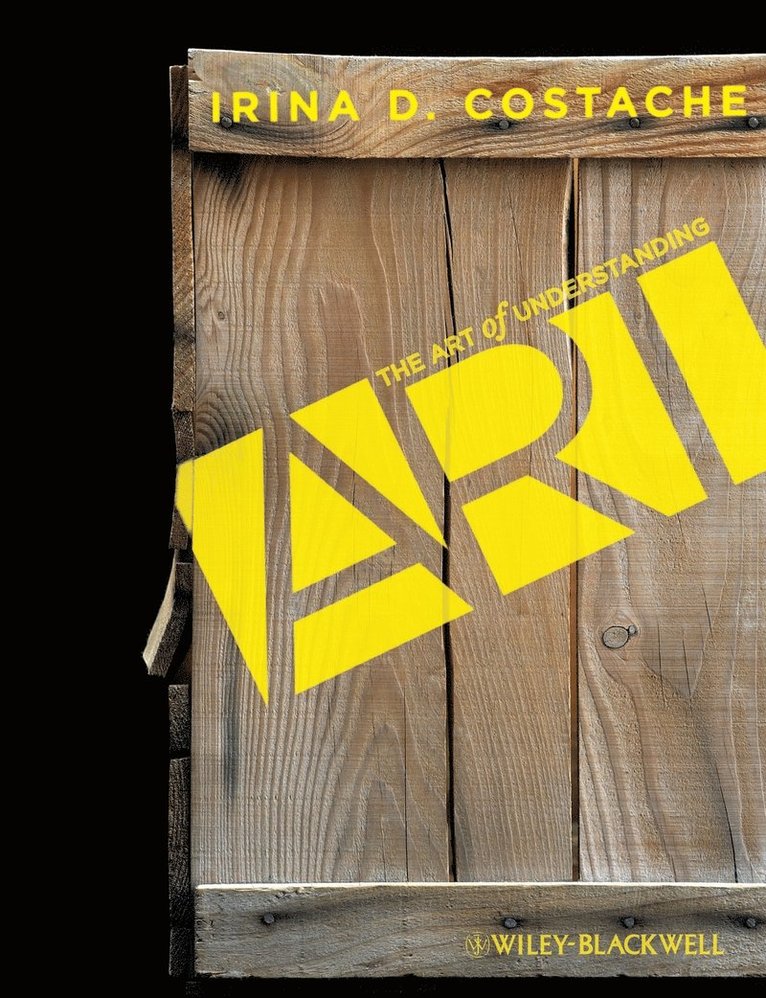
    Art of Understanding Art

    A Behind the Scenes Story

    AvIrina D. Costache

    Inbunden, Engelska, 2012

    1 304 kr

    Skickas . Fri frakt över 249 kr.

    Fler format och utgåvor

    Häftad

    568 kr

    E-bok

    1 435 kr

    E-bok

    1 435 kr

    Beskrivning

    The Art of Understanding Art reveals to students and other readers new and meaningful ways of developing personal ideas and opinions about art and how to express them with confidence. Offers an inquiry—unique among introductory art texts—into the learning process of understanding and appreciating artExamines the multiple issues and processes essential to making, analyzing and evaluating artUses cross-cultural examples to help readers develop comprehensive, yet personal, ways of looking at and thinking about artIncludes an annotated glossary of the 'Art World', institutions and individuals that play a role in defining art as well as diagrams, textboxes callouts and other visual elements to highlight information and enhance learningRichly illustrated with over 40 imagesSuggests innovative class assignments and projects useful for developing lesson plans, and offers an online companion site for additional illustrations and information
    Produktinformation

    • Utgivningsdatum:2012-03-30
    • Mått:193 x 254 x 19 mm
    • Vikt:807 g
    • Format:Inbunden
    • Språk:Engelska
    • Antal sidor:276
    • Förlag:John Wiley and Sons Ltd
    • ISBN:9780470658321

    Utforska kategorier

    • Konstteori inom Kultur
    • Filosofiska discipliner inom Filosofi och religion

    Mer om författaren

    Irina D. Costache, Ph.D., is an art historian and Professor of Art History at California State University Channel Islands. Her innovative teaching methodologies have been recognized with awards and grants. She has curated several exhibitions, including Postmodern Calligraphies, Nature and/or Technology and Line and Color. Her presentations and publications include This is Not a Painting: Art History and the Internet, Visual Culture/ Virtual Art, Italian Futurism and the Decorative Arts, and Futurist Film: an Incomplete Project.

    Innehållsförteckning

    • Acknowledgments xiiiWhy Should Art Matter to You? A Message to Art Beginners xvIntroduction: What Is Art? xviNavigating the Book: A User’s Guide xxiWhy Is Art Made? The Purposes of Art: A Brief Overview from A to Z xxivThe Anatomy of a Work of Art xxxiiPart One Making Art 11 Artists and Patrons 3Artists and Creators 3Originality, Authorship, Authenticity 4Appropriations 8Attributions and Studio Practices 9Collaborations 11Artists and Multiple Works 12Artists and Artisans 12Anonymous Artists 13The Creative Process: Inspiration and Influences 14Self-Reflections 14The Formative Years: Education, Family Life, and Personal Values 15Patronage 17Private Patronage 17Religious Patronage 18Royal Patronage 19State, City, and Community Patronage 19Today’s Patronage: Corporations, Institutions, Foundations, and Grants 20Summary 21Notes 212 Environment, Materials, and Other Resources 22Environment 23Natural Resources 23Location 24Climate 24Dialogues between the Environment and Art 25Materials, Tools, and Technology 27Materials and Artistic Values 27The Attributes of Materials 28The “Purity” of Materials and Mixed Media 29Materials as Sources for Meaning 29“Unusual” Art Materials 31Found Objects 32The Body as Art Material 32Tools and Technology 34Other Resources: Knowledge and Information 36Summary 37Notes 373 Context 38Cultural Context 39Artistic Context 39Art Organizations, Institutions, and Events 40Culture, Science and Ideas 41Historical, Political, and Religious Context 43Historical Context and Current Events 43Political Context 44Religious Context 47Societal Context 48Everyday Life 49The Mass Media 49Moral Values 50Social Context 51Summary 52Notes 52Conclusion to Part One 53Part Two Disseminating Art 554 The Dissemination of Original Art 57Institutions 57Museums 57Collections and Foundations 67Galleries 68Academic-Affiliated Art Institutions 70Beyond Institutional Walls 71Alternative Spaces 71Public Art 71Propaganda Art 72Art and Business 73The Art Market and other Financial Matters 73Art Patrons, Collectors, Dealers, and Sponsors 74Artists and Business 75Summary 76Notes 765 The Dissemination of Art through Reproductions, and Other Issues 77Publications, Presentations, and Lectures 78Books, Catalogues, and Periodicals (Articles, Essays, and Reviews) 78Lectures, Courses, and Presentations 79The Mass Media 80Films, Documentaries, and DVDs 80The Web 82Art and Popular Culture 84Today’s Art World 86The Decontextualization of Art 87Original Context and Contemporary Times 88“The Art World” 89Summary 89Notes 90Conclusion to Part Two 90Part Three Analyzing Art 916 Visual Resources Used to Analyze Art 93The Work of Art 94Form and Content 94The Physical Condition of the Work of Art 98Originals and Reproductions 100The Preservation and Conservation of Art 101Scientific Tools 103Visual Documentation and Research 103Artists’ “Body of Work” (Oeuvre) 104Artistic and Visual Context of the Time 104Drawings, Architectural Plans, and other Visual Resources 105New Art/Archaeological Discoveries 105Symbols in Art 106Summary 107Notes 1087 Textual and Other Resources Used to Analyze Art 109Primary Textual Sources 110Archival Material 110Artists’ Letters, Notes, and Statements 111Provenance 114Secondary Textual Sources 114Art-Historical Literature 115Original Context and History 115Today’s Art History, Criticism, and Context 116Additional Resources for Research 117Art Institutions and Exhibitions 117Online and Other Sources 117Comparisons 119“Conventional” Art Comparisons 119Cross-Chronological and Cross-Cultural Comparisons 123Visual Culture and Interdisciplinary Comparisons 124Summary 125Notes 1258 A Critical Examination of Art Classification 126Reflections on Art Classification 126Identifying the Category of “Art” 126The Roots of Art Classification 129Criteria for Art Classification 130Chronology and Artistic Periods 130Media 132Fine Art/High Art 132Painting, Drawings, Prints, and Sculptures 133Photography 134Mixed Media 134New Media 135Multimedia 136Graphic Arts 137“Minor Arts” 137Decorative Arts 138Crafts 138Architecture 138Other Categories 139“Low” Art and Popular Culture 139“Outsider” Art 140Naïve and Folk Art 141Vernacular Art 141Visual and Material Culture 141Summary 142Notes 142Conclusion to Part Three 142Part Four Interpreting Art 1439 Interpreting Art: Criteria and Values 145Preconceived Ideas about Art 146Modern Art and the Audience 148Artistic Values and Art Appreciation 150Modernism 152The Avant-Garde 152The Modernist Artist 153Modernism and Global Traditions 153Originality and the Original 154System of Values 154Postmodernism 155Multiculturalism 155Originality and the Original (Imitation/Appropriation/Re-purposing) 156The Postmodern Artist 156System of Values 156Interpreting Art: Getting Started 157Understanding Images 157Looking at and Interpreting Art 158Summary 161Notes 16110 Methodologies of Art 162Introduction to Art Methodologies 163Biography/Autobiography 163Connoisseurship 164Context 165Deconstruction 166Feminism 167Formalism and Style 167Gender 168Iconography 169Multiculturalism 169Postcolonialism 170Psychoanalysis 170Semiotics 171Structuralism/Poststructuralism 172Visual Culture 172Art Interpretation: Case Study 173Summary 179Notes 179Conclusion 180Appendix 1 The Art World 182Appendix 2 Creative Assignments and Writing Projects 189Appendix 3 Glossary 194Appendix 4 “Tools of the Trade” Diagrams: Form and Content (1–5) and Art Media (6–8) 210List of Figures and Color Plates 218Bibliography 220Index 227