• Fri frakt över 249 kr
  • •
  • Snabba leveranser
  • •
  • Billiga böcker
Kundservice

Du är på sajten för privatpersoner.

Företag, bibliotek eller offentlig verksamhet?

Du handlar på classic.bokus.com, där alla dina funktioner finns intakta.
Till classic.bokus.com
Bokus logotyp. Gå till startsidan.
  • Erbjudanden
  • Nyheter
  • Student
  • Topplistor
  • Barn & ungdom
  • Bokus Play
  • E-böcker
  • Pocketböcker
  • Spel & pussel

10% rabatt på allt med kod NYSTART10 →

Sidfot

Mina sidor

    Hjälp

    • Kundservice
    • Vanliga frågor och svar
    • Frakt och leverans
    • Retur vid ångerrätt
    • Reklamera vara
    • Betalning
    • Köpvillkor
    • Allmänna villkor
    • Information om webbplatsens tillgänglighet

    Om Bokus

    • Om oss
    • Pressrum
    • För studenter
    • För företag
    • För bibliotek och offentlig verksamhet
    • För leverantörer
    • Hållbarhet

    Populärt

    • Aktuella erbjudanden
    • Presentkort
    • Studentlitteratur
    • Nya böcker
    • Topplistor
    • Signerade böcker
    • Engelska böcker

    Inspiration

    • Boktips
    • BookTok
    • Populära bokserier
    • Barnbokskaraktärer
    • Populära författare
    Logotyp för Bokus
    Följ oss på Facebook (extern länk)Följ oss på Instagram (extern länk)Följ oss på YouTube (extern länk)Följ oss på TikTok (extern länk)
    bokus @ CookiesAnpassa cookiesIntegritetspolicyKöpvillkor
    Till Citymail hemsida (extern länk)Till Budbee hemsida (extern länk)Till Postnord hemsida (extern länk)Till Schenker hemsida (extern länk)Till Early Bird hemsida (extern länk)Till Walleys hemsida (extern länk)
    1. Djur och Natur
    2. Djurböcker
    3. Vilda djur
    4. Fjärilar, insekter, spindlar

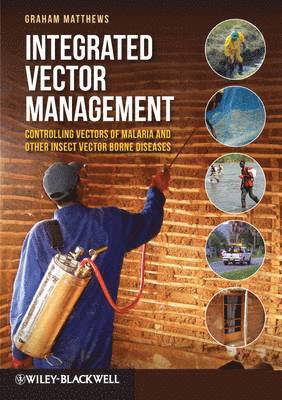
    Integrated Vector Management

    Controlling Vectors of Malaria and Other Insect Vector Borne Diseases

    AvG. A. Matthews

    Inbunden, Engelska, 2011

    1 073 kr

    Tillfälligt slut

    Fler format och utgåvor

    E-bok

    1 624 kr

    E-bok

    1 624 kr

    Beskrivning

    Diseases transmitted by insects continue to have a major impact on human populations. Malaria, dengue, onchocerciasis, sleeping sickness and leishmaniasis all adversely affect man. Malaria is one of the most important causes of child mortality and reduces economic development in many countries, with agricultural productivity often greatly reduced, as many vectors are active in the wet season favourable for crop production. Vector control is crucial to reduce the extent to which drugs are needed to treat the diseases, as the parasite can become resistant, or the drugs are often too expensive for those living in rural areas and urban slums most affected by these diseases. Chemical control of vectors is often the only method that can reduce vector populations in a disease epidemic, but with vectors developing resistance to insecticides, there is increasing awareness that a single control method is often insufficient and also that chemical control must be integrated where possible with other control measures.In Integrated Vector Management, Graham Matthews covers the main chemical methods of vector control, including the use of indoor residual spraying, space treatments, the use of treated bed nets and larviciding, but also stresses the importance of drainage schemes and improvement of houses to prevent access of indoor vectors, techniques that have largely been responsible for reducing the risk of vector borne diseases in Europe and the USA. This book combines practical information from successful vector control programmes, including early use of DDT, and recent research into a vital resource for all those now involved in combating insect vector borne diseases.Integrated Vector Management is an essential tool, not only for medical entomologists and those directly involved in government health departments, but also for all those who provide the skills and management needed to operate successful area-wide vector management programmes. Libraries in all universities and research establishments world-wide, where biological sciences, medicine and agriculture are studied and taught should have multiple copies of this important book.

    Produktinformation

    • Utgivningsdatum:2011-10-07
    • Mått:181 x 254 x 20 mm
    • Vikt:708 g
    • Format:Inbunden
    • Språk:Engelska
    • Antal sidor:248
    • Förlag:John Wiley and Sons Ltd
    • ISBN:9780470659663

    Utforska kategorier

    • Fjärilar, insekter, spindlar inom Djur och Natur
    • Insekter inom Naturvetenskap och teknik
    • Epidemiologi och medicinsk statistik inom Medicin

    Mer om författaren

    Graham Matthews is Emeritus Professor of Pest Management at Imperial College, London, UK and, since 1972, he has advised the World Health Organization on the equipment used for vector control. Over the last decade he has also been Technical Director of the NGO, Yaounde Initiative Foundation and has been directly involved in vector control in Cameroon.

    Recensioner i media

    “This volume provides a nice overview of these approaches and some of the issues involved—droplet sizes, wallspraying tactics, and the like. It should be on the bookshelves of anyone involved in the fight against mosquitoes.”  (The Quarterly Review of Biology, 1 June 2013)"Essential for anyone involved in vector control or its funding... The availability of the text as an e-book on Kindle will make it available to a much wider readership and provide a portable reference for travel and field work." (International Press Control, 1 November 2011)“Matthews has done a great job in describing the many options we have to control vector-borne diseases...both for those starting in the field, as well as veterans, the book is of value and a worthy addition to the limited number of recent books on the topic...Five Stars” Bart Knols, MalariaWorld.org

    Innehållsförteckning

    • Preface Acknowledgements1 IntroductionInsect vectorsDistribution of vectorsMosquitoesAnopheles spp.Aedes spp.Culex spp.FliesSimulium spp.Glossina spp. tsetse fliesPhlebotomine sand fliesMusca domestica and other synanthropic spp.Other vectorsTriatomine bugsChemical controlHazard and toxicityToxicityInsecticidesWHO recommendationsFormulationsPackaging and storageWaste disposalConclusionReferences2 Indoor Residual SprayingEquipment for indoor residual sprayingSpray volumeInsecticidesOperator exposureResident exposureImplementation of indoor residual sprayingVillage intervention teamsPlanning programmesInsecticidesEquipment requiredStorageTrainingMonitoringEnvironmental assessmentEvaluationEconomicsConclusionReferences3 Space TreatmentRequirements for space treatmentsEquipment for space treatmentsPortable equipmentMist treatmentsVehicle mounted equipmentAerial applicationInsecticidesPlanningAssessment of space spraysMonitoringConclusionReferences4 Bed Nets and Treated ClothingMaterialMesh sizeShapeInsecticideInsecticide impregnationImpact of washing netsDistribution of netsTrial dataOperational useTreated clothingImpregnated sheetingConclusionReferences5 LarvicidingLarvicide applicationMosquito controlOilsInsecticidesApplication of mosquito larvicidesKnapsack sprayingMotorised equipmentAerial application for mosquito controlApplication of aerial spraysApplication of granulesGround applicationAerial applicationMonitoringBlack fliesInsecticidesAerial application of larvicides for black fly controlBoat applicationApplications in small streamsMonitoringConclusionReferences6 Integrated Vector ManagementCultural controlsHouse designDrainage and water management schemesPersonal protectionImpregnated clothingInsecticide treated bed netsRepellentsBarrier treatmentsImplementation of IVMAn example of IVM at Copper mines in ZambiaCostsDevelopment of new technologyConclusionReferences7 Other Insects – Flies, Cockroaches and Bed BugsFliesRefuse dumpsSpace treatmentsMist treatmentsCockroachesTrapsSpraysBaitsBed bugsConclusionReferences8 Looking AheadNew insecticides?Can insecticides with new modes of action be developed?Insecticide resistanceBio-pesticidesSpray technologyElectrostatic spraying?Different sprayers?Different nozzles?Using a paintInnovative application techniqueGenetically modified mosquitoesAttractantsUrbanisationEconomicsConclusionReferencesAppendix A: CalibrationAppendix B: Conversion TablesIndex