• Fri frakt över 249 kr
  • •
  • Snabba leveranser
  • •
  • Billiga böcker
Kundservice

Du är på sajten för privatpersoner.

Företag, bibliotek eller offentlig verksamhet?

Du handlar på classic.bokus.com, där alla dina funktioner finns intakta.
Till classic.bokus.com
Bokus logotyp. Gå till startsidan.
  • Erbjudanden
  • Nyheter
  • Student
  • Topplistor
  • Barn & ungdom
  • Bokus Play
  • E-böcker
  • Pocketböcker
  • Spel & pussel

10% rabatt på allt med kod NYSTART10 →

Sidfot

Mina sidor

    Hjälp

    • Kundservice
    • Vanliga frågor och svar
    • Frakt och leverans
    • Retur vid ångerrätt
    • Reklamera vara
    • Betalning
    • Köpvillkor
    • Allmänna villkor
    • Information om webbplatsens tillgänglighet

    Om Bokus

    • Om oss
    • Pressrum
    • För studenter
    • För företag
    • För bibliotek och offentlig verksamhet
    • För leverantörer
    • Hållbarhet

    Populärt

    • Aktuella erbjudanden
    • Presentkort
    • Studentlitteratur
    • Nya böcker
    • Topplistor
    • Signerade böcker
    • Engelska böcker

    Inspiration

    • Boktips
    • BookTok
    • Populära bokserier
    • Barnbokskaraktärer
    • Populära författare
    Logotyp för Bokus
    Följ oss på Facebook (extern länk)Följ oss på Instagram (extern länk)Följ oss på YouTube (extern länk)Följ oss på TikTok (extern länk)
    bokus @ CookiesAnpassa cookiesIntegritetspolicyKöpvillkor
    Till Citymail hemsida (extern länk)Till Budbee hemsida (extern länk)Till Postnord hemsida (extern länk)Till Schenker hemsida (extern länk)Till Early Bird hemsida (extern länk)Till Walleys hemsida (extern länk)
    1. Naturvetenskap och teknik
    2. Matematik och naturvetenskap
    3. Kemi
    4. Analytisk kemi

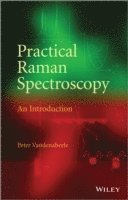
    Practical Raman Spectroscopy

    An Introduction

    AvPeter Vandenabeele

    Häftad, Engelska, 2013

    650 kr

    Beställningsvara. Skickas inom 5-8 vardagar. Fri frakt över 249 kr.

    Fler format och utgåvor

    E-bok

    743 kr

    E-bok

    743 kr

    Beskrivning

    This text offers an open-learning approach to Raman spectroscopy providing detail on instrumentation, applications and discussions questions throughout the book. It provides a valuable guide to assist with teaching Raman spectroscopy which is gaining attention in (analytical) chemistry, and as a consequence, teaching programs have followed. Today, education in Raman spectroscopy is often limited to theoretical aspects (e.g. selection rules), but practical aspects are usually disregarded. With these course notes, the author hopes to fill this gap and include information about Raman instrumentation and how it is interpreted. Provides a user-friendly text that tackles the theoretical background, and offers everyday tips for common practiceRaman instrumentation and practical aspects, which are sometimes overlooked, are coveredAppropriate for students, and includes summaries, text boxes, illustrating the ideas with examples from research literature or providing background information or links with other coursesWritten with an open-learning approach, this book will be ideal for use as a self-study guide or as the basis of a taught course with discussion and self-assessment questions throughout the textIncludes a comprehensive bibliography to guide the reader to more specialized texts and sources.

    Produktinformation

    • Utgivningsdatum:2013-08-16
    • Mått:152 x 231 x 11 mm
    • Vikt:318 g
    • Format:Häftad
    • Språk:Engelska
    • Antal sidor:192
    • Förlag:John Wiley & Sons Inc
    • ISBN:9780470683187

    Utforska kategorier

    • Analytisk kemi inom Naturvetenskap och teknik

    Mer om författaren

    Peter Vandenabeele is a Research Professor in Archaeometry at Ghent University. He currently leads the Raman research group, and for several years has taught Raman spectroscopy courses to the University students. He has supervised master and PhD students, researching Raman Spectroscopy in different fields of applications: archaeometry, bacteriology, mycology, geology and pharmaceutics.He has authored and co-authored approximately 50 research papers about Raman spectroscopy and has presented at international conferences. He was Guest editor of a special issue of Journal of Raman Spectroscopy and of Analytical and Bioanalytical Chemistry. Currently he is guest editing a special issue of Spectrochimica Acta A and was invited to organise a special issue of Anal. Bioanal. Chem on Raman spectroscopy.

    Recensioner i media

    “The book is written in the style of an introductory university lecture, each chapter beginning with a list of learning objectives, which can be later used as a quick reference guide to the chapter contents.”  (Chemistry World, 1 June 2014)

    Innehållsförteckning

    • Preface xiiiAcknowledgements xvAcronyms, Abbreviations and Symbols xviiIntroduction to Raman spectroscopy xix1 Theoretical Aspects 11.1 Classical Approach 11.2 Selection Rule 71.3 Energy Levels and Group Frequencies 131.4 Raman Intensity 191.5 Raman Bandwidth 351.6 The General Appearance of a Raman Spectrum 371.7 Summary 38Intermezzo 1.1 The Harmonic Oscillator and the Position of the Vibrational Energy Levels 6Intermezzo 1.2 The Anharmonic Oscillator and the Position of Vibrational Energy Levels 11Intermezzo 1.3 Raman Intensity Annotations 302 Interferences and Side-effects 392.1 Absorption 402.2 Fluorescence 402.3 Thermal Effects, Photodecomposition and Laser Ablation 432.4 Ambient Light and Background Radiation 442.5 Summary 443 Enhancement of the Raman Signal 473.1 Resonance Raman (RR) Spectroscopy 483.2 Surface-Enhanced Raman Spectroscopy (SERS) 483.2.1 Working Principle of SERS 49(a) Chemical Enhancement 49(b) Field Enhancement 513.2.2 Preparation of SERS Substrates 53(a) Colloids 54(b) Sputtering 55(c) Electrochemical Production 55(d) Etching 563.2.3 SERS Active Molecules 563.2.4 Advantages and Disadvantages of SERS 573.3 Summary 59Intermezzo 3.1 The Analysis of Organic Dyes by SERS 584 Raman Instrumentation 614.1 Lasers 624.1.1 Classification According to Safety Category 644.1.2 The Operating Principle of the Laser 654.1.3 Lasers for Raman Spectroscopy 714.2 Detectors 744.2.1 Single-Channel Detectors 754.2.2 Multi-Channel Detectors 764.2.3 Charge-Coupled Device (CCD) Detectors 764.2.4 Semi-conductor Detectors 804.3 Filters 814.4 Dispersion Systems 834.4.1 Systems Based on Diffraction of Light 834.4.2 Fourier-Transform (FT-) Systems 864.5 Components for Transportation of Light 884.6 Sample Chambers and Measurement Probes 914.7 Noise in Raman Spectroscopy 954.7.1 Noise Originating from the Sample: σs 964.7.2 Noise Originating from the Raman Instrument: σi 984.7.3 Noise Originating from the Signal Processing: σp 994.8 Summary 99Intermezzo 4.1 The Helium-Neon laser 695 Raman Spectroscopy in Daily Lab-life 1015.1 Calibration of a Raman Spectrometer 1025.1.1 X-Axis Calibration 1025.1.2 Y-Axis Calibration 1055.2 Raman Spectral Post-processing 1085.2.1 Digital Filters 1095.2.2 Scaling 1105.2.3 Deconvolution 1125.2.4 Baseline Corrections 1135.3 Interpretation of Raman Spectra of Organic Molecules 1165.3.1 Raman Spectra of Alkanes and Cycloalkanes 1205.3.2 Raman Spectra of Alkenes and Cycloalkenes 1255.3.3 Raman Spectra of Aromates 1295.4 Interpretation of Raman Spectra of Inorganic Molecules 1315.5 Quantitative Aspects of Raman Spectroscopy 1345.6 Fingerprinting and Spectral Searching Algorithms 1375.7 Raman Mapping and Imaging 1415.8 Combination with Other Techniques 1455.9 Summary 147Intermezzo 5.1 Micro-Raman Spectroscopy in Microbiology 107Intermezzo 5.2 Raman Spectroscopy in a Forensics Laboratory 117Intermezzo 5.3 Pigment Analysis with Raman Spectroscopy 132Intermezzo 5.4 Detection of Counterfeit Medicines with Raman Spectroscopy 136Intermezzo 5.5 Exobiology: Raman Spectroscopy Helps the Search for Life on Mars 139Intermezzo 5.6 Direct Analysis of Precious Art Objects 144Responses to Questions 149Bibliography 153Glossary of Terms 155Index 157