• Fri frakt över 249 kr
  • •
  • Snabba leveranser
  • •
  • Billiga böcker
Kundservice

Du är på sajten för privatpersoner.

Företag, bibliotek eller offentlig verksamhet?

Du handlar på classic.bokus.com, där alla dina funktioner finns intakta.
Till classic.bokus.com
Bokus logotyp. Gå till startsidan.
  • Erbjudanden
  • Student
  • Topplistor
  • Barn & ungdom
  • Bokus Play
  • E-böcker
  • Ljudböcker
  • Pocketböcker
  • Spel och pussel

5% studentrabatt – använd koden KURSBOK27 →

Sidfot

Mina sidor

    Hjälp

    • Kundservice
    • Vanliga frågor och svar
    • Frakt och leverans
    • Retur vid ångerrätt
    • Reklamera vara
    • Betalning
    • Köpvillkor
    • Allmänna villkor
    • Information om webbplatsens tillgänglighet

    Om Bokus

    • Om oss
    • Pressrum
    • För studenter
    • För företag
    • För bibliotek och offentlig verksamhet
    • För leverantörer
    • Hållbarhet

    Populärt

    • Aktuella erbjudanden
    • Presentkort
    • Studentlitteratur
    • Nya böcker
    • Topplistor
    • Signerade böcker
    • Engelska böcker

    Inspiration

    • Boktips
    • BookTok
    • Barnbokskaraktärer
    • Populära författare
    Logotyp för Bokus
    Följ oss på Facebook (extern länk)Följ oss på Instagram (extern länk)Följ oss på YouTube (extern länk)Följ oss på TikTok (extern länk)
    bokus @ CookiesAnpassa cookiesIntegritetspolicyKöpvillkor
    Till Citymail hemsida (extern länk)Till Budbee hemsida (extern länk)Till Postnord hemsida (extern länk)Till Schenker hemsida (extern länk)Till Early Bird hemsida (extern länk)Till Walleys hemsida (extern länk)
    1. Kultur
    2. Musikböcker
    3. Musikvetenskap

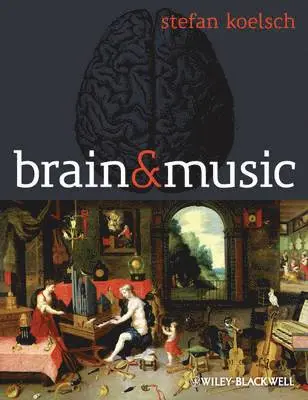
    Brain and Music

    AvStefan Koelsch

    Inbunden, Engelska, 2012

    1 170 kr

    Beställningsvara. Skickas inom 5-8 vardagar. Fri frakt över 249 kr.

    Fler format och utgåvor

    Häftad

    567 kr

    E-bok

    1 348 kr

    E-bok

    650 kr

    Beskrivning

    A comprehensive survey of the latest neuroscientific research into the effects of music on the brain Covers a variety of topics fundamental for music perception, including musical syntax, musical semantics, music and action, music and emotionIncludes general introductory chapters to engage a broad readership, as well as a wealth of detailed research material for expertsOffers the most empirical (and most systematic) work on the topics of neural correlates of musical syntax and musical semanticsIntegrates research from different domains (such as music, language, action and emotion both theoretically and empirically, to create a comprehensive theory of music psychology

    Produktinformation

    • Utgivningsdatum:2012-04-13
    • Mått:196 x 245 x 21 mm
    • Vikt:733 g
    • Format:Inbunden
    • Språk:Engelska
    • Antal sidor:328
    • Förlag:John Wiley and Sons Ltd
    • ISBN:9780470683408

    Utforska kategorier

    • Musikvetenskap inom Kultur
    • Biologisk psykologi och neuropsykologi inom Psykologi och pedagogik
    • Neurologi och klinisk neurofysiologi inom Medicin

    Mer om författaren

    Stefan Koelsch is Professor of Music Psychology at the Freie University Berlin. He is a former post-doctoral research fellow at Harvard Medical School, and led an independent Junior Research Group at the Max Planck Institute for Human Cognitive and Brain Sciences in Leipzig. His main areas of research are neurocognition of music, music and emotion, and music therapy.

    Innehållsförteckning

    • Preface ix Part I Introductory Chapters 11 Ear and Hearing 31.1 The ear 31.2 Auditory brainstem and thalamus 61.3 Place and time information 81.4 Beats, roughness, consonance and dissonance 91.5 Acoustical equivalency of timbre and phoneme 111.6 Auditory cortex 122 Music-theoretical Background 172.1 How major keys are related 172.2 The basic in-key functions in major 202.3 Chord inversions and Neapolitan sixth chords 212.4 Secondary dominants and double dominants 213 Perception of Pitch and Harmony 233.1 Context-dependent representation of pitch 233.2 The representation of key-relatedness 263.3 The developing and changing sense of key 293.4 The representation of chord-functions 303.5 Hierarchy of harmonic stability 313.6 Musical expectancies 353.7 Chord sequence paradigms 364 From Electric Brain Activity to ERPs and ERFs 404.1 Electro-encephalography (EEG) 434.1.1 The 10–20 system 434.1.2 Referencing 454.2 Obtaining event-related brain potentials (ERPs) 454.3 Magnetoencephalography (MEG) 484.3.1 Forward solution and inverse problem 494.3.2 Comparison between MEG and EEG 495 ERP Components 515.1 Auditory P1, N1, P2 515.2 Frequency-following response (FFR) 535.3 Mismatch negativity 545.3.1 MMN in neonates 575.3.2 MMN and music 575.4 N2b and P300 595.5 ERP-correlates of language processing 595.5.1 Semantic processes: N400 605.5.2 Syntactic processes: (E)LAN and P600 635.5.3 Prosodic processes: Closure Positive Shift 676 A Brief Historical Account of ERP Studies of Music Processing 706.1 The beginnings: Studies with melodic stimuli 706.2 Studies with chords 746.3 MMN studies 756.4 Processing of musical meaning 766.5 Processing of musical phrase boundaries 776.6 Music and action 777 Functional Neuroimaging Methods: fMRI and PET 797.1 Analysis of fMRI data 817.2 Sparse temporal sampling in fMRI 847.3 Interleaved silent steady state fMRI 857.4 ‘Activation’ vs. ‘activity change’ 85Part II Towards a New Theory of Music Psychology 878 Music Perception: A Generative Framework 899 Musical Syntax 989.1 What is musical syntax? 989.2 Cognitive processes 1029.3 The early right anterior negativity (ERAN) 1099.3.1 The problem of confounding acoustics and possible solutions 1139.3.2 Effects of task-relevance 1209.3.3 Polyphonic stimuli 1219.3.4 Latency of the ERAN 1279.3.5 Melodies 1279.3.6 Lateralization of the ERAN 1299.4 Neuroanatomical correlates 1319.5 Processing of acoustic vs. music-syntactic irregularities 1339.6 Interactions between music- and language-syntactic processing 1389.6.1 The Syntactic Equivalence Hypothesis 1459.7 Attention and automaticity 1479.8 Effects of musical training 1499.9 Development 15110 Musical Semantics 15610.1 What is musical semantics? 15610.2 Extra-musical meaning 15810.2.1 Iconic musical meaning 15810.2.2 Indexical musical meaning 159Excursion: Decoding of intentions during musinc listening 16110.2.3 Symbolic musical meaning 16210.3 Extra-musical meaning and the N400 16310.4 Intra-musical meaning 170Excursion: Posterior temporal cortex and processing of meaning 16610.4.1 Intra-musical meaning and the N5 17110.5 Musicogenic meaning 17710.5.1 Physical 17710.5.2 Emotional 17910.5.3 Personal 18010.6 Musical semantics 18110.6.1 Neural correlates 18110.6.2 Propositional semantics 18210.6.3 Communication vs. expression 18210.6.4 Meaning emerging from large-scale relations 18310.6.5 Further theoretical accounts 18411 Music and Action 18611.1 Perception–action mediation 18611.2 ERP correlates of music production 18912 Emotion 20312.1 What are ‘musical emotions’? 20412.2 Emotional responses to music – underlying mechanisms 20712.3 From social contact to spirituality – The Seven Cs 20812.4 Emotional responses to music – underlying principles 21212.5 Musical expectancies and emotional responses 21612.5.1 The tension-arch 21812.6 Limbic and paralimbic correlates of music-evoked emotions 21912.6.1 Major–minor and happy–sad music 22512.6.2 Music-evoked dopaminergic neural activity 22612.6.3 Music and the hippocampus 22712.6.4 Parahippocampal gyrus 23112.6.5 A network comprising hippocampus, parahippocampal gyrus, and temporal poles 23212.6.6 Effects of music on insular and anterior cingulate cortex activity 23212.7 Electrophysiological effects of music-evoked emotions 23312.8 Time course of emotion 23412.9 Salutary effects of music making 23513 Concluding Remarks and Summary 24113.1 Music and language 24113.2 The music-language continuum 24413.3 Summary of the theory 24913.4 Summary of open questions 258References 267Index 303