• Fri frakt över 249 kr
  • •
  • Snabba leveranser
  • •
  • Billiga böcker
Kundservice

Du är på sajten för privatpersoner.

Företag, bibliotek eller offentlig verksamhet?

Du handlar på classic.bokus.com, där alla dina funktioner finns intakta.
Till classic.bokus.com
Bokus logotyp. Gå till startsidan.
  • Erbjudanden
  • Nyheter
  • Student
  • Topplistor
  • Barn & ungdom
  • Bokus Play
  • E-böcker
  • Pocketböcker
  • Spel & pussel

10% rabatt på allt med kod NYSTART10 →

Sidfot

Mina sidor

    Hjälp

    • Kundservice
    • Vanliga frågor och svar
    • Frakt och leverans
    • Retur vid ångerrätt
    • Reklamera vara
    • Betalning
    • Köpvillkor
    • Allmänna villkor
    • Information om webbplatsens tillgänglighet

    Om Bokus

    • Om oss
    • Pressrum
    • För studenter
    • För företag
    • För bibliotek och offentlig verksamhet
    • För leverantörer
    • Hållbarhet

    Populärt

    • Aktuella erbjudanden
    • Presentkort
    • Studentlitteratur
    • Nya böcker
    • Topplistor
    • Signerade böcker
    • Engelska böcker

    Inspiration

    • Boktips
    • BookTok
    • Populära bokserier
    • Barnbokskaraktärer
    • Populära författare
    Logotyp för Bokus
    Följ oss på Facebook (extern länk)Följ oss på Instagram (extern länk)Följ oss på YouTube (extern länk)Följ oss på TikTok (extern länk)
    bokus @ CookiesAnpassa cookiesIntegritetspolicyKöpvillkor
    Till Citymail hemsida (extern länk)Till Budbee hemsida (extern länk)Till Postnord hemsida (extern länk)Till Schenker hemsida (extern länk)Till Early Bird hemsida (extern länk)Till Walleys hemsida (extern länk)
    1. Naturvetenskap och teknik
    2. Matematik och naturvetenskap
    3. Kemi

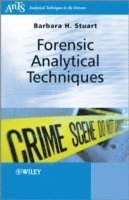
    Forensic Analytical Techniques

    AvBarbara H. Stuart

    Inbunden, Engelska, 2013

    Del 49 i serien Analytical Techniques in the Sciences (AnTs)

    1 361 kr

    Tillfälligt slut

    Fler format och utgåvor

    Häftad

    746 kr

    E-bok

    2 051 kr

    Beskrivning

    The book will be an open learning / distance learning text in the Analytical Techniques for the Sciences (AnTS) covering analytical techniques used in forensic science. No prior knowledge of the analytical techniques will be required by the reader. An introductory chapter will provide an overview of the science of the materials used as forensic evidence. Each of the following chapters will describe the techniques used in forensic analysis. The theory, instrumentation and sampling techniques will be explained and examples of the application of each technique to particular forensic samples will be provided. The reader will be able to assess their understanding with the use of regular self assessment questions and discussion questions throughout the book. The user of the book will be able to apply their understanding to the application of specific techniques to particular analyses encountered in their professional life.

    Produktinformation

    • Utgivningsdatum:2013-01-11
    • Mått:159 x 236 x 17 mm
    • Vikt:426 g
    • Format:Inbunden
    • Språk:Engelska
    • Serie:Analytical Techniques in the Sciences (AnTs)
    • Antal sidor:234
    • Förlag:John Wiley & Sons Inc
    • ISBN:9780470687277

    Utforska kategorier

    • Kemi inom Naturvetenskap och teknik
    • Brottsutredning och kriminalteknik inom Samhälle och politik

    Mer om författaren

    Barbara Stuart (BSc(Hons), MSc(Syd), PhD(Lond), DIC, MRSC, MRACI, Cchem)After graduating with a BSc degree from the University of Sydney in Australia, Barbara Stuart worked as a tutor at this university. She also carried out research in the field of biophysical chemistry in the Department of Physical Chemistry and graduated with a MSc in 1990. The author moved to the UK to carry out doctoral studies in polymer engineering within the Department of Chemical Engineering and Chemical Technology at Imperial College (University of London). After obtaining her PhD in 1993, she took up a position as Lecturer in Physical Chemistry at the University of Greenwich in London. Barbara joined the staff at the University of Technology, Sydney, Australia in 1995, where she is currently a Senior Lecturer in the Department of Chemistry, Materials and Forensic Science. She is presently conducting research in the fields of polymer spectroscopy, materials conservation and forensic science. Barbara is the author of four books published by Wiley, "Modern Infrared Spectroscopy", "Biological Applications of Infrared Spectroscopy", "Polymer Analysis" and "Infrared Spectroscopy: Fundamentals and Applications" in the current ANTS series of texts and "Analytical Techniques in Materials Conservation".

    Innehållsförteckning

    • Series Preface xiiiPreface xvAbout the Author xviiAcronyms, Abbreviations and Symbols xix1 The Chemistry of Forensic Evidence 11.1 Introduction 11.2 Evidence Types 21.2.1 Polymers 21.2.2 Fibres 61.2.3 Paint 71.2.4 Documents 91.2.5 Glass 101.2.6 Soil 111.2.7 Explosives 121.2.8 Firearms 141.2.9 Arson 141.2.10 Body Fluids 161.2.11 Drugs and Toxicology 161.2.12 Fingerprints 211.3 Introduction to Data Analysis 231.4 Summary 242 Preliminary Tests 272.1 Introduction 272.2 Chemical Tests 272.2.1 Methods 282.2.2 Drugs and Toxicology 282.2.3 Body Fluids 292.2.4 Gunshot Residue 302.2.5 Explosives 312.2.6 Paint 312.2.7 Documents 322.3 Density 322.3.1 Methods 322.3.2 Glass 332.3.3 Soil 332.3.4 Polymers 342.4 Light Examination 352.4.1 Methods 352.4.2 Fingerprints 362.4.3 Body fluids 382.4.4 Documents 382.5 Summary 393 Microscopic Techniques 413.1 Introduction 413.2 Optical Microscopy 423.2.1 Methods 423.2.2 Interpretation 443.2.3 Fibres 453.2.4 Paint 483.2.5 Drugs 493.2.6 Glass 493.2.7 Soil 503.2.8 Documents 513.2.9 Firearms 513.3 Transmission Electron Microscopy 513.3.1 Method 523.3.2 Interpretation 533.3.3 Paint 533.4 Scanning Electron Microscopy 543.4.1 Methods 543.4.2 Interpretation 553.4.3 Gunshot Residue 563.4.4 Paint 573.4.5 Fibres 583.4.6 Documents 583.4.7 Glass 593.5 Atomic Force Microscopy 593.5.1 Methods 593.5.2 Interpretation 603.5.3 Documents 603.6 X-Ray Diffraction 603.6.1 Methods 623.6.2 Interpretation 633.6.3 Explosives 633.6.4 Paint 633.6.5 Drugs 643.6.6 Documents 653.6.7 Soil 653.7 Summary 664 Molecular Spectroscopy 694.1 Introduction 704.2 Infrared Spectroscopy 704.2.1 Methods 704.2.2 Interpretation 734.2.3 Paint 744.2.4 Fibres 754.2.5 Polymers 844.2.6 Documents 864.2.7 Explosives 894.2.8 Drugs 894.3 Raman Spectroscopy 894.3.1 Methods 904.3.2 Interpretation 914.3.3 Drugs 914.3.4 Paint 934.3.5 Fibres 944.3.6 Documents 944.3.7 Explosives 944.4 Ultraviolet–visible Spectroscopy 954.4.1 Methods 954.4.2 Interpretation 974.4.3 Fibres 974.4.4 Paint 984.4.5 Documents 994.4.6 Drugs 994.4.7 Toxicology 1014.5 Fluorescence Spectroscopy 1014.5.1 Methods 1014.5.2 Interpretation 1024.5.3 Body Fluids 1024.5.4 Toxicology 1034.5.5 Fibres 1044.6 Nuclear Magnetic Resonance Spectroscopy 1044.6.1 Methods 1044.6.2 Interpretation 1054.6.3 Drugs 1074.6.4 Explosives 1084.7 Summary 1095 Elemental Analysis 1135.1 Introduction 1135.2 Atomic Spectrometry 1145.2.1 Methods 1145.2.2 Interpretation 1155.2.3 Glass 1155.2.4 Gunshot Residue 1165.2.5 Toxicology 1165.3 Inductively Coupled Plasma–Mass Spectrometry 1175.3.1 Methods 1175.3.2 Interpretation 1185.3.3 Glass 1185.3.4 Paint 1185.3.5 Gunshot Residue 1195.4 X-Ray Fluorescence Spectroscopy 1195.4.1 Methods 1205.4.2 Interpretation 1205.4.3 Glass 1215.4.4 Gunshot Residue 1225.4.5 Paint 1225.5 Particle-Induced X-Ray Emission Spectroscopy 1235.5.1 Methods 1245.5.2 Interpretation 1245.5.3 Glass 1245.6 Neutron Activation Analysis 1255.7 Summary 1256 Mass Spectrometry 1296.1 Introduction 1296.2 Molecular Mass Spectrometry 1296.2.1 Methods 1306.2.2 Interpretation 1326.2.3 Drugs 1326.2.4 Explosives 1346.3 Isotope Ratio Mass Spectrometry 1346.3.1 Methods 1356.3.2 Interpretation 1366.3.3 Drugs 1366.3.4 Explosives 1366.4 Ion Mobility Spectrometry 1376.4.1 Methods 1376.4.2 Interpretation 1376.4.3 Explosives 1386.4.4 Drugs 1386.5 Summary 1407 Separation Techniques 1437.1 Introduction 1447.2 Paper Chromatography 1447.2.1 Method 1447.2.2 Interpretation 1447.2.3 Documents 1457.3 Thin Layer Chromatography 1457.3.1 Methods 1467.3.2 Interpretation 1467.3.3 Drugs 1467.3.4 Documents 1477.3.5 Fibres 1487.3.6 Explosives 1487.4 Gas Chromatography 1497.4.1 Methods 1497.4.2 Interpretation 1507.4.3 Drugs 1507.4.4 Toxicology 1527.4.5 Arson Residues 1547.4.6 Explosives 1557.5 Liquid Chromatography 1557.5.1 Methods 1557.5.2 Interpretation 1567.5.3 Drugs and Toxicology 1567.5.4 Fibres 1587.6 Ion Chromatography 1597.6.1 Methods 1597.6.2 Interpretation 1597.6.3 Explosives 1597.7 Capillary Electrophoresis 1617.7.1 Methods 1617.7.2 Interpretation 1627.7.3 Drugs and Toxicology 1627.7.4 Explosives and Gunshot Residues 1637.8 Summary 1638 Thermal Analysis 1678.1 Introduction 1678.2 Pyrolysis Techniques 1688.2.1 Methods 1688.2.2 Interpretation 1688.2.3 Paint 1698.2.4 Fibres 1708.2.5 Polymers 1708.2.6 Documents 1718.3 Differential Scanning Calorimetry and Differential Thermal Analysis 1718.3.1 Methods 1728.3.2 Interpretation 1728.3.3 Polymers 1738.3.4 Fibres 1738.4 Thermogravimetric Analysis 1748.4.1 Methods 1748.4.2 Interpretation 1758.4.3 Polymers 1768.4.4 Explosives and Arson Residues 1788.5 Summary 178References 178Bibliography 195Glossary of Terms 197SI Units and Physical Constants 203Periodic Table 207Index 209