• Fri frakt över 249 kr
  • •
  • Snabba leveranser
  • •
  • Billiga böcker
Kundservice

Du är på sajten för privatpersoner.

Företag, bibliotek eller offentlig verksamhet?

Du handlar på classic.bokus.com, där alla dina funktioner finns intakta.
Till classic.bokus.com
Bokus logotyp. Gå till startsidan.
  • Erbjudanden
  • Nyheter
  • Student
  • Topplistor
  • Barn & ungdom
  • Bokus Play
  • E-böcker
  • Pocketböcker
  • Spel & pussel

10% rabatt på allt med kod NYSTART10 →

Sidfot

Mina sidor

    Hjälp

    • Kundservice
    • Vanliga frågor och svar
    • Frakt och leverans
    • Retur vid ångerrätt
    • Reklamera vara
    • Betalning
    • Köpvillkor
    • Allmänna villkor
    • Information om webbplatsens tillgänglighet

    Om Bokus

    • Om oss
    • Pressrum
    • För studenter
    • För företag
    • För bibliotek och offentlig verksamhet
    • För leverantörer
    • Hållbarhet

    Populärt

    • Aktuella erbjudanden
    • Presentkort
    • Studentlitteratur
    • Nya böcker
    • Topplistor
    • Signerade böcker
    • Engelska böcker

    Inspiration

    • Boktips
    • BookTok
    • Populära bokserier
    • Barnbokskaraktärer
    • Populära författare
    Logotyp för Bokus
    Följ oss på Facebook (extern länk)Följ oss på Instagram (extern länk)Följ oss på YouTube (extern länk)Följ oss på TikTok (extern länk)
    bokus @ CookiesAnpassa cookiesIntegritetspolicyKöpvillkor
    Till Citymail hemsida (extern länk)Till Budbee hemsida (extern länk)Till Postnord hemsida (extern länk)Till Schenker hemsida (extern länk)Till Early Bird hemsida (extern länk)Till Walleys hemsida (extern länk)
    1. Ekonomi och Ledarskap
    2. Ledarskapsböcker
    3. Ledarskap och motivation

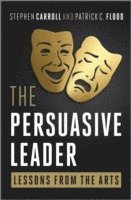
    Persuasive Leader

    Lessons from the Arts

    AvStephen Carroll,Patrick C. Flood

    Inbunden, Engelska, 2010

    402 kr

    Beställningsvara. Skickas inom 5-8 vardagar. Fri frakt över 249 kr.

    Beskrivning

    The communication aspect of leadership – to actively engage your followers and achieve understanding and motivation whilst making the message memorable – has never been more important. Using vivid lessons and examples from spheres outside business organization, The Persuasive Leader explores the leader's role as a communicator and teaches the fundamental principles of successful leadership. This book provides insights and principles about persuasive leadership from a broad range of human experiences. It draws on examples of persuasive leaders and persuasive leadership principles from the performing arts, the fine arts, literature, philosophical writings, and biography. The authors use their unconventional material to explore themes such as moral leadership, toxic leadership, learning from failures, 'distributed' leadership, leading for results and the leader as a mentor and counsellor.Leaders described in The Persuasive Leader:Abraham Lincoln, Jack Welch, Cleopatra, Teddy Roosevelt, Alexander the Great, Rachel Carson, Joshua Chamberlain, Governor John Winthrop, Barack Obamma, Steve Jobs, Henry V, Julius Caesar, John Quincy Adams, Dwight Eisenhower, Susan B. Anthony, Elizabeth Cady Stanton, Huey Long, Napoleon, Ghandi, Sam Walton, Archbishop Sean O'Malley, Benjamin Franklin, Franklin Roosevelt, Jim Sinegal, Dolly Madison, James Jones, Clarence Darrow, William Harvey, Ronald Reagan, Fletcher Christian, Thomas Jefferson, Nelson Mandela, Charles McCormick, George Washington, Oprah Winfrey, Joan of Arc, John Kennedy, Herbert Hoover, Christopher Columbus, Anita Roddick, John DeLorean, Ronald Reagan, Margaret Thatcher, and others less well known persuasive leaders such as Anne Sullivan, TS Lin, Maria Galantry, Dorothy Collins, Scott Nash, Jane Hughes, William Barnes.

    Produktinformation

    • Utgivningsdatum:2010-07-23
    • Mått:160 x 236 x 23 mm
    • Vikt:553 g
    • Format:Inbunden
    • Språk:Engelska
    • Antal sidor:288
    • Förlag:John Wiley & Sons Inc
    • ISBN:9780470688281

    Utforska kategorier

    • Ledarskap och motivation inom Ekonomi och Ledarskap

    Mer om författaren

    Stephen J. Carroll is a retired professor emeritus at the University of Maryland, who now works as a private consultant. During his career he has authored twelve books on psychology and organizational behaviour. He has served as a consultant to more than 30 industrial and government organizations and is a regular speaker at the University of Maryland and Syracuse University executive courses. He is best known for his books on performance assessment and leadership.  He first developed the idea for this book in his courses for company executives where he found they responded particularly well to the case examples from the arts and from day to day life. Patrick C Flood is an Academic Fellow at Cambridge University. He has worked at the London Business School, University of Maryland, University of Limerick, Dublin City University and the London School of Economics. He is known primarily for his work on leadership teams and firm performance. His books include Effective Top Management Teams (2001, Blackwelll; Managing Strategy Implementation (with S.J.Carroll, Blackwell, 2000) (5000 copies sold over life) and Managing without Traditional Methods (Addison Wesley, 1996). He is currently external examiner at SAID business school and consults for the following companies: Pernod Ricard-Irish Distillers; Nypro-Clinton(US); Hewlett Packard (UK), Wang, Paul Partnership and VEC, Novartis, Nortel, ICL (UK), NHS(UK).

    Recensioner i media

    "... this unique book is ideal for executives, organizational leaders, consultants, educators, and MBA students." (Publicnet.co.uk, September 2010)

    Innehållsförteckning

    • Foreword by Denise M. Rousseau xvi Preface xviiAcknowledgements xviiiAbout the authors xix1 Persuasive leadership in life and work 1Beginning cases 2What is leadership? 4Persuasive leadership in a new world 5A newer focus on emotions and logic 6Leadership as a social role in all living groups 6Leadership legacies 7Leadership goals 8Leadership sub-roles 9Leadership in changing crcumstances 9Leader agendas 10Leadership and the arts 10Parents as persuasive leaders 11Leadership and strategies 11Do leaders need charisma? 12Persuasion as a key to all leadership efforts 13Leaders as coherent wholes 13Learning from examples 13Types of persuasion settings 14Types of Leadership 15Leadership skills as identified in the arts and humanities 15Do we need empirical studies of leadership? 16Leaders and ethical behaviours 17Leaders as examples of persuasive and moral principles 172 Usingaesthetics and the arts in persuasive leadership 21Beginning cases 22Leaders using the arts 24What are the arts? 25Practical use of the arts 25The aesthetic response 26Aesthetics and human evolution 27Unity among the arts 27Performance art 28Leader–managers as architects 28The orchestra conductor metaphor 29Music in aesthetics 30Humans as artists 31Theatrical principles in leadership 32Fictional versus actual leaders 33Behaving like an artist 343 Usingwords effectively in persuasive speech and writing 37Beginning cases 38Evolution of language 39Importance of word choice 39Power of words to evoke emotion 40Aesthetic versus non-aesthetic language 41Function of fictional stories 41Use of stories in persuasion 42Delivering words effectively 42Audience reactions to words 45Words reflect characteristics of the speaker 45Being open-minded in one’s communications 464 Persuasive leadership and rhetoric principles 49Beginning cases 50Persuasion principles from philosophy 51Persuasion in literature 52Henry V 53Julius Caesar 55Joshua Chamberlain 56Discussion of speeches 585 Persuasive leadership-planningconsiderations 63Beginning cases 64Studying the prospective audience 65Building credibility 66Obtain endorsements by influential persons 66Build competence and coalitions 67Gather facts and arguments in favor of goals 67Plan for creating arousal/activation and more memorable messages 68Planning for message content 68Preparation 69Practice 69Choose optimum timing and setting 70Emotional appeals 70Use of dramatic principles in persuasion planning 70Creating an engaging character—yourself 71Learning acting skills 71Process of planning 72Using the arts in planning 726 Audience characteristics 77Beginning cases 78Audience characteristics 78Audience to leader effects 79Use of participation 80Audience concerns 82Psychological needs of the audience 82Effect of cultural differences in audience responses 83Motivational propensities in an audience 83Occupational differences 84Gender, ethnic, racial, and age differences 847 Leader–follower emotional ties 89Beginning cases 90Leader–follower attraction 92Leader–follower bonding 93Narcissistic behaviour 93Attraction to morality 94Attractiveness versus behaviour 94Similarity 95Openness and attraction 96Optimistic and hopeful leaders 96Respect for differences 968 Creatingpositive responses in sub-leaders and followers 99Beginning cases 100Leading sub-leaders 101Counselling group members as individuals 102Creating positive emotional states 103Leaders as role models 105Positive psychology 106Optimism in the arts 108Adversity coaching 108Matching individuals and groups with appropriate tasks 109Social barriers to persuasion 1099 Persuasive leadership and change 113Beginning cases 114Change as a constant 115Some fundamental causes of resistance to change efforts 116Importance of feelings of self-efficacy in the motivation to change 117Leader effectiveness versus likeability 117Leadership and admiration—Benjamin Franklin 118Franklin's targeted virtues 119Using goals in change 120Handling multiple factors in change 120Self-leadership and change 121Psychotherapy as an aid to change 121Creating positive emotions 122How small changes can have big effects 12210 Strategic plans as a persuasive tool 125Beginning cases 126What are strategies? 127Importance of acceptance of strategies 127Credibility in the strategic planning process 128Strategic plans and goal setting 128Importance of self-perceived efficacy in goal achievement 129Visioning and goal setting 130Follow-up activities in strategic implementation 13111 Harmful persuasion 135Beginning case 136Doing harm with persuasion 136Types of harm 137Why do such persuasive leaders act the way they do? 138Confronting evil 138Why is harmful persuasion accepted? 138Standing up to injustice 139Helping orientations 139The role of deception in harmful persuasion 141Deceptive messages well delivered 14212 Self-leadership 145Beginning cases 146Leadership and self-management 147Political liberty 147Freedom in organizations 148Trends in self-direction in several fields 149Self-direction in parenting and preparation for self-direction 149Therapy and other individual change programmes 149Differential degrees of self-leadership and wasted human assets 150Self-management and human respect and dignity 150Self-leadership and the professional 15113 Persuasive variations in different settings 153Beginning cases 154Persuasion in the courtroom 156The law as a symbol of justice 158Persuasion in the medical community 158Persuasion in the home 160Architecture 161Philanthropic and artistic organizations 161In the political arena 16114 Achievingtrust and cooperation 165Beginning cases 166Leadership issues in cooperation 167Reactions to authority 168Origins of trust 169Types of trust 170Follower and leader needs 172Explaining and fostering cooperation among group members 17215 The noble persuasive leader 179Beginning cases 180What is nobility? 182Roots of noble behaviour 182Religion and nobility 183Nobility in business enterprises 184Nobility as a social class 184Noble behaviour in the form of altruism and helping 185The appeal of noble leaders 186Immoral leaders 186What are immoral practices in terms of morality within organizations? 187Moral development 18816 Leadership emergence 191Beginning cases 192Choosing leaders 194Situational factors in persuasive leader emergence and effectiveness 194Some indicators of leader emergence and success 195Leaders as independent visionaries 198Persuasiveness in leader effectiveness 198Leader–follower interactions 199Mindsets of effective leaders 199What do prospective followers want in a leader? 200Leadership changes 20117 Handlingproblems and failure 203Beginning cases 204What are problems and failures? 206Failures due to a changing world 207Causes of persuasion failures 208Persuasion failures mixed with successes 208Persuasion failures due to competing social cultures 208Politics and persuasion failures 209Personal characteristics in reacting to problems and failures 210Role of arrogance and hubris in failures 21018 Why become a persuasive leader? 215Beginning cases 216Persuasiveness as a means to significant ends 218Changing life roles 219The human search for happiness 219What is true (rather than perceived) happiness? 220Expectations and happiness 221Good and evil ends 221Redeeming oneself 222The ideal persuasive leader in fiction 223Search for a meaningful life 225Expectations and success 226Avoidance of regrets/remorse 226Persuasion and performance and a changed self-identity 227Role of positive values 228Life as a search for beauty 229Summary 229End cases 230Exercise 231Works cited 232Appendices.A Brief look at some of the relevant arts and humanities 233B Happiness 239C Behaviours of the best and worst bosses 243D Selected social science theories relevant to persuasive leadership 247Bibliography 253Index 259