• Fri frakt över 249 kr
  • •
  • Snabba leveranser
  • •
  • Billiga böcker
Kundservice

Du är på sajten för privatpersoner.

Företag, bibliotek eller offentlig verksamhet?

Du handlar på classic.bokus.com, där alla dina funktioner finns intakta.
Till classic.bokus.com
Bokus logotyp. Gå till startsidan.
  • Erbjudanden
  • Nyheter
  • Student
  • Topplistor
  • Barn & ungdom
  • Bokus Play
  • E-böcker
  • Pocketböcker
  • Spel & pussel

10% rabatt på allt med kod: NYSTART10 →

Sidfot

Mina sidor

    Hjälp

    • Kundservice
    • Vanliga frågor och svar
    • Frakt och leverans
    • Retur vid ångerrätt
    • Reklamera vara
    • Betalning
    • Köpvillkor
    • Allmänna villkor
    • Information om webbplatsens tillgänglighet

    Om Bokus

    • Om oss
    • Pressrum
    • För studenter
    • För företag
    • För bibliotek och offentlig verksamhet
    • För leverantörer
    • Hållbarhet

    Populärt

    • Aktuella erbjudanden
    • Presentkort
    • Studentlitteratur
    • Nya böcker
    • Topplistor
    • Signerade böcker
    • Engelska böcker

    Inspiration

    • Boktips
    • BookTok
    • Populära bokserier
    • Barnbokskaraktärer
    • Populära författare
    Logotyp för Bokus
    Följ oss på Facebook (extern länk)Följ oss på Instagram (extern länk)Följ oss på YouTube (extern länk)Följ oss på TikTok (extern länk)
    bokus @ CookiesAnpassa cookiesIntegritetspolicyKöpvillkor
    Till Citymail hemsida (extern länk)Till Budbee hemsida (extern länk)Till Postnord hemsida (extern länk)Till Schenker hemsida (extern länk)Till Early Bird hemsida (extern länk)Till Walleys hemsida (extern länk)
    1. Djur och Natur
    2. Naturböcker
    3. Växtböcker

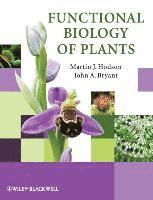
    Functional Biology of Plants

    AvMartin J. Hodson,John A. Bryant

    Häftad, Engelska, 2012

    1 128 kr

    Beställningsvara. Skickas inom 5-8 vardagar. Fri frakt över 249 kr.

    Beskrivning

    Functional Biology of Plants provides students and researchers with a clearly written, well structured whole plant physiology text. Early in the text, it provides essential information on molecular and cellular processes so that the reader can understand how they are integrated into the development and function of the plant at whole-plant level. Thus, this beautifully illustrated book, presents a modern, applied integration of whole plant and molecular approaches to the study of plants. It is divided into four parts: Part 1: Genes and Cells, looks at the origins of plants, cell structure, biochemical processes and genes and development. Part 2: The Functioning Plant, describes the structure and function of roots, stems, leaves, flowers and seed and fruit development. Part 3: Interactions and Adaptations, examines environmental and biotic stresses and how plants adapt and acclimatise to these conditions. Part 4: Future Directions, illustrates the great importance of plant research by looking at some well chosen, topical examples such as GM crops, biomass and bio-fuels, loss of plant biodiversity and the question of how to feed the planet.Throughout the book there are text boxes to illustrate particular aspects of how humans make use of plants, and a comprehensive glossary proves invaluable to those coming to the subject from other areas of life science.

    Produktinformation

    • Utgivningsdatum:2012-04-13
    • Mått:180 x 244 x 20 mm
    • Vikt:771 g
    • Format:Häftad
    • Språk:Engelska
    • Antal sidor:336
    • Förlag:John Wiley and Sons Ltd
    • ISBN:9780470699393

    Utforska kategorier

    • Växtböcker inom Djur och Natur
    • Botanik inom Naturvetenskap och teknik

    Mer om författaren

    Dr Martin J. Hodson, School of Biological & Molecular Sciences, Oxford Brookes University. Martin Hodson is a Visiting Researcher in Environmental Biology in the School of Life Sciences at Oxford Brookes University. Professor John A. Bryant, Emeritus Professor, School of Biosciences, University of Exeter. John Bryant is Professor Emeritus of Cell and Molecular Biology at the University of Exeter; Visiting Professor in Molecular Biology at West Virginia State University, USA; Chair of Christians in Science and is a past President of the Society for Experimental Biology.

    Recensioner i media

    "Martin Hodson and John Bryant have written the most captivating and elementary textbook on modern plant biology. It might be read from cover to cover by anyone seeking an introduction to the subject, but seems especially suited to high school, undergraduate and vocational courses."  (Expl Agric, 1 January 2013)Named CHOICE Outstanding Title for 2012 “Students who are new to plant science will be quite well served, as will graduate students and others needing to develop fuller understandings and perspectives on their research.  Summing Up: Highly recommended.  Lower-division undergraduates through researchers/faculty.”  (Choice, 1 November 2012)

    Innehållsförteckning

    • Preface, ixAcknowledgements, x1 Origins, 11.1 Plants – what are they?, 11.2 Back to the beginning, 11.3 Eukaryotes emerge, 21.4 Photosynthetic eukaryotes – the first 'plants', 31.5 The greening of Earth – plants invade the land, 41.6 Embracing the terrestrial lifestyle, 61.7 Arrival of the angiosperms, 81.8 Sex and the alternation of generations, 112 Introduction to Plant Cells, 142.1 Plant cells, 142.2 Cell walls, 152.3 The plasma membrane, 212.4 Cell compartmentation, 232.5 Chloroplasts, 242.6 Mitochondria, 272.7 The nucleus, 292.8 The vacuole, 312.9 Endomembrane systems, 312.10 Microbodies/peroxisomes, 322.11 Ribosomes, 342.12 The cytoskeleton, 342.13 The mitotic cell cycle, 362.14 Metabolism, 423 Genes, Gene Expression and Development, 563.1 Genes, 563.2 Gene expression, 593.3 Chloroplasts and mitochondria, 653.4 Control of gene expression – switching genes on and off, 693.5 Molecular aspects of development, 753.6 Plant hormones, 753.7 Light receptors, 863.8 Concluding comments, 924 From Embryo to Establishment, 944.1 Introduction, 944.2 Embryogenesis, 944.3 Endosperm, 994.4 Perisperm, 1004.5 Late embryo growth, storage deposition and desiccation, 1004.6 Seed coat, 1094.7 'Recalcitrant' seeds, 1094.8 Apomixis, 1094.9 Seeds and fruit, 1104.10 Fruit development and ripening, 1124.11 Dormancy and quiescence, 1144.12 Germination, 1154.13 Establishment, 1205 Roots, 1245.1 External morphology of roots, 1245.2 Root anatomy, 1245.3 Root growth, 1265.4 Soil chemistry and water relations, 1305.5 Plant mineral nutrition, 1325.6 Movement of nutrients to the root surface, 1335.7 Absorption of water and nutrients, 1335.8 Mycorrhizae, 1395.9 Root nodules and nitrogen fixation, 1395.10 Tropisms, 1425.11 Gravitropism in roots, 1436 Stems, 1456.1 Structure of the stem, 1456.2 The young stem, 1456.3 The shoot apical meristem, 1466.4 Shoot organizational forms, 1486.5 The mature stem, 1486.6 The tallest, largest and oldest plants, 1516.7 Ageing and senescence, 1526.8 Long-distance xylem transport, 1546.9 Translocation in the phloem, 1556.10 Biological clocks in plants, 1576.11 Phototropism – how do stems curve towards the light?, 1606.12 Gravitropism in stems, 1606.13 Thigmotropism, 1616.14 Nastic movements, 1616.15 Bud dormancy, 1637 Leaves, 1667.1 External morphology of leaves, 1667.2 The anatomy of the leaf, 1667.3 Control of leaf growth and development, 1677.4 Photosynthesis, 1687.5 Photorespiration, 1747.6 The photosynthesis/transpiration dilemma, 1777.7 C4 photosynthesis, 1787.8 Crassulacean acid metabolism (CAM), 1817.9 Sources and sinks, 1827.10 Stomata, 1847.11 Leaf senescence and abscission, 1868 Flowers, 1898.1 Introduction, 1898.2 What is a flower?, 1898.3 Organization of flowers and flowering – inflorescences and life-styles, 1918.4 Formation of flowers, 1928.5 Gametogenesis, 1988.6 Pollination and fertilization, 2048.7 Evolution, 2149 Environmental Stresses, 2169.1 Responses to stress, 2169.2 Temperature, 2179.3 Waterlogging, 2219.4 Drought, 2239.5 Salinity, 2269.6 Chemical stress, 2289.7 Light and radiation, 23210 Acclimation and Adaptation to Environmental Stresses, 23510.1 Adaptation and acclimation responses, 23510.2 Temperature, 23610.3 Resistance and adaptation to waterlogging, 24010.4 Resistance and adaptation to drought, 24310.5 Resistance and adaptation to salinity, 24710.6 Tolerance and adaptation to toxic metals, 25210.7 Adaptations to light and radiation, 25611 Biotic Stresses, 26011.1 Plant/plant competition, 26011.2 Plant/animal interactions, 26511.3 Plant pathology, 27112 Plants and the Future, 28412.1 Climate change, 28412.2 Loss of plant biodiversity, 28812.3 Biomass and biofuels derived from plants, 29112.4 Genetically modified crops, 29712.5 Conclusion, 300Glossary, 302Index, 309