• Fri frakt över 249 kr
  • •
  • Snabba leveranser
  • •
  • Billiga böcker
Kundservice

Du är på sajten för privatpersoner.

Företag, bibliotek eller offentlig verksamhet?

Du handlar på classic.bokus.com, där alla dina funktioner finns intakta.
Till classic.bokus.com
Bokus logotyp. Gå till startsidan.
  • Erbjudanden
  • Nyheter
  • Student
  • Topplistor
  • Barn & ungdom
  • Bokus Play
  • E-böcker
  • Pocketböcker
  • Spel & pussel

10% rabatt på allt med kod NYSTART10 →

Sidfot

Mina sidor

    Hjälp

    • Kundservice
    • Vanliga frågor och svar
    • Frakt och leverans
    • Retur vid ångerrätt
    • Reklamera vara
    • Betalning
    • Köpvillkor
    • Allmänna villkor
    • Information om webbplatsens tillgänglighet

    Om Bokus

    • Om oss
    • Pressrum
    • För studenter
    • För företag
    • För bibliotek och offentlig verksamhet
    • För leverantörer
    • Hållbarhet

    Populärt

    • Aktuella erbjudanden
    • Presentkort
    • Studentlitteratur
    • Nya böcker
    • Topplistor
    • Signerade böcker
    • Engelska böcker

    Inspiration

    • Boktips
    • BookTok
    • Populära bokserier
    • Barnbokskaraktärer
    • Populära författare
    Logotyp för Bokus
    Följ oss på Facebook (extern länk)Följ oss på Instagram (extern länk)Följ oss på YouTube (extern länk)Följ oss på TikTok (extern länk)
    bokus @ CookiesAnpassa cookiesIntegritetspolicyKöpvillkor
    Till Citymail hemsida (extern länk)Till Budbee hemsida (extern länk)Till Postnord hemsida (extern länk)Till Schenker hemsida (extern länk)Till Early Bird hemsida (extern länk)Till Walleys hemsida (extern länk)
    1. Naturvetenskap och teknik
    2. Teknik och industri
    3. Elektronik och kommunikationer

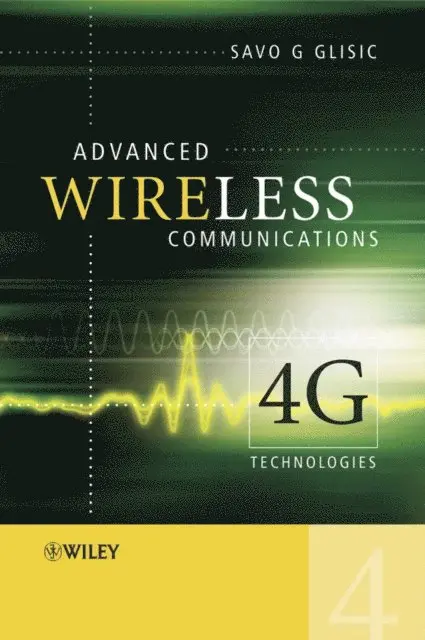
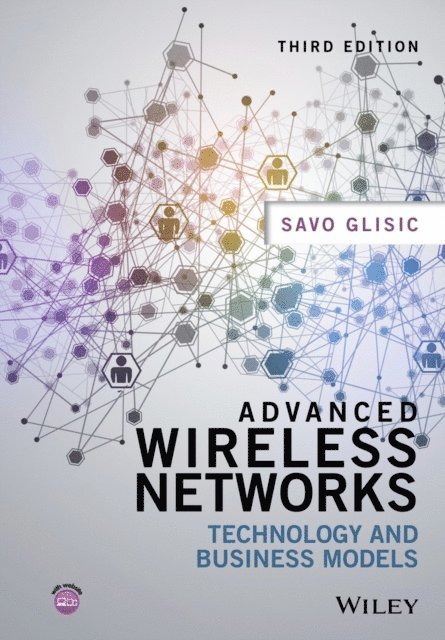
    Advanced Wireless Communications and Internet

    Future Evolving Technologies

    AvSavo G. Glisic

    Inbunden, Engelska, 2011

    2 032 kr

    Beställningsvara. Skickas inom 5-8 vardagar. Fri frakt över 249 kr.

    Fler format och utgåvor

    E-bok

    2 351 kr

    E-bok

    2 351 kr

    Beskrivning

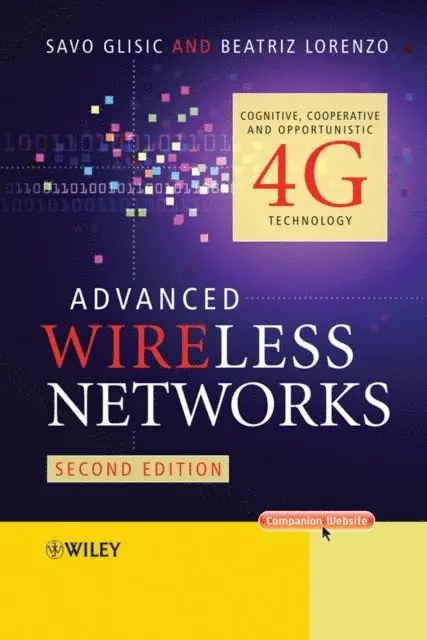
    ADVANCED WIRELESS COMMUNICATIONS AND INTERNET THIRD EDITION ADVANCED WIRELESS COMMUNICATIONS AND INTERNET Future Evolving Technologies The new edition of Advanced Wireless Communications: 4G Cognitive and Cooperative Broadband Technology, 2nd Edition, including the latest developments In the evolution of wireless communications, the dominant challenges are in the areas of networking and their integration with the Future Internet. Even the classical concept of cellular networks is changing and new technologies are evolving to replace it. To reflect these new trends, Advanced Wireless Communications & INTERNET builds upon the previous volumes, enhancing the existing chapters, and including a number of new topics. Systematically guiding readers from the fundamentals through to advanced areas, each chapter begins with an introductory explanation of the basic problems and solutions followed with an analytical treatment in greater detail. The most important aspects of new emerging technologies in wireless communications are comprehensively covered including: next generation Internet; cloud computing and network virtualization; economics of utility computing and wireless grids and clouds. This gives readers an essential understanding of the overall environment in which future wireless networks will be operating. Furthermore, a number of methodologies for maintaining the network connectivity, by using tools ranging from genetic algorithms to stochastic geometry and random graphs theory, and a discussion on percolation and connectivity, are also offered. The book includes a chapter on network formation games, covering the general models, knowledge based network formation games, and coalition games in wireless ad hoc networks. Illustrates points throughout using real-life case studies drawn from the author’s extensive international experience in the field of telecommunicationsFully updated to include the latest developments, key topics covered include: advanced routing and network coding; network stability control; relay-assisted Wireless Networks; multicommodity flow optimization problems, flow optimization in heterogeneous networks, and dynamic resource allocation in computing cloudsMethodically guides readers through each topic from basic to advanced areasFocuses on system elements that provide adaptability and re-configurability, and discusses how these features can improve wireless communications system performanceEnjoyed this book?Why not tell others about itand write a review on yourfavourite online bookseller.

    Produktinformation

    • Utgivningsdatum:2011-04-08
    • Mått:185 x 252 x 51 mm
    • Vikt:1 733 g
    • Format:Inbunden
    • Språk:Engelska
    • Antal sidor:960
    • Upplaga:3
    • Förlag:John Wiley & Sons Inc
    • ISBN:9780470711224

    Utforska kategorier

    • Elektronik och kommunikationer inom Naturvetenskap och teknik

    Mer om författaren

    SAVO G GLISIC, UNIVERSITY OF OULU, FINLAND

    Innehållsförteckning

    • Preface to the Third Edition xix1 Fundamentals 11.1 4G and the Book Layout 11.2 General Structure of 4G Signals 51.3 Next Generation Internet 161.4 Cloud Computing and Network Virtualization 181.5 Economics of Utility Computing 201.6 Drawbacks of Cloud Computing 221.7 Wireless Grids and Clouds 24References 302 Adaptive Coding 352.1 Adaptive and Reconfigurable Block Coding 352.2 Adaptive and Reconfigurable Convolutional Codes 402.3 Concatenated Codes with Interleavers 512.4 Adaptive Coding, Practice and Prospects 572.5 Distributed Source Coding 59Appendix 2.1 Maximum a Posteriori Detection 69References 713 Adaptive and Reconfigurable Modulation 773.1 Coded Modulation 773.2 Adaptive Coded Modulation for Fading Channels 86References 894 Space–Time Coding 934.1 Diversity Gain 934.2 Space–Time Coding 984.3 Space–Time Block Codes from Orthogonal Designs 1124.4 Channel Estimation Imperfections 1224.5 Quasi-Orthogonal Space–Time Block Codes 1234.6 Space–Time Convolutional Codes 1274.7 Algebraic Space–Time Codes 1284.8 Differential Space–Time Modulation 1334.9 Multiple Transmit Antenna Differential Detection from Generalized Orthogonal Designs 1424.10 Layered Space–Time Coding 1484.11 Concatenated Space–Time Block Coding 1574.12 Estimation of MIMO Channel 1654.13 Space–Time Codes for Frequency Selective Channels 1684.14 Optimization of a MIMO System 1744.15 MIMO Systems with Constellation Rotation 1824.16 Diagonal Algebraic Space–Time Block Codes 187Appendix 4.1 QR Factorization 192Appendix 4.2 Lattice Code Decoder for Space–Time Codes 194Appendix 4.3 MIMO Channel Capacity 195References 2005 Multiuser Communication 2095.1 Pseudorandom Sequences 2095.2 Multiuser CDMA Receivers 2205.3 Minimum Mean Square Error (MMSE) Linear Multiuser Detection 2375.4 Single User LMMSE Receivers for Frequency Selective Fading Channels 2465.5 Signal Subspace-Based Channel Estimation for CDMA Systems 2535.6 Iterative Receivers for Layered Space–Time Coding 259Appendix 5.1 Linear and Matrix Algebra 277References 2836 Channel Estimation and Equalization 2916.1 Equalization in the Digital Data Transmission System 2916.2 LMS Equalizer 2976.3 Detection for a Statistically Known, Time Varying Channel 3016.4 LMS-Adaptive MLSE Equalization on Multipath Fading Channels 3066.5 Adaptive Channel Identification and Data Demodulation 3116.6 Turbo Equalization 3246.7 Kalman Filter Based Joint Channel Estimation and Data Detection Over Fading Channels 3306.8 Equalization Using Higher Order Signal Statistics 335References 3457 Orthogonal Frequency Division Multiplexing – OFDM and Multicarrier CDMA 3517.1 Timing and Frequency Offset in OFDM 3517.2 Fading Channel Estimation for OFDM Systems 3577.3 64 DAPSK and 64 QAM Modulated OFDM Signals 3637.4 Space–Time Coding with OFDM Signals 3677.5 Layered Space–Time Coding for MIMO OFDM 3757.6 Space–Time Coded TDMA/OFDM Reconfiguration Efficiency 3797.7 Multicarrier CDMA System 3927.8 Multicarrier DS-CDMA Broadcast Systems 3967.9 Frame By Frame Adaptive Rate Coded Multicarrier DS-CDMA System 3997.10 Intermodulation Interference Suppression in Multicarrier CDMA Systems 4057.11 Successive Interference Cancellation in Multicarrier DS-CDMA Systems 4097.12 MMSE Detection of Multicarrier CDMA 4137.13 Approximation of Optimum Multiuser Receiver for Space–Time Coded Multicarrier CDMA Systems 4197.14 Parallel Interference Cancellation in OFDM Systems in Time-Varying Multipath Fading Channels 4307.15 Zero Forcing OFDM Equalizer in Time-Varying Multipath Fading Channels 4377.16 Channel Estimation for OFDM Systems Using Multiple Receive Antennas 4427.17 Turbo Processing for an OFDM-Based MIMO System 4457.18 PAPR Reduction of OFDM Signals 447Appendix 7.1 451References 4528 UltraWide Band Radio 4598.1 UWB Multiple Access in a Gaussian Channel 4598.2 The UWB Channel 4628.3 UWB System with M-ary Modulation 4688.4 M-ary PPM UWB Multiple Access 4768.5 Coded UWB Schemes 4838.6 Multiuser Detection in UWB Radio 4868.7 UWB with Space–Time Processing 4878.8 Beamforming for UWB Radio 492References 5199 Linear Precoding for MIMO Channels 5239.1 Space–Time Precoders and Equalizers for MIMO Channels 5239.2 Linear Precoding Based on Convex Optimization Theory 5309.3 Convex Optimization-Theory-Based Beamforming 540References 56110 Cognitive Networks 56510.1 Optimal Channel Sensing in Cognitive Wireless Networks 56510.2 Optimal Sequential Channel Sensing 56810.3 Optimal Parallel Multiband Channel Sensing 56910.4 Collaborative Spectrum Sensing 57310.5 Multichannel Cognitive MAC 578References 58311 Relay-AssistedWireless Networks 585A. Agustin, J. Vidal,O.Muñoz, and S. Glisic11.1 Introduction 58511.2 Background and Related Work 58611.3 Cooperative Communications 59311.4 Relay-Assisted Communications 61611.5 Two-Way Relay-Assisted Communications 64611.6 Relay-Assisted Communications With Reuse of Resources 651Appendices 66812 Biologically Inspired Paradigms inWireless Networks 68312.1 Biologically Inspired Model for Securing Hybrid Mobile Ad Hoc Networks 68312.2 Biologically Inspired Routing in Ad Hoc Networks 68712.3 Analytical Modeling of AntNet as Adaptive Mobile Agent Based Routing 69112.4 Biologically Inspired Algorithm for Optimum Multicasting 69712.5 Biologically Inspired (BI) Distributed Topology Control 70312.6 Optimization of Mobile Agent Routing in Sensor Networks 70812.7 Epidemic Routing 71012.8 Nano-Networks 71512.9 Genetic Algorithm Based Dynamic Topology Reconfiguration in Cellular Multihop Wireless Networks 718References 73913 Positioning in Wireless Networks 74313.1 Mobile Station Location in Cellular Networks 74313.2 Relative Positioning in Wireless Sensor Networks 75313.3 Average Performance of Circular and Hyperbolic Geolocation 762References 77114 Wireless Networks Connectivity 77314.1 Survivable Wireless Networks Design 77314.2 Survivability of Wireless Ad Hoc Networks 77614.3 Network Dimensioning 77714.4 Survivable Network Under General Traffic 78514.5 Stochastic Geometry and Random Graphs Theory 791References 79815 Advanced Routing and Network Coding 80115.1 Conventional Routing Versus Network Coding 80115.2 A Max-Flow Min-Cut Theorem 80315.3 Algebraic Formulation of Network Coding 80715.4 Random Network Coding 81115.5 Gossip Based Protocol and Network Coding 81315.6 Network Coding With Reduced Complexity 81615.7 Multisource Multicast Network Switching 82015.8 Optimization of Wireless Multicast Ad-Hoc Networks 83115.9 Optimization of Multicast Wireless Ad-Hoc Network Using Soft Graph Coloring and Non-Linear Cubic Games 84315.10 Joint Optimization of Routing and Medium Contention in Multihop Multicast Wireless Network 85515.11 Routing and Network Stability 86115.12 Lagrangian Decomposition of the Multicomodity Flow Optimization Problem 86715.13 Flow Optimization in Heterogeneous Networks 86815.14 Dynamic Resource Allocation in Computing Clouds 87916 Network Formation Games 88716.1 General Model of Network Formation Games 88716.2 Knowledge Based Network Formation Games 89316.3 Coalition Games in Wireless Ad Hoc Networks 89716.4 HD Game Based TCP Selection 91216.4.1 Evolutionary Stable Strategy 91416.4.2 TCP Protocol Competition in Wireless Networks 918References 919Index 923