• Fri frakt över 249 kr
  • •
  • Snabba leveranser
  • •
  • Billiga böcker
Kundservice

Du är på sajten för privatpersoner.

Företag, bibliotek eller offentlig verksamhet?

Du handlar på classic.bokus.com, där alla dina funktioner finns intakta.
Till classic.bokus.com
Bokus logotyp. Gå till startsidan.
  • Erbjudanden
  • Nyheter
  • Student
  • Topplistor
  • Barn & ungdom
  • Bokus Play
  • E-böcker
  • Pocketböcker
  • Spel & pussel

10% rabatt på allt med kod NYSTART10 →

Sidfot

Mina sidor

    Hjälp

    • Kundservice
    • Vanliga frågor och svar
    • Frakt och leverans
    • Retur vid ångerrätt
    • Reklamera vara
    • Betalning
    • Köpvillkor
    • Allmänna villkor
    • Information om webbplatsens tillgänglighet

    Om Bokus

    • Om oss
    • Pressrum
    • För studenter
    • För företag
    • För bibliotek och offentlig verksamhet
    • För leverantörer
    • Hållbarhet

    Populärt

    • Aktuella erbjudanden
    • Presentkort
    • Studentlitteratur
    • Nya böcker
    • Topplistor
    • Signerade böcker
    • Engelska böcker

    Inspiration

    • Boktips
    • BookTok
    • Populära bokserier
    • Barnbokskaraktärer
    • Populära författare
    Logotyp för Bokus
    Följ oss på Facebook (extern länk)Följ oss på Instagram (extern länk)Följ oss på YouTube (extern länk)Följ oss på TikTok (extern länk)
    bokus @ CookiesAnpassa cookiesIntegritetspolicyKöpvillkor
    Till Citymail hemsida (extern länk)Till Budbee hemsida (extern länk)Till Postnord hemsida (extern länk)Till Schenker hemsida (extern länk)Till Early Bird hemsida (extern länk)Till Walleys hemsida (extern länk)
    1. Naturvetenskap och teknik
    2. Teknik och industri
    3. Tillverkningsteknik

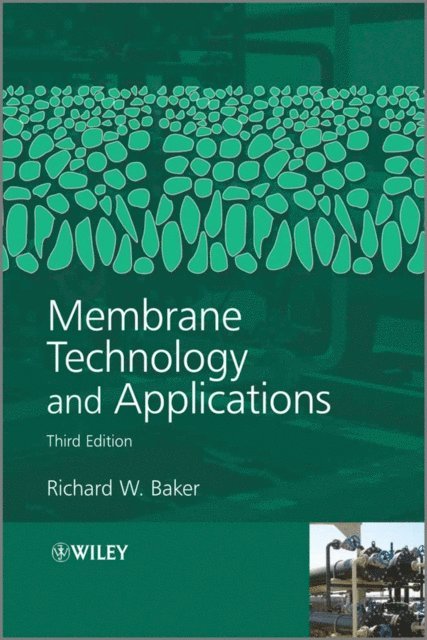
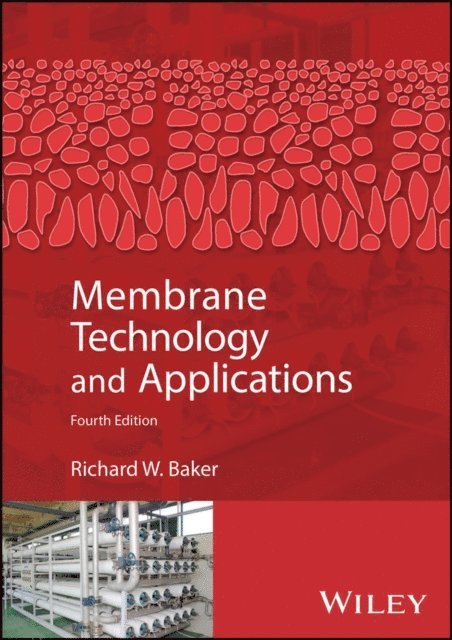
    Membrane Technology and Applications

    AvRichard W. Baker

    Inbunden, Engelska, 2012

    1 184 kr

    Beställningsvara. Skickas inom 5-8 vardagar. Fri frakt över 249 kr.

    Fler format och utgåvor

    E-bok

    1 357 kr

    E-bok

    1 357 kr

    Inbunden

    1 337 kr

    E-bok

    1 625 kr

    E-bok

    1 625 kr

    Beskrivning

    “… the best handbook on membrane technology, which is currently on the market... ” –Membrane News (on the previous edition)Building on the success of the previous edition, Membrane Technology and Applications Third Edition provides a comprehensive overview of separation membranes, their manufacture and their applications. Beginning with a series of general chapters on membrane preparation, transport theory and concentration polarization, the book then surveys several major areas of membrane application in separate chapters. Written in a readily accessible style, each chapter covers its membrane subject thoroughly, from historical and theoretical backgrounds through to current and potential applications. Topics include reverse osmosis, ultrafiltration, pervaporation, microfiltration, gas separation and coupled and facilitated transport; chapters on electrodialysis and medical applications round out the coverage.NEW TO THE THIRD EDITION New sections on the use of membranes in the chlor-alkali industry, membrane distillation, pressure retarded osmosis and constant flux-variable pressure ultrafiltrationZeolite and ceramic membranes, submerged membrane modules, and fuel cell membranesSubstantially enhanced chapters on ultrafiltration, pervaporation and membrane contactorsUpdates to every chapter to reflect the developments in the field

    Produktinformation

    • Utgivningsdatum:2012-08-31
    • Mått:168 x 239 x 36 mm
    • Vikt:1 134 g
    • Format:Inbunden
    • Språk:Engelska
    • Antal sidor:592
    • Upplaga:3
    • Förlag:John Wiley & Sons Inc
    • ISBN:9780470743720

    Utforska kategorier

    • Tillverkningsteknik inom Naturvetenskap och teknik

    Mer om författaren

    Richard W. Baker, Membrane Technology and Research, Inc.(MTR), Newark, California, USA

    Innehållsförteckning

    • Preface xiAcknowledgments xiii   1. Overview of Membrane Science and Technology 11.1 Introduction 11.2 Historical Development of Membranes 11.3 Types of Membranes 41.3.1 Isotropic Membranes 41.3.2 Anisotropic Membranes 61.3.3 Ceramic, Metal, and Liquid Membranes 61.4 Membrane Processes 6References 132. Membrane Transport Theory 152.1 Introduction 152.2 The Solution-Diffusion Model 182.2.1 Molecular Dynamics Simulations 182.2.2 Concentration and Pressure Gradients in Membranes 222.2.3 Application of the Solution-Diffusion Model to Specific Processes 272.2.4 A Unified View 502.3 Structure-Permeability Relationships in Solution-Diffusion Membranes 532.3.1 Diffusion Coefficients 552.3.2 Sorption Coefficients in Polymers 642.4 Pore-Flow Membranes 722.4.1 Permeation in Ultrafiltration and Microfiltration Membranes 732.4.2 Knudsen Diffusion and Surface Diffusion in Microporous Membranes 792.4.3 Polymers with Intrinsic Microporosity (PIMs) 862.4.4 The Transition Region 892.5 Conclusions and Future Directions 90References 923. Membranes and Modules 973.1 Introduction 973.2 Isotropic Membranes 983.2.1 Isotropic Nonporous Membranes 983.2.2 Isotropic Microporous Membranes 1003.3 Anisotropic Membranes 1023.3.1 Phase separation membranes 1043.3.2 Interfacial Polymerization Membranes 1213.3.3 Solution-Coated Composite Membranes 1253.3.4 Other Anisotropic Membranes 1283.3.5 Repairing Membrane Defects 1323.4 Metal, Ceramic, Zeolite, Carbon, and Glass Membranes 1343.4.1 Metal Membranes 1343.4.2 Ceramic Membranes 1353.4.3 Zeolite Membranes 1393.4.4 Mixed-Matrix Membranes 1413.4.5 Carbon Membranes 1453.4.6 Microporous Glass Membranes 1483.5 Liquid Membranes 1483.6 Hollow Fiber Membranes 1483.7 Membrane Modules 1543.7.1 Plate-and-Frame Modules 1553.7.2 Tubular Modules 1573.7.3 Spiral-Wound Modules 1583.7.4 Hollow Fiber Modules 1623.7.5 Other Module Types 1653.8 Module Selection 1673.9 Conclusions and Future Directions 169References 1704. Concentration Polarization 1794.1 Introduction 1794.2 Boundary Layer Film Model 1824.3 Determination of the Peclet Number 1914.4 Concentration Polarization in Liquid Separation Processes 1934.5 Concentration Polarization in Gas Separation Processes 1964.6 Cross-Flow, Co-Flow, and Counter-Flow 1974.7 Conclusions and Future Directions 204References 2055. Reverse Osmosis 2075.1 Introduction and History 2075.2 Theoretical Background 2085.3 Membranes and Materials 2135.3.1 Cellulosic Membranes 2135.3.2 Noncellulosic Polymer Membranes 2165.3.3 Interfacial Composite Membranes 2175.3.4 Other Membrane Materials 2195.4 Reverse Osmosis Membrane Categories 2205.4.1 Seawater and Brackish Water Desalination Membranes 2215.4.2 Nanofiltration Membranes 2225.4.3 Hyperfiltration Organic Solvent Separating Membranes 2245.5 Membrane Selectivity 2275.6 Membrane Modules 2285.7 Membrane Fouling Control 2315.7.1 Scale 2315.7.2 Silt 2335.7.3 Biofouling 2335.7.4 Organic Fouling 2355.7.5 Membrane Cleaning 2365.8 Applications 2375.8.1 Brackish Water Desalination 2385.8.2 Seawater Desalination 2405.8.3 Ultrapure Water 2415.8.4 Wastewater Treatment 2425.8.5 Nanofiltration 2445.8.6 Organic Solvent Separation 2455.9 Conclusions and Future Directions 246References 2476. Ultrafiltration 2536.1 Introduction and History 2536.2 Characterization of Ultrafiltration Membranes 2546.3 Membrane Fouling 2576.3.1 Constant Pressure/Constant Flux Operation 2576.3.2 Concentration Polarization 2616.3.3 Fouling Control 2716.4 Membranes 2746.5 Constant Pressure Modules, System Design, and Applications 2746.5.1 Cross-Flow Ultrafiltration Modules 2756.5.2 Constant Pressure (Cross-Flow) System Design 2786.5.3 Applications of Cross-Flow Membrane Modules 2826.6 Constant Flux Modules, System Design, and Applications 2926.6.1 Constant Flux/Variable Pressure Modules 2926.6.2 Submerged Membrane Modules and System Design 2936.6.3 Submerged Membrane Applications 2966.7 Conclusions and Future Directions 299References 3007. Microfiltration 3037.1 Introduction and History 3037.2 Background 3057.2.1 Types of Membrane 3057.2.2 Membrane Characterization 3067.2.3 Microfiltration Membranes and Modules 3137.2.4 Process Design 3167.3 Applications 3207.3.1 Sterile Filtration of Pharmaceuticals 3227.3.2 Sterilization of Wine and Beer 3227.3.3 Microfiltration in the Electronics Industry 3237.4 Conclusions and Future Directions 323References 3248. Gas Separation 3258.1 Introduction and History 3258.2 Theoretical Background 3268.2.1 Polymer Membranes 3288.2.2 Metal Membranes 3378.2.3 Ceramic and Zeolite Membranes 3378.2.4 Thermally Rearranged/Microporous Carbon Membranes 3388.2.5 Mixed-Matrix Membranes 3388.3 Membrane Modules 3388.4 Process Design 3398.4.1 Pressure Ratio 3408.4.2 Stage-Cut 3438.4.3 Multistep and Multistage System Designs 3458.4.4 Recycle Designs 3478.5 Applications 3498.5.1 Hydrogen Separations 3508.5.2 Oxygen/Nitrogen Separation 3528.5.3 Natural Gas Separations 3598.5.4 Carbon Dioxide Separation 3618.5.5 Vapor/Gas Separations 3688.5.6 Dehydration of Air 3698.5.7 Carbon Dioxide/Hydrogen and Carbon Dioxide/Nitrogen Separations 3708.5.8 Vapor/Vapor Separations 3728.6 Conclusions and Future Directions 373References 3759. Pervaporation 3799.1 Introduction and History 3799.2 Theoretical Background 3819.3 Membrane Materials and Modules 3899.3.1 Membrane Materials 3899.3.2 Dehydration Membranes 3929.3.3 Organic/Water Separation Membranes 3939.3.4 Organic/Organic Separation Membranes 3949.3.5 Membrane Modules 3959.4 System Design 3989.5 Applications 4009.5.1 Solvent Dehydration 4019.5.2 Separation of Dissolved Organics from Water 4069.5.3 Separation of Organic Mixtures 4099.6 Conclusions and Future Directions 412References 41210. Ion Exchange Membrane Processes – Electrodialysis 41710.1 Introduction/History 41710.2 Theoretical Background 42110.2.1 Transport through Ion Exchange Membranes 42110.3 Chemistry of Ion Exchange Membranes 42310.3.1 Homogeneous Membranes 42510.3.2 Heterogeneous Membranes 42610.4 Electrodialysis 42810.4.1 Concentration Polarization and Limiting Current Density 42810.4.2 Current Efficiency and Power Consumption 43310.4.3 System Design 43510.5 Electrodialysis Applications 43810.5.1 Brackish Water Desalination 43810.5.2 Salt Recovery from Seawater 43810.5.3 Other Electrodialysis Separation Applications 44010.5.4 Continuous Electrodeionization and Ultrapure Water 44210.5.5 Bipolar Membranes 44310.6 Fuel Cells 44410.7 Membranes in Chlor-Alkali Processes 44810.8 Conclusions and Future Directions 449References 44911. Carrier Facilitated Transport 45311.1 Introduction/History 45311.2 Coupled Transport 45911.2.1 Background 45911.2.2 Characteristics of Coupled Transport Membranes 46311.2.3 Coupled Transport Membranes 46811.2.4 Applications 47211.3 Facilitated Transport 47311.3.1 Background 47311.3.2 Process Designs 47611.3.3 Applications 48111.4 Conclusions and Future Directions 486References 48712. Medical Applications of Membranes 49312.1 Introduction 49312.2 Hemodialysis 49312.3 Blood Oxygenators 49812.4 Plasma Fractionation 50012.5 Controlled Drug Delivery 50112.5.1 Membrane Diffusion-Controlled Systems 50212.5.2 Biodegradable Systems 51012.5.3 Osmotic Systems 512References 51813. Other Membrane Processes 52113.1 Introduction 52113.2 Dialysis 52113.3 Donnan Dialysis (Diffusion Dialysis) 52213.4 Charge Mosaic Membranes and Piezodialysis 52613.5 Membrane Contactors and Membrane Distillation 52913.5.1 Applications of Membrane Contactors 53213.6 Membrane Reactors 53813.6.1 Applications of Membrane Reactors 54113.7 Ion-Conducting Membrane Reactors 54413.8 Pressure-Retarded Osmosis (PRO) and Reverse Electrodialysis (RED) 54713.9 Chiral Drug Separation 55113.10 Conclusions and Future Directions 552References 553Appendix 559Index 571