• Fri frakt över 249 kr
  • •
  • Snabba leveranser
  • •
  • Billiga böcker
Kundservice

Du är på sajten för privatpersoner.

Företag, bibliotek eller offentlig verksamhet?

Du handlar på classic.bokus.com, där alla dina funktioner finns intakta.
Till classic.bokus.com
Bokus logotyp. Gå till startsidan.
  • Erbjudanden
  • Nyheter
  • Student
  • Topplistor
  • Barn & ungdom
  • Bokus Play
  • E-böcker
  • Pocketböcker
  • Spel & pussel

10% rabatt på allt med kod NYSTART10 →

Sidfot

Mina sidor

    Hjälp

    • Kundservice
    • Vanliga frågor och svar
    • Frakt och leverans
    • Retur vid ångerrätt
    • Reklamera vara
    • Betalning
    • Köpvillkor
    • Allmänna villkor
    • Information om webbplatsens tillgänglighet

    Om Bokus

    • Om oss
    • Pressrum
    • För studenter
    • För företag
    • För bibliotek och offentlig verksamhet
    • För leverantörer
    • Hållbarhet

    Populärt

    • Aktuella erbjudanden
    • Presentkort
    • Studentlitteratur
    • Nya böcker
    • Topplistor
    • Signerade böcker
    • Engelska böcker

    Inspiration

    • Boktips
    • BookTok
    • Populära bokserier
    • Barnbokskaraktärer
    • Populära författare
    Logotyp för Bokus
    Följ oss på Facebook (extern länk)Följ oss på Instagram (extern länk)Följ oss på YouTube (extern länk)Följ oss på TikTok (extern länk)
    bokus @ CookiesAnpassa cookiesIntegritetspolicyKöpvillkor
    Till Citymail hemsida (extern länk)Till Budbee hemsida (extern länk)Till Postnord hemsida (extern länk)Till Schenker hemsida (extern länk)Till Early Bird hemsida (extern länk)Till Walleys hemsida (extern länk)
    1. Medicin
    2. Andra medicinska specialiteter
    3. Rättsmedicin

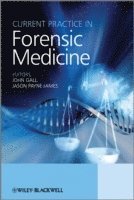
    Current Practice in Forensic Medicine

    AvJohn A. M. Gall,Jason Payne-James

    Inbunden, Engelska, 2011

    1 252 kr

    Beställningsvara. Skickas inom 5-8 vardagar. Fri frakt över 249 kr.

    Beskrivning

    Although forensic medicine has been in existence for centuries in one guise or another, it is only with the recent growth in international research that it has begun to be acknowledged as a specific discipline in its own right. Many areas of progress are being made and this text aims to provide a unique, in-depth and critical update on selected topics that are of direct relevance to those practicing in the field including lawyers, police, medical and dental practitioners, forensic scientists and postgraduate/undergraduate medical students and undergraduate law students preparing for forensic medicine examinations. This volume is designed to cover the wider aspects of forensic medicine, including the law, science, medicine (forensic pathology, clinical forensic medicine and forensic psychiatry) and dentistry. Topics covered include subjects of debate and/or uncertainty in areas where significant advances have been made and in those of current relevance to the forensic profession, Chapters provide a variety of approaches to the areas under discussion with reviews of current knowledge, information on significant changes and pointers to the future that the reader should be aware of.Features: An authoritative review, for forensic medicine practitioners throughout the world, from leading international experts in the field.Provides critical commentary and updates on current practice.Topics include: a guide to the presentation of forensic medical evidence, bioterrorism, the paediatric hymen, assessment and interpretation of bone trauma in children, adult sexual assault, genital photography, forensic photography, common errors in injury interpretation, self-inflicted injuries and associated psychological profiles, bite marks and the role of the pathologist in aviation disasters.Includes a wealth of four colour figures to illustrate key points discussed within the text.

    Produktinformation

    • Utgivningsdatum:2011-01-21
    • Mått:201 x 253 x 23 mm
    • Vikt:885 g
    • Format:Inbunden
    • Språk:Engelska
    • Antal sidor:348
    • Förlag:John Wiley & Sons Inc
    • ISBN:9780470744871

    Utforska kategorier

    • Rättsmedicin inom Medicin

    Mer om författaren

    JOHN GALL is a forensic physician in private practice, Director of Southern Medical Services, Principal of Era Health and is a staff specialist Forensic Physician in the Victorian Paediatric Forensic Medical Service, located at the Royal Children's Hospital and Monash Medical Centre, Melbourne. He is a member of the International Editorial Board of the Journal of Legal and Forensic Medicine and Internet Journal of Forensic Medicine and Toxicology. He has published widely in the field of clinical forensic medicine and has spent many years teaching forensic medicine to undergraduates and graduates. JASON PAYNE-JAMES is a forensic physician. He is Honorary Senior Lecturer, Cameron Forensic Medical Sciences, Barts & the London School of Medicine & Dentistry, University of London, UK. He is Director of Forensic Healthcare Services Ltd. He is external Consultant to the National Policing Improvement Agency and to the National Injuries Database in the UK. He is Editor-in-Chief of the Journal of Forensic & Legal Medicine. He has published widely in the field of clinical forensic medicine. He has also co-edited, co-authored and contributed to numerous books in the field including Black, Aggrawal and Payne-James: 'Age Estimation in the Living' 2010 (Wiley Blackwell).

    Recensioner i media

    "This being said, given the challenges in locating an expert willing and able to be called by the defence on an issue involving forensic medicine, this text would certainly be a valuable addition to the criminal practitioner's library." (For the Defence, 2012) "If you find this book up your street and valuable, as many of you will, look out for more: The editors intend there to be a follow up ‘regular multi volume text addressing recent advances in the practice of forensic medicine'." (Expert Witness Newsletter, 1 March 2012)"All in all, a very useful book. I would highly recommend this book not only to all forensic physicians, but to everyone practicing in this field. I would imagine that his book would be highly useful for lawyers, police, medical and dental practitioners, forensic scientists. I would also recommend this book to all undergraduate and postgraduate law and medical students preparing for forensic medicine examinations." (Anil Aggrawal's Internet Journal of Forensic Medicine and Toxicology, 1 January 2012)"Most of the topics are extremely useful for newly trained and in-training forensic pathologists. The book provides a concise summary of controversial topics with good references, although some chapters are less pertinent." (Doody's, 14 October 2011)"The editors of this text have compiled an authoritative review of the topic, with contributions from leading international experts in the field. They provide enough detail about the forensic sciences to give practitioners some insight into these areas without attempting to turn them into experts." (Sydney Forensic Medicine and Science Network, 2011)"Edited and written by leading international experts in the field, this in depth guide will provide an invaluable and authoritative, critique of topical areas of forensic medicine that are of key interest to practitioners throughout the world." (PR-Inside.com, 22 February 2011)

    Innehållsförteckning

    • List of Contributors ixForeword xviiPreface xixChapter One: Expert evidence and healthcare professionals 1Introduction 1The adversarial system of justice 2Expert reports 3Evidentiary exclusionary rules 3Pre-trial preparation for expert witnesses 5Appearance 6Timeliness 7Giving of evidence 7Managing cross-examination 10Summary 14References 14Chapter Two: Forensic investigation of biological weapon use 17Introduction 17A choice of words 17Threat assessments 18Presenting features 22Forensic microbiology or microbial forensics? 25Assembling evidence from emerging infectious disease biology 26Current constraints 34References 34Appendix 37Chapter Three: The paediatric hymen 43Introduction 43Studies of normal anatomy 44Studies of genital findings in sexually abused girls 49Studies of acute injuries as they heal 54A consideration of test reliability 56Putting it all together 58References 59Chapter Four: Assessment and interpretation of bone trauma in children 63Introduction 63How should I evaluate suspected bone trauma in children? 64What radiological investigations identify bone trauma? 68How do X-rays detect fractures? 69How does ultrasound detect bone injury? 73How do nuclear medicine scans detect bone injury? 74How does MRI detect bone injury? 75How are medical images presented and shared? 78What forces cause bones to fracture? 79Are some bone injuries diagnostic of child abuse? 80What do we know about bone healing in children? 82What tests detect fragile bones? 83Neonates with fractures: what are the special considerations? 85Can the time of bone injury be determined? 87Why might an X-ray be reported as normal when bone trauma exists? 87Why might an ultrasound appear normal when bone trauma exists? 87Why might a nuclear medicine scan appear normal when bone trauma exists? 88Why might an X-ray appear abnormal when no bone trauma exists? 88Why might a nuclear medicine scan appear abnormal when no bone trauma exists? 89How do I deal with correctly interpreted but discordant imaging findings? 90A. Why might an X-ray appear normal and bone scan ‘hot’ when bone trauma exists? 90B. Why might a fracture seem obvious on plain X-ray but bone scan is ‘cold’ when bone trauma exists? 90When and why should I repeat X-rays? 91How does the process of forming a forensic medical opinion differ from the process of diagnosis in clinical medicine? 91Why do I need to be aware of my level of confidence in my medical diagnosis? 91What factors should I consider when forming a diagnostic opinion about the cause of a child’s fracture? 92References 93Chapter Five: Adult sexual assault 95Introduction 95Sexual assault settings and characteristics 96Findings after sexual assault 101Toxicology and sexual assault 116Forensic science and sexual assault 116Treatment after sexual assault 117Summary 118References 118Chapter Six: The ethical and medical aspects of photodocumenting genital injury 123Introduction 123Sexual assault 126Imaging the body in the history of medicine 126Photography 128The evolution of the photography of genital injury 129A particular Australian’s experience 132Ethics of care 140Why no ethical objection to children being photographed? 141The difference that being a child makes and its relevance 142Advancing the question of best ethical practice 143Clinical forensic medicine and sexual assault 150Conclusion 152References 153Appendix 157Chapter Seven: The photography of injuries 159Introduction 159The image 160Equipment 161Illumination 163Polarizing filters 164Forensic scales 164The photography of an injury 164The colour control or reference 166Cross-polarized photography 167Reflected ultraviolet 172Infrared 181Long wave ultraviolet-induced fluorescence 184Imaging file format 188The audit trail 189Conclusion 190Acknowledgements 191References 191Further reading 191Chapter Eight: DNA analysis: Current practice and problems 193Introduction 193DNA collection and storage 194DNA extraction 196DNA quantification 196DNA amplification 199DNA separation and detection 200DNA genotyping 201Standard loci sets and commercial STR kits 202Statistical evaluation of a DNA match 203Assessing STR profiles 208Mixtures of DNA 213Degraded DNA 217Low-template DNA 217Other genetic markers 221Tissue identification 228Use of DNA in the criminal justice system 229References 231Chapter Nine: Injury interpretation: Possible errors and fallacies 239Injury visualization 241Nomenclature 244Photography 245Aging of injuries 248Force of injury 253Medical limitations and considerations 255Genito-anal injuries in the adult 255Child abuse 258Self-inflicted injury 262Other specialist opinions 263Opinions 266How to avoid errors 267References 268Chapter Ten: Self-inflicted injuries and associated psychological profiles 273Introduction 273Forensic aspects of self-harm 273Psychiatric aspects of self-harm 280Epidemiology 281Classification of self-harm 282The clinical dilemma 284Management 285Long-term outcome 286Conclusion 286References 288Chapter Eleven: Bite marks 291Introduction and cautionary remarks 291Animal bites 291Other injuries mimicking bites 294Bites in foodstuffs 295Examination of injuries in the dead 296Examination of the living 300Examination of the suspect 301Trends in bite-mark analysis 303Acknowledgement 306References 306Further reading 307Chapter Twelve: Aviation disasters: The role of the forensic pathologist 309Introduction 309The scene 309The autopsy 311Establishing the cause of death 314Circumstances surrounding death 317Forensic pathology report 320References 321Index 323