• Fri frakt över 249 kr
  • •
  • Snabba leveranser
  • •
  • Billiga böcker
Kundservice

Du är på sajten för privatpersoner.

Företag, bibliotek eller offentlig verksamhet?

Du handlar på classic.bokus.com, där alla dina funktioner finns intakta.
Till classic.bokus.com
Bokus logotyp. Gå till startsidan.
  • Erbjudanden
  • Nyheter
  • Student
  • Topplistor
  • Barn & ungdom
  • Bokus Play
  • E-böcker
  • Pocketböcker
  • Spel & pussel

10% rabatt på allt med kod: NYSTART10 →

Sidfot

Mina sidor

    Hjälp

    • Kundservice
    • Vanliga frågor och svar
    • Frakt och leverans
    • Retur vid ångerrätt
    • Reklamera vara
    • Betalning
    • Köpvillkor
    • Allmänna villkor
    • Information om webbplatsens tillgänglighet

    Om Bokus

    • Om oss
    • Pressrum
    • För studenter
    • För företag
    • För bibliotek och offentlig verksamhet
    • För leverantörer
    • Hållbarhet

    Populärt

    • Aktuella erbjudanden
    • Presentkort
    • Studentlitteratur
    • Nya böcker
    • Topplistor
    • Signerade böcker
    • Engelska böcker

    Inspiration

    • Boktips
    • BookTok
    • Populära bokserier
    • Barnbokskaraktärer
    • Populära författare
    Logotyp för Bokus
    Följ oss på Facebook (extern länk)Följ oss på Instagram (extern länk)Följ oss på YouTube (extern länk)Följ oss på TikTok (extern länk)
    bokus @ CookiesAnpassa cookiesIntegritetspolicyKöpvillkor
    Till Citymail hemsida (extern länk)Till Budbee hemsida (extern länk)Till Postnord hemsida (extern länk)Till Schenker hemsida (extern länk)Till Early Bird hemsida (extern länk)Till Walleys hemsida (extern länk)
    1. Ekonomi och Ledarskap
    2. Företagsekonomi
    3. Redovisning och finansiering
    4. Finansiering

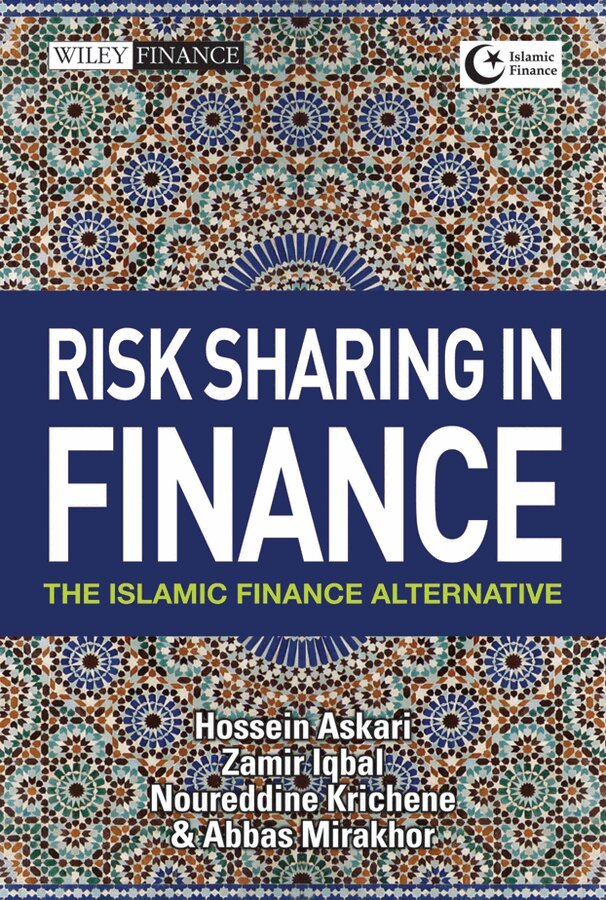
    Risk Sharing in Finance

    The Islamic Finance Alternative

    AvHossein Askari,Zamir Iqbal

    Inbunden, Engelska, 2012

    Del i serien Wiley Finance

    788 kr

    Beställningsvara. Skickas inom 5-8 vardagar. Fri frakt över 249 kr.

    Beskrivning

    How the Islamic finance approach to risk can serve as a model for global reform The recent U.S. financial debacle has affected the entire world and led to major reviews of risk management in financial institutions. Perhaps a simpler alternative is just to adopt the systems used for centuries in Islamic finance. Risk Sharing in Finance expounds upon this novel idea, suggesting that the Islamic financial system can be developed for use around the world by providing a helpful paradigm for crafting global financial reforms.Demonstrating how Islamic finance can successfully expand its array of risk sharing instruments, for example issuing government shares to finance development projects and placing limits on short sales and leveraging, the book makes a compelling case for thinking outside the box to redevelop a vibrant stock market. Provides analysis of the comparative historical, theoretical, and empirical investigation of risk management in both the conventional and the Islamic-type financial systemsExplores the benefits and the implications of introducing Islamic finance around the world and explains how wider reliance on risk sharing can be implementedEstablishes a connection between the flawed contemporary Western system of capitalist finance and the ancient, traditional forms of risk-sharing prevalent in Islamic financeOffering a timely look at financial reform, Risk Sharing in Finance draws on the expertise of author Zamir Iqbal of the World Bank, along with a host of co-authors Abbas Mirakhor, Hossein Askari, and Noureddine Krichene to present a new form of financial reform.

    Produktinformation

    • Utgivningsdatum:2012-02-28
    • Mått:159 x 236 x 22 mm
    • Vikt:608 g
    • Format:Inbunden
    • Språk:Engelska
    • Serie:Wiley Finance
    • Antal sidor:256
    • Förlag:John Wiley & Sons Inc
    • ISBN:9780470829660

    Utforska kategorier

    • Finansiering inom Ekonomi och Ledarskap

    Mer om författaren

    PROF. HOSSEIN ASKARI is Iran Professor of International Business and International Affairs at the George Washington University. He served for two and a half years on the Executive Board of the IMF and was Special Advisor to the Minister of Finance of Saudi Arabia; during the mid-1980s he was director of the team that developed the first comprehensive domestic, regional and international energy models and plan for Saudi Arabia. He has written extensively on economic development in the Middle East, Islamic economics and finance, international trade and finance, agricultural economics, oil economics and on economic sanctions. He received his university education at MIT. DR. ZAMIR IQBAL works as Lead Investment Officer in the Treasury of the World Bank in Washington, D.C. He earned his Ph.D. in International Finance from the George Washington University, where he also serves as adjunct faculty of International Finance. He has extensive experience with capital markets, structured products, risk management, financial sector development, and financial modeling. His research interests include Islamic finance, financial engineering, structured finance and risk management. He is co-author of several books on Islamic banking and finance. He also serves as Professional Faculty at the John Hopkins Carey Business School where he teaches graduate level courses on investment and portfolio management and risk of financial institutions.DR. NOUREDDINE KRICHENE received his Ph.D. in economics, University of California, Los Angeles, 1980; joined the International Monetary Fund (IMF) in 1986; and held the position of advisor at the Islamic Development Bank.DR. ABBAS MIRAKHOR received his Ph.D. in Economics from Kansas State University in 1969. After teaching at various universities in the USA and in Iran he joined the staff of the Research Department of the IMF in 1984. He became an Executive Director of the IMF from 1990 until his retirement in 2008. He is the author of a number of articles and books on Islamic economics and finance. He is now the first holder of the INCEIF Chair in Islamic Finance.

    Innehållsförteckning

    • Preface ix Acknowledgments xviiGlossary xixPART ONE THE HISTORY AND CAUSES OF FINANCIAL CRISESCHAPTER 1 A Brief History of Financial Crises and Proposed Reforms 3CHAPTER 2 Financialization and the Decoupling–Recoupling Hypotheses 31PART TWO RISK SHARING AND THE ISLAMIC PARADIGMCHAPTER 3 A Brief History of Risk-Sharing Finance 49CHAPTER 4 Risk Sharing and the Islamic Finance Paradigm 69CHAPTER 5 Risk Sharing in the Islamic Financial System: The Building Blocks 95CHAPTER 6 Risk Sharing and Vibrant Capital Markets in Islamic Finance 115CHAPTER 7 Portfolio Theory and Asset Pricing 133CHAPTER 8 Complementary Role of Intermediaries and Markets in Promoting Risk Sharing 159PART THREE MOVING FORWARDCHAPTER 9 Enhanced Access to Finance, Social Welfare, and Economic Development under a Risk-Sharing System 181CHAPTER 10 The Role of Institutions and Governance in Risk Sharing 201CHAPTER 11 Gaps between the Theory and Practice of Islamic Finance 225CHAPTER 12 Concluding Remarks 247References 259Index 277