• Fri frakt över 249 kr
  • •
  • Snabba leveranser
  • •
  • Billiga böcker
Kundservice

Du är på sajten för privatpersoner.

Företag, bibliotek eller offentlig verksamhet?

Du handlar på classic.bokus.com, där alla dina funktioner finns intakta.
Till classic.bokus.com
Bokus logotyp. Gå till startsidan.
  • Erbjudanden
  • Nyheter
  • Student
  • Topplistor
  • Barn & ungdom
  • Bokus Play
  • E-böcker
  • Pocketböcker
  • Spel & pussel

10% studentrabatt med kod TERM26

Sidfot

Mina sidor

    Hjälp

    • Kundservice
    • Vanliga frågor och svar
    • Frakt och leverans
    • Retur vid ångerrätt
    • Reklamera vara
    • Betalning
    • Köpvillkor
    • Allmänna villkor
    • Information om webbplatsens tillgänglighet

    Om Bokus

    • Om oss
    • Pressrum
    • För studenter
    • För företag
    • För bibliotek och offentlig verksamhet
    • För leverantörer
    • Hållbarhet

    Populärt

    • Aktuella erbjudanden
    • Presentkort
    • Studentlitteratur
    • Nya böcker
    • Topplistor
    • Signerade böcker
    • Engelska böcker

    Inspiration

    • Boktips
    • BookTok
    • Populära bokserier
    • Barnbokskaraktärer
    • Populära författare
    Logotyp för Bokus
    Följ oss på Facebook (extern länk)Följ oss på Instagram (extern länk)Följ oss på YouTube (extern länk)Följ oss på TikTok (extern länk)
    bokus @ CookiesAnpassa cookiesIntegritetspolicyKöpvillkor
    Till Citymail hemsida (extern länk)Till Budbee hemsida (extern länk)Till Postnord hemsida (extern länk)Till Schenker hemsida (extern länk)Till Early Bird hemsida (extern länk)Till Walleys hemsida (extern länk)
    1. Naturvetenskap och teknik
    2. Matematik och naturvetenskap
    3. Kemi

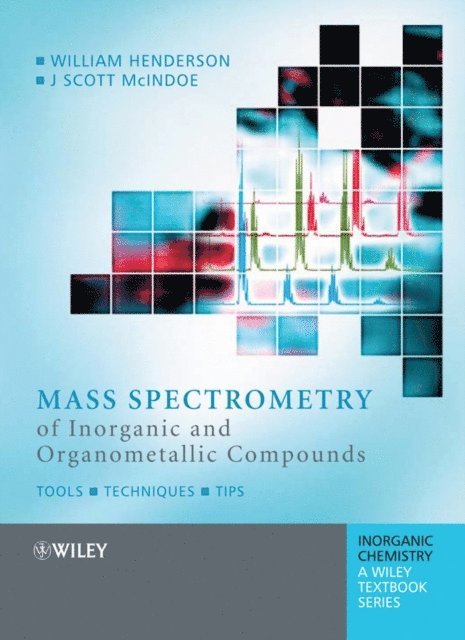
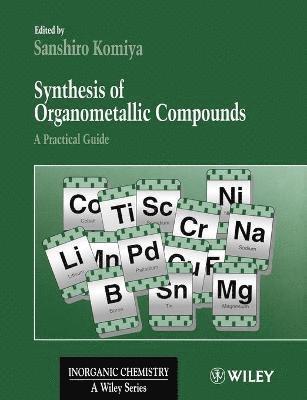
    Mass Spectrometry of Inorganic and Organometallic Compounds

    Tools - Techniques - Tips

    AvWilliam Henderson,J. Scott McIndoe

    Inbunden, Engelska, 2005

    Del i serien Inorganic Chemistry: A Textbook Series

    1 765 kr

    Tillfälligt slut

    Fler format och utgåvor

    Häftad

    807 kr

    Beskrivning

    This is the first modern book to treat inorganic and organometallic mass spectrometry simultaneously. It is textbook and handbook in one; as a textbook it introduces the techniques and gives hints on how to apply the various techniques, as a handbook it lists all available ionization techniques for just about any given compound. The book also includes non-mathematical explanations of how modern MS instruments work Mass Spectrometry of Inorganic and Organometallic Compounds will inspire the synthetic inorganic and organometallic chemist with the confidence to apply some of the new techniques to their characterization problems.

    Produktinformation

    • Utgivningsdatum:2005-02-11
    • Mått:192 x 221 x 24 mm
    • Vikt:794 g
    • Format:Inbunden
    • Språk:Engelska
    • Serie:Inorganic Chemistry: A Textbook Series
    • Antal sidor:272
    • Förlag:John Wiley & Sons Inc
    • ISBN:9780470850152

    Utforska kategorier

    • Kemi inom Naturvetenskap och teknik

    Mer om författaren

    William Henderson is the author of Mass Spectrometry of Inorganic and Organometallic Compounds: Tools - Techniques - Tips, published by Wiley.J. Scott McIndoe is the author of Mass Spectrometry of Inorganic and Organometallic Compounds: Tools - Techniques - Tips, published by Wiley.

    Recensioner i media

    "Although this book has been specifically written for inorganic and organometallic chemistry, researchers working in other fields can also learn not only about the basic principles and techniques of mass-spectrometry but also can learn of its applications." (The Higher Education Academy Physical Sciences Centre, June 2008)"Valuable addition to those already written covering mass spectrometry." (Reviews, June 2008)

    Innehållsförteckning

    • Preface. List of commonly-used abbreviations.1. Fundamentals.1.1 Introduction.1.2 Inlets.1.3 Collision-induced dissociation.1.4 Detectors.1.5 Mass resolution.1.6 Data processing.1.7 Isotopes.References.2. Mass analysers.2.1 Introduction.2.2 Sectors.2.3 Quadrupoles.2.4 Quadrupole Ion Trap.2.5 Time-of-flight.2.6 Fourier Transform Ion Cyclotron Resonance.References.3. Ionisation techniques.3.1 Introduction.3.2 Electron ionisation.3.3 Chemical Ionisation.3.4 Field ionisation / Field desorption.3.5 Plasma Desorption.3.6 Fast Atom Bombardment / Liquid Secondary Ion Mass Spectrometry.3.7 Matrix Assisted Laser Desorption Ionisation.3.8 Inductively Coupled Plasma Mass Spectrometry.3.9 Electrospray ionisation.References.4. The ESI MS behaviour of simple inorganic compounds.4.1 Introduction.4.2 Simple metal salts.4.3 Polyanions formed by main group elements.4.4 Oxoanions formed by main group elements.4.5 Borane anions.4.6 Fullerenes.4.7 Inorganic phosphorus compounds: phosphoranes and cyclophosphazenes.4.8 Summary.References.5. The ESI MS behaviour of coordination complexes.5.1 Introduction.5.2 Charged, "simple" coordination complexes.5.3 (Neutral) metal halide coordination complexes.5.4 Metal complexes of polydentate oxygen donor ligands: polyethers, crown ethers, cryptands and calixarenes.5.5 Porphyrins and metalloporphyrins.5.6 Metal alkoxides – highly moisture-sensitive coordination compounds.5.7 b-Diketonate complexes.5.8 Metal complexes of carbohydrates.5.9 Metal complexes of amino acids, peptides and proteins.5.10 Oxoanions, polyoxoanions and related species.5.11 Metal clusters.5.12 Compounds with anionic sulfur and selenium donor ligands.5.13 Characterisation of metal-based anticancer drugs, their reaction products and metabolites.5.14 In situ formation of coordination complexes as an ionisation technique.5.15 Summary.References.6. The ESI MS behaviour of main group organometallic compounds.6.1 Introduction.6.2 Organometallic derivatives of group 14 elements.6.3 Organometallic derivatives of group 15 elements.6.4 Organometallic derivatives of group 16 elements; organo-sulfur, -selenium and -tellurium compounds.6.5 Organomercury compounds.6.6 Other organometallic derivatives.6.7 Summary.References.7. The ESI MS behaviour of transition metal and lanthanide organometallic compounds.7.1 Introduction.7.2 Metal carbonyl complexes.7.3 Metal isocyanide complexes.7.4 Metal cyclopentadienyl and related complexes.7.5 Metal h3-allyl complexes.7.6 Metal arene complexes.7.7 Formation of p-hydrocarbon complexes and their use as an ionisation aid.7.8 Metal-acetylene/acetylide complexes, and complexes of metal-acetylides.7.9 Transition metal s-alkyl and aryl complexes.7.10 Mass spectrometry of lanthanide organometallic complexes.7.11 Summary.References.8. A selection of special topics.8.1 Introduction.8.2 Characterisation of dendrimers using ESI and MALDI–TOF MS techniques.8.3 Investigating the formation of supramolecular coordination assemblies using ESI MS.8.4 Using ESI MS as a tool for directing chemical synthesis: A case studyinvolving the platinum metalloligands [Pt2(m–E)2(PPh3)4] (E = S, Se).8.5 Applications of ESI MS in the detection of reactive intermediates and catalyst screening.References.Appendix 1: Naturally occurring isotopes.Appendix 2: Periodic table of the elements.Appendix 3: Alphabetical list of elements.Appendix 4: Glossary of Terms.Appendix 5: Useful sources of information.Index.