• Fri frakt över 249 kr
  • •
  • Snabba leveranser
  • •
  • Billiga böcker
Kundservice

Du är på sajten för privatpersoner.

Företag, bibliotek eller offentlig verksamhet?

Du handlar på classic.bokus.com, där alla dina funktioner finns intakta.
Till classic.bokus.com
Bokus logotyp. Gå till startsidan.
  • Erbjudanden
  • Nyheter
  • Student
  • Topplistor
  • Barn & ungdom
  • Bokus Play
  • E-böcker
  • Pocketböcker
  • Spel & pussel

Må bättre, för mindre! Upp till 50% rabatt på hälsoböcker

Sidfot

Mina sidor

    Hjälp

    • Kundservice
    • Vanliga frågor och svar
    • Frakt och leverans
    • Retur vid ångerrätt
    • Reklamera vara
    • Betalning
    • Köpvillkor
    • Allmänna villkor
    • Information om webbplatsens tillgänglighet

    Om Bokus

    • Om oss
    • Pressrum
    • För studenter
    • För företag
    • För bibliotek och offentlig verksamhet
    • För leverantörer
    • Hållbarhet

    Populärt

    • Aktuella erbjudanden
    • Presentkort
    • Studentlitteratur
    • Nya böcker
    • Topplistor
    • Signerade böcker
    • Engelska böcker

    Inspiration

    • Boktips
    • BookTok
    • Populära bokserier
    • Barnbokskaraktärer
    • Populära författare
    Logotyp för Bokus
    Följ oss på Facebook (extern länk)Följ oss på Instagram (extern länk)Följ oss på YouTube (extern länk)Följ oss på TikTok (extern länk)
    bokus @ CookiesAnpassa cookiesIntegritetspolicyKöpvillkor
    Till Citymail hemsida (extern länk)Till Budbee hemsida (extern länk)Till Postnord hemsida (extern länk)Till Schenker hemsida (extern länk)Till Early Bird hemsida (extern länk)Till Walleys hemsida (extern länk)
    1. Psykologi och pedagogik
    2. Pedagogik
    3. Specialundervisning

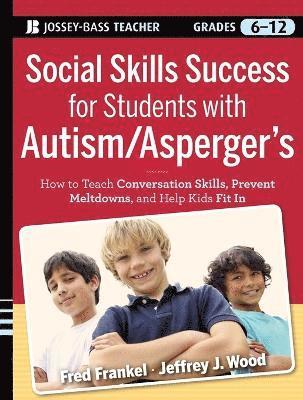
    Social Skills Success for Students with Autism / Asperger's

    Helping Adolescents on the Spectrum to Fit In

    AvFred Frankel,Jeffrey J. Wood

    Häftad, Engelska, 2011

    211 kr

    Beställningsvara. Skickas inom 5-8 vardagar. Fri frakt över 249 kr.

    Beskrivning

    The only evidence-based program available for teaching social skills to adolescents with autism spectrum disorders Two nationally known experts in friendship formation and anxiety management address the social challenges faced by adolescents with autism spectrum disorders (ASD). The book helps educators instruct youth on conversing with others, displaying appropriate body language, managing anxiety, initiating and participating in get-togethers, and more. The book is filled with helpful information on ASD to aid teachers who have received little training on the topic. Extremely practical, the book includes lesson plans, checklists, and sidebars with helpful advice. Based on UCLA's acclaimed PEERS program, the only evidence-based approach to teaching social skills to adolescents with ASDContains best practices for working with parents, which is the key to helping kids learn social skillsThe authors discuss the pros and cons of teaching students with ASD in educational settings like full inclusion (good for academics but bad for social skills) and pull-out special day classes (where the reverse is true)Provides a much-needed book for teachers at all levels for helping students develop the skills they need to be successful.

    Produktinformation

    • Utgivningsdatum:2011-12-16
    • Mått:178 x 234 x 18 mm
    • Vikt:431 g
    • Format:Häftad
    • Språk:Engelska
    • Antal sidor:256
    • Förlag:John Wiley & Sons Inc
    • ISBN:9780470952382

    Utforska kategorier

    • Specialundervisning inom Psykologi och pedagogik

    Mer om författaren

    Fred Frankel, Ph.D., is a professor of Psychiatry and Biobehavioral Sciences at University of California, Los Angeles (UCLA) and the director of the UCLA Parent Training and Children's Friendship Programs. A coauthor of UCLA's acclaimed PEERS social skills training program and the author of Friends Forever: How Parents Can Help Their Kids Make and Keep Good Friends, he speaks regularly on the topic of autism and social skills to professionals and parents alike. More information is available at http://www.semel.ucla.edu/socialskills.  Jeffrey J. Wood, Ph.D., is an associate professor of Education and Psychiatry and Biobehavioral Sciences at UCLA, and is a licensed clinical psychologist. He is the coauthor of Child Anxiety Disorders and is researching cognitive-behavioral interventions for students with autism and Asperger's syndrome, childhood anxiety, and the development of children's close friendships.

    Innehållsförteckning

    • About the Authors iiiAcknowledgments vIntroduction 1Our Approach to Social Skills Training 3The Knowledge Base Behind This Book 4Children’s Friendship Training/PEERS 4Cognitive-Behavioral Strategies for Emotional Self-Regulation 6The Purpose of This Book 7How to Use This Book 8Part I: Basic Information About Teens with Autism Spectrum Disorder 11Chapter 1: What Is Autism Spectrum Disorder? 13Challenges Facing Neuro typical Teens 14Becoming Independent from Parents 14Preparing for a Vocation or Career 15Adjusting to the Physical and Psychosexual Changes of Puberty 16Developing Values and Identity 16Establishing Effective Relationships with Peers 16Symptoms of Autism Spectrum Disorders 18Misleading Aspects of Communication 18Deficits in Expression and Communication 19Easily Corrected Deficits in Understanding Others 22Coping with Anxiety-Producing Situations 24Chapter 2: Making Inclusion More Successful for Students with Autism 27History of the Inclusion Movement 28Parent Views About Inclusion 29Types of Educational Placement 29Traditional Teacher Roles in Partially and Fully Included Classrooms 32Research Findings on Inclusion 32Social Integration into School Life 33Mainstream Success of Students on the Autism Spectrum 34Approaches for Social Inclusion with Neuro typical Teens 35Teen Altruism 37Chapter 3: Classroom Management and Social Skills Groups 43Classroom Management for Students with Autism Spectrum Disorders 44Segregated Students 44Partially Included Students 45Fully Included Students 46Consequences for Misbehavior 47Organizing Social Skills Groups for Tweens and Teens 48How to Organize Groups at School 49How to Have Teens Take the Class 49How to Engage Teens in Class Discussions 50Have Some Fun Activities 50Have ‘‘Real-Life’’ Homework 50Involving Parents in Social Skills Training 51Part II: Interventions for Basic Social Skills 53Chapter 4: Helping Students Expand Their Interests 55Problems in Conversation Versus Problems in Interests 56Socially Functional Interests 57Interference Due to Anxiety 58Building on Current Interests 58Assessing Student Interests 59Lessons to Expand Interests 62Chapter 5: Improving Comprehension of Figurative Language 73Idioms 74Irony and Sarcasm 75Types of Sarcasm 76Recognizing Sarcasm 76Teaching Sarcasm and Irony 77Chapter 6: Improving Conversational Comprehension 87Goals of Conversations 88Ensuring Mutual Understanding 89Conversational Repair Strategies 90Teaching Better Task-Oriented Conversations, Accuracy Checks, and Repair Statements 91Chapter 7: Improving Social Conversations 99Potential Understanding of Conversational Goals 100Small Talk 101Parts of Conversations 102Chapter 8: Helping Students Choose Friends 109Neurotypical Teen Relationships 110Friends of Teens with Autism Spectrum Disorders 111The Internet and Friendships 113Appropriate Friends for Teens on the Spectrum 113Common Errors Adults Make in Offering Friendship Help 115Requiring Inclusion 115Attempting to Pair Students 116Assigning Peer Buddies 116How Educators Can Help Foster Friendships of Teens on the Spectrum 117Part III: More Intensive Interventions to Help Kids Fit in 121Chapter 9: Understanding and Assessing Anxiety. 123How Anxiety Works 124Clinical Levels of Anxiety 125How Anxiety Exacerbates Symptoms of Autism Spectrum Disorder 126Outbursts and Meltdowns 128Types of Anxiety in Students with Autism 129Social Anxiety 130Generalized Anxiety 132Separation Anxiety 133Assessing Anxiety 135Chapter 10: Interventions to Reduce Anxiety and Outbursts 147PhaseI: Skill Building 150Knowing I’m Nervous 150Irritating Thoughts 151Calm Thoughts 152Keep Practicing 153PhaseII: Practicing the Skills 154Lesson Plans 155Chapter 11: Preventing and Dealing with Victimization 187Types of Victimization 188Teasing 188Physical Aggression 189Bullying 190Cyberbullying 194Effective Ways of Handling Bullying 198Teaching Safety 198Improving Reputation Among Peers 199Informal Approaches to Head Off Continuing Bullying 200Effective Ways of Handling Cyberbullying 205Chapter 12: Working with Peer Mentors 211Commonly Used Alternatives to Mentoring 213Job Description of the Cross-Age Mentor 213Step 1: Selecting Mentors 214Step 2: Selecting Mentees 216Step 3: Mentor Orientation 218Step 4: Matching Mentor and Mentee 218Step 5: The Mentorship Term 219Step 6: Assessment 220Conclusion: Helping Kids on the Spectrum Find Their Own Place in the World 227Resources and References 229Index 239