• Fri frakt över 249 kr
  • •
  • Snabba leveranser
  • •
  • Billiga böcker
Kundservice

Du är på sajten för privatpersoner.

Företag, bibliotek eller offentlig verksamhet?

Du handlar på classic.bokus.com, där alla dina funktioner finns intakta.
Till classic.bokus.com
Bokus logotyp. Gå till startsidan.
  • Erbjudanden
  • Nyheter
  • Student
  • Topplistor
  • Barn & ungdom
  • Bokus Play
  • E-böcker
  • Pocketböcker
  • Spel & pussel

10% rabatt på allt med kod NYSTART10 →

Sidfot

Mina sidor

    Hjälp

    • Kundservice
    • Vanliga frågor och svar
    • Frakt och leverans
    • Retur vid ångerrätt
    • Reklamera vara
    • Betalning
    • Köpvillkor
    • Allmänna villkor
    • Information om webbplatsens tillgänglighet

    Om Bokus

    • Om oss
    • Pressrum
    • För studenter
    • För företag
    • För bibliotek och offentlig verksamhet
    • För leverantörer
    • Hållbarhet

    Populärt

    • Aktuella erbjudanden
    • Presentkort
    • Studentlitteratur
    • Nya böcker
    • Topplistor
    • Signerade böcker
    • Engelska böcker

    Inspiration

    • Boktips
    • BookTok
    • Populära bokserier
    • Barnbokskaraktärer
    • Populära författare
    Logotyp för Bokus
    Följ oss på Facebook (extern länk)Följ oss på Instagram (extern länk)Följ oss på YouTube (extern länk)Följ oss på TikTok (extern länk)
    bokus @ CookiesAnpassa cookiesIntegritetspolicyKöpvillkor
    Till Citymail hemsida (extern länk)Till Budbee hemsida (extern länk)Till Postnord hemsida (extern länk)Till Schenker hemsida (extern länk)Till Early Bird hemsida (extern länk)Till Walleys hemsida (extern länk)
    1. Data och IT
    2. Programmeringsböcker
    3. Programspråk

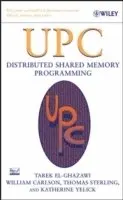
    UPC

    Distributed Shared Memory Programming

    AvTarek El-Ghazawi,William Carlson

    Inbunden, Engelska, 2005

    Del 20 i serien Wiley Series on Parallel and Distributed Computing

    1 865 kr

    Beställningsvara. Skickas inom 5-8 vardagar. Fri frakt över 249 kr.

    Beskrivning

    This is the first book to explain the language Unified Parallel C and its use. Authors El-Ghazawi, Carlson, and Sterling are among the developers of UPC, with close links with the industrial members of the UPC consortium. Their text covers background material on parallel architectures and algorithms, and includes UPC programming case studies. This book represents an invaluable resource for the growing number of UPC users and applications developers. More information about UPC can be found at: http://upc.gwu.edu/ An Instructor Support FTP site is available from the Wiley editorial department.

    Produktinformation

    • Utgivningsdatum:2005-07-01
    • Mått:162 x 247 x 18 mm
    • Vikt:494 g
    • Format:Inbunden
    • Språk:Engelska
    • Serie:Wiley Series on Parallel and Distributed Computing
    • Antal sidor:264
    • Förlag:John Wiley & Sons Inc
    • ISBN:9780471220480

    Utforska kategorier

    • Programspråk inom Data och IT

    Mer om författaren

    Tarek El-Ghazawi received his PhD in electrical and computer engineering from New Mexico State University. Currently, he is an associate professor in the Electrical and Computer Engineering??Department at the George Washington University. His research? interests are in high-performance computing, computer architecture, reconfigurable computing, embedded systems, and experimental performance. He has over 70 technical journal and conference publications in these areas. He has served as the principal investigator for over two dozen funded research projects, and his research has been supported by NASA, DoD, NSF and industry. He has served as a guest editor for the IEEE concurrency and was an Associate Editor for the International Journal of Parallel and Distributed Computing and Networking. El-Ghazawi has also served as a visiting scientist at NASA GSFC and NASA Ames Research Center. He is a senior member of the IEEE and a member of the advisory board for the IEEE Task Force on Cluster Computing. William Carlson received his PhD in Electrical Engineering from Purdue University. From 1988 to 1990, he was an assistant professor at the University of Wisconsin-Madision. His research interestes include performance evaluation of advanced computer architectures, operating systems, languages and compilers for parallel and distributed computers. Thomas Sterling received his PhD as a Hertz Fellow from the Massachusetts Institute of Technology. His research interests include parallel computer architecture, system software and evaluation. He holds six patents, is the co-author of several books and has published dozens of papers in the field of parallel Computing. Katherine Yelick received her? PhD in Electrical Engineering and Computer Science from the Massachusetts Institute of Technology. Her research interests include parallel computing, memory hierarchy optimizations, programming languages and compilers. Currently, she is a Professor of Computer Science at the University of California, Berkeley.

    Recensioner i media

    "This book is a good introduction to the UPC programming philosophy." (Computing Reviews.com, February 15, 2006)

    Innehållsförteckning

    • Preface vii1. Introductory Tutorial 11.1 Getting Started 11.2 Private and Shared Data 31.3 Shared Arrays and Affinity of Shared Data 61.4 Synchronization and Memory Consistency 81.5 Work Sharing 101.6 UPC Pointers 111.7 Summary 14Exercises 142. Programming View and UPC Data Types 172.1 Programming Models 172.2 UPC Programming Model 202.3 Shared and Private Variables 212.4 Shared and Private Arrays 232.5 Blocked Shared Arrays 252.6 Compiling Environments and Shared Arrays 302.7 Summary 30Exercises 313. Pointers and Arrays 333.1 UPC Pointers 333.2 Pointer Arithmetic 353.3 Pointer Casting and Usage Practices 383.4 Pointer Information and Manipulation Functions 403.5 More Pointer Examples 433.6 Summary 47Exercises 474. Work Sharing and Domain Decomposition 494.1 Basic Work Distribution 504.2 Parallel Iterations 514.3 Multidimensional Data 544.4 Distributing Trees 624.5 Summary 71Exercises 715. Dynamic Shared Memory Allocation 735.1 Allocating a Global Shared Memory Space Collectively 735.2 Allocating Multiple Global Spaces 785.3 Allocating Local Shared Spaces 825.4 Freeing Allocated Spaces 895.5 Summary 90Exercises 906. Synchronization and Memory Consistency 916.1 Barriers 926.2 Split-Phase Barriers 946.3 Locks 996.4 Memory Consistency 1086.5 Summary 113Exercises 1147. Performance Tuning and Optimization 1157.1 Parallel System Architectures 1167.2 Performance Issues in Parallel Programming 1207.3 Role of Compilers and Run-Time Systems 1227.4 UPC Hand Optimization 1237.5 Case Studies 1287.6 Summary 135Exercises 1358. UPC Libraries 1378.1 UPC Collective Library 1378.2 UPC-IO Library 1418.3 Summary 146References 147Appendix A: UPC Language Specifications, v1.1.1 149Appendix B: UPC Collective Operations Specifications, v1.0 183Appendix C: UPC-IO Specifications, v1.0 203Appendix D: How to Compile and Run UPC Programs 243Appendix E: Quick UPC Reference 245Index 251