• Fri frakt över 249 kr
  • •
  • Snabba leveranser
  • •
  • Billiga böcker
Kundservice

Du är på sajten för privatpersoner.

Företag, bibliotek eller offentlig verksamhet?

Du handlar på classic.bokus.com, där alla dina funktioner finns intakta.
Till classic.bokus.com
Bokus logotyp. Gå till startsidan.
  • Erbjudanden
  • Nyheter
  • Student
  • Topplistor
  • Barn & ungdom
  • Bokus Play
  • E-böcker
  • Pocketböcker
  • Spel & pussel

10% rabatt på allt med kod NYSTART10 →

Sidfot

Mina sidor

    Hjälp

    • Kundservice
    • Vanliga frågor och svar
    • Frakt och leverans
    • Retur vid ångerrätt
    • Reklamera vara
    • Betalning
    • Köpvillkor
    • Allmänna villkor
    • Information om webbplatsens tillgänglighet

    Om Bokus

    • Om oss
    • Pressrum
    • För studenter
    • För företag
    • För bibliotek och offentlig verksamhet
    • För leverantörer
    • Hållbarhet

    Populärt

    • Aktuella erbjudanden
    • Presentkort
    • Studentlitteratur
    • Nya böcker
    • Topplistor
    • Signerade böcker
    • Engelska böcker

    Inspiration

    • Boktips
    • BookTok
    • Populära bokserier
    • Barnbokskaraktärer
    • Populära författare
    Logotyp för Bokus
    Följ oss på Facebook (extern länk)Följ oss på Instagram (extern länk)Följ oss på YouTube (extern länk)Följ oss på TikTok (extern länk)
    bokus @ CookiesAnpassa cookiesIntegritetspolicyKöpvillkor
    Till Citymail hemsida (extern länk)Till Budbee hemsida (extern länk)Till Postnord hemsida (extern länk)Till Schenker hemsida (extern länk)Till Early Bird hemsida (extern länk)Till Walleys hemsida (extern länk)
    1. Naturvetenskap och teknik
    2. Matematik och naturvetenskap
    3. Kemi

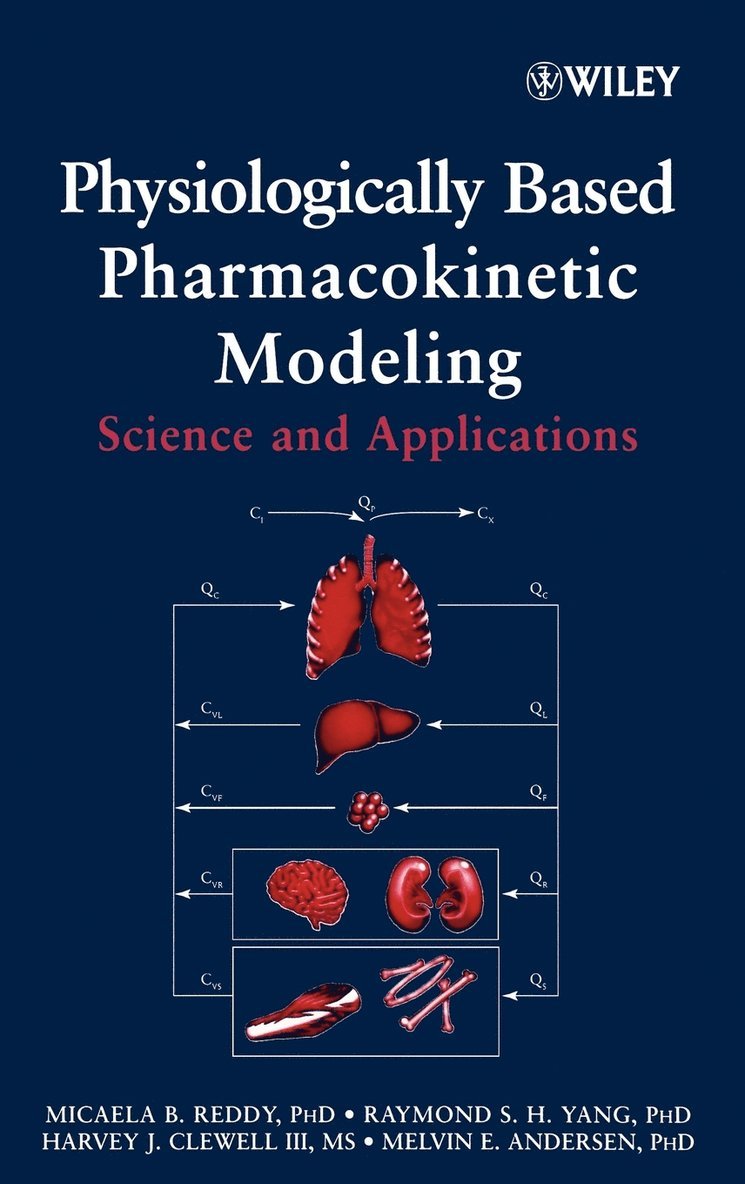
    Physiologically Based Pharmacokinetic Modeling

    Science and Applications

    AvMicaela Reddy,R. S. Yang

    Inbunden, Engelska, 2005

    2 102 kr

    Beställningsvara. Skickas inom 5-8 vardagar. Fri frakt över 249 kr.

    Beskrivning

    A definitive, single source of information on PBPK modelingPhysiologically-based pharmacokinetic (PBPK) modeling is becoming increasingly important in human health risk assessments and in supporting pharmacodynamic modeling for toxic responses. Organized by classes of compounds and modeling purposes so users can quickly access information, this is the first comprehensive reference of its kind.This book presents an overview of the underlying principles of PBPK model development. Then it provides a compendium of PBPK modeling information, including historical development, specific modeling challenges, and current practices for:* Halogenated Alkanes* Halogenated Alkenes* Alkene and Aromatic Compounds* Reactive Vapors in the Nasal Cavity* Alkanes, Oxyhydrocarbons, and Related Compounds* Pesticides and Persistent Organic Pollutants* Dioxin and Related Compounds* Metals and Inorganic Compounds* Drugs* Antineoplastic Agents* Perinatal Transfer* Mixtures* Dermal Exposure ModelsIn addition to pinpointing specific information, readers can explore diverse modeling techniques and applications. An authoritative reference for toxicologists, ecotoxicologists, risk assessors, regulators, pharmacologists, pharmacists, and graduate students in pharmacokinetics and toxicology, Physiologically-Based Pharmacokinetic Modeling compiles information from leaders in the field and discusses future directions for PBPK modeling.

    Produktinformation

    • Utgivningsdatum:2005-07-15
    • Mått:165 x 240 x 25 mm
    • Vikt:710 g
    • Format:Inbunden
    • Språk:Engelska
    • Antal sidor:440
    • Förlag:John Wiley & Sons Inc
    • ISBN:9780471478140

    Utforska kategorier

    • Kemi inom Naturvetenskap och teknik

    Mer om författaren

    The EDITORS have worked together on PBPK research and in teaching PBPK modeling workshops and courses through the Quantitative and Computation Toxicology research group at the Center for Environ-mental Toxicology and Technology (CETT) in the Department of Environmental and Radiological Health Sciences at Colorado State University (CSU). MICAELA B. REDDY, PhD, is a research professor at CETT where she has developed PBPK models for risk assessment and toxicology applications.RAYMOND S. H. YANG, PhD, Professor of Toxicology and former director, CETT, championed applications of PBPK modeling in research on the toxicology of chemical mixtures.HARVEY J. CLEWELL III, MS, Director, Center for Human Health Assessment, CIIT Centers for Health Research, Research Triangle Park, North Carolina, played a major role in the first uses of PBPK modeling in cancer and non-cancer risk assessments by several federal agencies, including EPA, ATSDR, OSHA, and FDA.MELVIN E. ANDERSEN, PhD, a pioneer in use of PBPK modeling in toxicology and risk assessment, is Director, Computational Biology Division, CIIT Centers for Health Research, Research Triangle Park, North Carolina.

    Recensioner i media

    "This is a comprehensive, useful book, a valuable reference for toxicologists, regulators, pharmacologists, pharmacists, and graduate students…" (American Journal of Therapeutics, March/April 2006)

    Innehållsförteckning

    • Preface. Acknowledgments.Contributors.Chapter 1. Introduction: A Historical Perspective of the Development and Applications of PBPK Models.1. Introduction.2. A Historical Perspective.2-1. Responses to Inhaled Compounds.2-2. Pharmaceutical Applications.2-3. Occupational and Environmental Applications.2-4. Digital Computation and PBPK Modeling.3. Expansion of PBPK Model Applications.3-1. PBPK Models for Tissue Dosimetry from Secondary Data.3-2. Biological Mechanisms Underlying PK Behaviors.3-3. Chemicals as Probes of Biological Processes.3-4. Risk Assessment Applications.3-5. PBPK Models as Repository of Mechanistic Data on Distribution and Response.4. Summary.PART I: PBPK MODELING FOR VOLATILE ORGANIC COMPOUNDS.Chapter 2. Halogenated Alkanes.1. Introduction.2. PBPK Model Development for Volatile Organics.2-1. Model Formulation.2-2. Model Equations.2-3. Model Parameterization.2-4. Model Calculations.3. Advances in Experimental Methods Demonstrated for Groups of Chemicals.4. PBPK Models for Halogenated Alkanes.4-1. Anesthetic Gases.4-2. Chlorofluorocarbons (CFCs), Refrigerants and Halons.4-3. Halogenated Alkanes.5. Summary.Chapter 3. Halogenated Alkenes.1. Introduction.2. The Chloroethylenes: Background.3. Review of PBPK Models.3-1. Vinyl Chloride (VC).3-2. Vinyl Fluoride (VF).3-3. cis-1,2-Dichloroethylene (cDCE) and trans-1,2-Dichloroethylene (tDCE).3-4. Vinylidene Chloride (VDC).3-5. Trichloroethylene (TCE).3-6. Tetrachloroethylene (PERC).3-7. Allyl Chloride (AC).3-8. b-Chloroprene (CD).3-9. Hexachlorobutadiene, HCB.4. Summary.Chapter 4. Alkene and Aromatic Compounds.1. Introduction.2. PK and Pharmacodynamic Properties Important in PBPK Model Development for Aromatic and Alkene Compounds.2-1. Metabolism and Mode of Action.2-2. Model Structures.2-3. PK Differences.2-4. Extrahepatic Metabolism and Transport of Metabolites.2-5. GSH Conjugation.2-6. Endogenous Production.2-7. Reactivity with DNA and Protein.2-8. Inhibition of Second Oxidative Steps.2-9. Variability and PK Differences.2-10. Subcompartments in PBPK Models.2-11. “Privileged Access” of Epoxide Hydratase to Epoxide Substrates.3. Review of Aromatic and Alkene PBPK Models.3-1. Benzene-A Known Human Carcinogen with an Uncertain Mode of Action.3-2. Styrene- Early PBPK Models.3-3. 1,3-Butadiene.3-4. Isoprene.3-5. Ethylene, Propylene and their Oxides.3-6. Naphthalene and Other PAHs.3-7. Halobenzenes.3-8. Miscellaneous Related Compounds.4. Summary.Chapter 5. Reactive Vapors in the Nasal Cavity.Introduction.1-1. Nasal Effects and Risk Assessment.1-2. General Models for Nasal Uptake.1-2-1. Air Phase.1-2-2. Specific Nasal Regions.1-2-3. Air Phase Mass Transfer Coefficients.1-2-4. Interfacial Mass Transfer Coefficient.1-2-5. Tissue Diffusion.2. No Air-Phase Models.2-1. The “Perfused Nose” Model.2-2. Vinyl Acetate.3. Creating the Air Phase Compartments.3-1. Computational Fluid Dynamics.3-2. Estimating the Air Phase Mass Transfer Coefficient.3-3. Estimating Air Phase Mass Transfer Coefficients – Acrylic Acid.4. Other Models for Vapors Affecting Nasal Tissues.4-1. Vinyl Acetate.4-2. Ethyl Acrylate and its Metabolite, Acrylic Acid.4-2. Epichlorohydrin.5. Methyl Methacrylate.6. Formaldehyde.7. Hydrogen Sulfide.10. Summary.Chapter 6. Alkanes, Oxyhydrocarbons, and Related Compounds.1. Introduction.2. Purposes for PBPK Model Development.3. PBPK Models for Four Classes of Compounds.3-1. Alkanes.3-2. Oxyhydrocarbons.3-3. Alkylbenzenes.3-4. Siloxanes.4. Summary.PARK II: PBPK MODEL DEVELOPMENT FOR ENVIRONMENTAL POLLUTANTS.Chapter 7. Pesticides and Persistent Organic Pollutants (POPs).1. Introduction.2. Pesticides.2-1. Chemical Classes of Pesticides.2-2. Modeling Tissue Distribution.2-3. Modeling Metabolism.2.4 Summary of Individual Models.3. Polychlorinated and Polybrominated Biphenyls, PCBs and PBBs.3-1. Modeling in Mammals.3-2. Modeling in Nonmammalian Species.4. Summary.Chapter 8. Dioxin and Related Compounds.1. Introduction.2. Toxicity.3. Mode of Action.4. Pharmacokinetics.4-1. Absorption, Metabolism, and Excretion.4-2. Distribution.5. PBPK Models of TCDD.5-1. PBPK Models of TCDD in Rodents.5-2. PBPK Models of TCDD in Humans.6. Summary.Chapter 9. Metals and Inorganic Compounds.1. Introduction.2. Physiologically Based Modeling of Metals.2-1. Arsenic.2-2. Nickel.2-3. Lead.2-4. Chromium.3. PBPK Models for Non-Metals.3-1. A PBPK Model for Fluoride, a Bone-Seeking Non-Metal.3-2. PBPK Models for Other Non-Metals.4. Compartmental Models for Miscellaneous Inorganic and/or Endogenous Chemicals.5. Research Needs.5-1. The Need for Physiologically Based Modeling for Essential Metals.5-2. Other Research Needs.6. Summary.PART III: PHARMACEUTICAL APPLICATIONS OF PBPK MODELS.Chapter 10. Drugs.1. Introduction.2. Describing the Tissue Distribution of Drugs.3. Describing Metabolism and Other Clearance Processes of Drugs.4. Other Issues in Model Development for Drugs.4-1. Altered Physiological States.4-2. Drug Stereospecificity.4-3. Non Steady-State Dynamics.4-4. Drug Interactions.4-5. Utilization of In Vitro Data.5. Future Perspectives.6. Summary.Chapter 11. Antineoplastic Agents.1. Introduction.2. PBPK Models for Antineoplastic Agents.2-1. Methotrexate.2-2. cis-Dichlorodiammine-platinum.2-3. Actinomycin D.2-4. 2’-Deoxycoformycin (Pentostatin).2-5. 5-Fluorouracil.2-6. 2-Amino-1,3,4-thiadiazole.2-7. 1-β-D-Arabinofuranosylcytosine.2-8. Adriamycin.2-9. Melphalan.2-10. Topotecan.2-11. 17-(Allylamino)-17-demethoxygeldanamycin.3. Summary.PART IV: PBPK MODELING APPROACHES FOR SPECIAL APPLICATIONS.Chapter 12. Perinatal Pharmacokinetics.1. Introduction.2. Physiological and Biochemical Changes During Pregnancy.2-1. Body Weight Changes and Organ Growth.2-2. Physiological and Biochemical Changes in Pregnant Females.2-3. Physiological Changes in Fetuses.2-4. Mechanisms of Chemicals Transfer through Placenta.2-5. Mechanisms of Chemical Transfer through Breast Milk.3. Physiological Factors Incorporated into PBPK Models for Perinatal Pharmacokinetics.3-1. Body Weight in the Mother.3-2. Organ Volume and Cardiac Output in the Mother.3-3. Chemical Transfer through the Placenta and Mammary Gland.4. PBPK Models for Perinatal Transfer.4-1. Tetracycline.4-2. Morphine.4-3. Theophylline.4-4. Methadone.4-5. Pethidine.4-6. Trichloroethylene.4-7. 5,5’-Dimethyloxazolidine-2,4-dione (DMO).4-8. Tetrachloroethylene.4-9. 2-Methoxyethanol and Methoxyacetic Acid.4-10. Methylmercury (MeHg).4-11. 2,4-Dichlorophenoxyacetic Acid (2,4-D).4-12. Methanol.4-13. Vitamin A Acid.4-14. Organic Solvents.4-15. p-Phenylbenzoic Acid (PPBA).4-16. p,p’-Dichloro-2,2-bis(p-chlorophenyl)ethylene (DDE).4-17. 2-Ethoxyethanol and Ethoxyacetic Acid.4-18.Perchlorate.5. Risk Assessment Dosimetry Models.6. Summary.Chapter 13. Mixtures.1. Introduction.2. PBPK Modeling Of Chemical Mixtures.2-1. Earlier Days: PBPK Modeling of Binary Mixtures.2-2. More Recent Endeavors: PBPK Modeling of Higher Order Mixtures.3. Future Perspectives: Second Generation PBPK/PD modeling.4. Summary.Chapter 14. Dermal Exposure Models.1. Introduction.2. Factors to Consider in Modeling Dermal Absorption.3. Dermal Absorption Models.3-1. Membrane Models.3-2. Compartment Models.4. Experimental Methods.5. Summary.Chapter 15. Conclusions and Future Directions.1. Introduction.2. A Systems Approach for Pharmacokinetics.3. Modeling Both Dose and Response.4. Opportunities for PBPK Modeling in Pharmaceutical Industry.5. Reaction Network Modeling with Xenobiotics.6. Systems Biology and Dose-Response.7. Summary.Index.