• Fri frakt över 249 kr
  • •
  • Snabba leveranser
  • •
  • Billiga böcker
Kundservice

Du är på sajten för privatpersoner.

Företag, bibliotek eller offentlig verksamhet?

Du handlar på classic.bokus.com, där alla dina funktioner finns intakta.
Till classic.bokus.com
Bokus logotyp. Gå till startsidan.
  • Erbjudanden
  • Nyheter
  • Student
  • Topplistor
  • Barn & ungdom
  • Bokus Play
  • E-böcker
  • Pocketböcker
  • Spel & pussel

10% rabatt på allt med kod: NYSTART10 →

Sidfot

Mina sidor

    Hjälp

    • Kundservice
    • Vanliga frågor och svar
    • Frakt och leverans
    • Retur vid ångerrätt
    • Reklamera vara
    • Betalning
    • Köpvillkor
    • Allmänna villkor
    • Information om webbplatsens tillgänglighet

    Om Bokus

    • Om oss
    • Pressrum
    • För studenter
    • För företag
    • För bibliotek och offentlig verksamhet
    • För leverantörer
    • Hållbarhet

    Populärt

    • Aktuella erbjudanden
    • Presentkort
    • Studentlitteratur
    • Nya böcker
    • Topplistor
    • Signerade böcker
    • Engelska böcker

    Inspiration

    • Boktips
    • BookTok
    • Populära bokserier
    • Barnbokskaraktärer
    • Populära författare
    Logotyp för Bokus
    Följ oss på Facebook (extern länk)Följ oss på Instagram (extern länk)Följ oss på YouTube (extern länk)Följ oss på TikTok (extern länk)
    bokus @ CookiesAnpassa cookiesIntegritetspolicyKöpvillkor
    Till Citymail hemsida (extern länk)Till Budbee hemsida (extern länk)Till Postnord hemsida (extern länk)Till Schenker hemsida (extern länk)Till Early Bird hemsida (extern länk)Till Walleys hemsida (extern länk)
    1. Ekonomi och Ledarskap
    2. Företagsekonomi
    3. Försäljning och marknadsföring

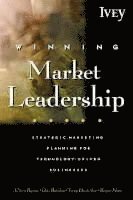
    Winning Market Leadership

    Strategic Market Planning for Technology-Driven Businesses

    AvAdrian Ryans,Roger More

    Inbunden, Engelska, 2000

    281 kr

    Beställningsvara. Skickas inom 5-8 vardagar. Fri frakt över 249 kr.

    Beskrivning

    Strategic market planning in technology-intensive businesses is more complex and is less manageable than in most other organizations. The technology-driven business environment is intensely competitive, complex, and dynamic, and planning needs to be done quickly and often.Winning Market Leadership offers a refreshing new approach to strategic market planning in these very demanding technology-intensive markets. It provides a systematic and highly integrated process for evaluating market opportunities and for developing strategies to lead in chosen markets. Its proven, highly practical approach to strategic market planning has allowed leading companies worldwide to: plan faster, focus on cash-flow and profitability, create "living plans" that reflect changing market conditions and competitive dynamics, involve cross-functional teams effectively, and drive to "yes/no" decisions. The book resulted from project-based executive programs developed by the authors for corporate clients such as IBM, Nortel Networks, National Semiconductor, and General Electric. This strategic market planning process has been refined and tested with over a thousand managers and executives in North America, Europe, and Asia. Winning Market Leadership: Is targeted at managers in technology-intensive businesses such as computers, telecommunications, software, biotechnology, semiconductors, instruments, pharmaceuticals, and advanced materials.Focuses on the key issues and tough choices faced by executives in very demanding technology-intensive markets.Outlines a clear 10-step process for building winning market plans, including: identifying opportunities, understanding the competition, managing critical relationships, understanding the profit dynamic, and more.Features examples from high-tech companies such as Intel, Compaq, Hewlett-Packard, Glaxo Wellcome, and General Electric.Includes "Key Questions for Executives and Managers" at the end of each chapter that help eliminate "blind spots" in the planning process.Winning Market Leadership is relevant to all executives and managers who play a significant role in developing cross-functional strategic market plans for their business: general managers; marketing managers; strategic planners; managers in business development, engineering, and R&D; and project team leaders.

    Produktinformation

    • Utgivningsdatum:2000-02-09
    • Mått:161 x 236 x 23 mm
    • Vikt:595 g
    • Format:Inbunden
    • Språk:Engelska
    • Antal sidor:336
    • Förlag:John Wiley & Sons Inc
    • ISBN:9780471644309

    Utforska kategorier

    • Försäljning och marknadsföring inom Ekonomi och Ledarskap
    • Media och underhållning inom Ekonomi och Ledarskap

    Mer om författaren

    The authors are on the faculty of the Richard Ivey School of Business at The University of Western Ontario, Canada's leading business school. They have worked as a team on school and private consulting initiatives for over a decade. Adrian B. Ryans is Professor of Business Administration. He has served as Dean and Director of Executive Education, and has also taught at Stanford, INSEAD, and IMD. He has served as a marketing strategy and management development consultant to a number of leading companies around the world, including General Electric, Hewlett-Packard, Nortel Networks, IBM, Varian, Fluke, and National Semiconductor. He currently directs the American Electronics Association/Ivey Executive Marketing Program for executives in high-technology companies. Roger A. More is Associate Professor of Business Administration and former Hewlett-Packard Professor of Marketing and New Technology. He has been a professor at the Harvard Business School, and taught at INSEAD and Penn State. A professional engineer and marketing planning and strategy consultant, his clients include General Electric, Nortel Networks, DuPont, Hewlett-Packard, Uddeholm Steel, and ICI. Donald W. Barclay is George and Mary Turnbull Professor. He teaches Marketing Management and Sales Management and is Director, Marketing Management Program at Ivey. He has also taught at Thunderbird and at Memorial University, Newfoundland. Formerly with IBM in sales and national account positions, he now consults to clients such as 3M, Novartis, and the Royal Bank of Canada. Terry H. Deutscher is Professor of Business Administration. During his time at the School, he has served as Associate Dean, Director of Research, and founding director of Ivey's Executive MBA Program via video-conferencing. He has also held appointments at Cornell University, Ohio State University, the University of British Columbia, and IMD. His consulting clients include IBM, General Electric, Nortel Networks, Philips, and ICI.

    Innehållsförteckning

    • Preface xvAcknowledgments xviiChapter 1: Introduction 1The Environment in Which Technology-Intensive Businesses Operate 3Complex and Dynamic Market Chains 3Network Effects 5Speed of Change is High 6Blurred Market Boundaries 7Markets and Competition Are Global 8Strategic Market Planning in a Technology-Intensive Business 10Who Should Be Involved in the Process? 10Planning Builds Mental Models 10Planning Process Must Be Iterative and Continuous 11Planning Process Must Be Integrative 12Winning Market Leadership: An Integrated Approach 12Choose the Arena 13Identify Potentially Attractive Opportunities 14Understand the Market 16Assess Resources and Competencies 16Understand the Competitive Challenge 17Make Tough Strategic Choices 19Plan Key Relationships 21Complete the Winning Strategy 22Understand the Profit Dynamic 23Implement the Chosen Strategy 23What Is Different About This Book? 24Integrated Planning Process 24Process Applies to New or Existing Business Opportunities 24Process Is Designed for Managers 25Chapter 2: Choose the Arena 27Introduction 27Crucial First Step in the Planning Process 29Strategic Business Unit (SBU) 29Existing Market Opportunities 30New Market Opportunities 31Define the Arena 34Customers Served 34Applications/Functionality Provided 36Technologies/Competencies Used 36Value-Adding Role 37Strategic Drivers and Strategic Paths 37Driving Force 37Strategic Path 38Next Step: Identify the Potentially Attractive Opportunities in the Business Arena 40Chapter 3: Identify Attractive Opportunities 43Introduction 43Identifying Potential Market Opportunities 43Benefits of Thinking About Market Segments Early in the Process 46Segmenting a Market 46Possible Segmentation Bases 47Segmentation Process 51Targeting Issues 52Market Segment Attractiveness 54Determining the Attractiveness of a Market Segment 55Understanding Choices Among Market Chain Opportunities 65Market-Driving Opportunities 66Exploiting Environmental Change 67Sources of Discontinuities or Breakpoints 68Next Step: Developing a Deeper Understanding of the Market Opportunities 70Chapter 4: Understand the Market 71Introduction 71Adoption of New Products 72Types of Innovations 73Technology Adoption Life Cycle 74Adopter Categories 75Driving the Adoption Process 77Achieving Market Leadership 82Whole Product or Complete Solution 83Understanding Buyer Choice/Rejection Behavior 84Decision-Making Unit 85Choice Criteria 86The Choice/Rejection Process 88Market Chains 93Choices Among Market Chains 93Market Chain Dynamics 96Market Chains as a Series of Choice/Rejection Processes 98Next Step: Assessing Your Resources and Competencies 99Chapter 5: Assess Resources and Competencies 103Introduction 103The Process of Assessing Resource/Competency Fit 104Core Competencies 105What Is a Core Competency? 105What Is a Constraining Incompetency? 108Identifying Core Competencies 109Identifying Your Organization’s Core Competencies 110Managing Core Competencies 111Should You “Make” or “Buy” Strategic Activities Associated with Core Competencies? 112Customer Value and Profit Creation Model 113Mapping Competencies and Customer Requirements 114Assessing a Market Opportunity: Fit With Core Competencies 115Next Step: Understanding the Competitive Challenge 120Chapter 6: Understand the Competitive Challenge 123Introduction 123Process of Competitive Analysis 125Issues in the Competitive Analysis Process 126Identification of Competitors 126How Do They Compete? 128How Are They Doing Now? How Will They Do in the Future? 134Analysis of Strategy Driving Forces 137Pulling the Competitive Information Together 141Actions-Consequences-Evidence (ACE) Framework 141Next Step: Making the Tough Choices 142Chapter 7: Make Tough Strategic Choices 145Introduction 145Strategic Issues 147What Is a Strategic Issue? 147How Many Strategic Issues? 148Types of Strategic Issues 148Developing a Winning Strategy for an Opportunity 149Cost Leadership 149Differentiation 151Strategic Breakpoint 153Risks of Adopting a Differentiation Strategy 155Sustaining the Competitive Advantage 157Convergence of Cost Leadership and Differentiation 158Selecting the Portfolio of Opportunities 159Balance Market Attractiveness and Ability to Win 159Displaying the Portfolio of Opportunities 160Making Clear Strategic Choices 163Next Step: Managing Critical Relationships 165Chapter 8: Manage Critical Relationships 167Introduction 167Why Are Relationships Critical? 168The Market Web 170A Generic Market Web and an Example 171A Managerial Perspective on Market Webs 174Market Webs as Value-Creating Systems 174Evolution of the Market Web 175Managing Critical Relationships 176Market Chain Strands 177Customer and Supplier Relationships 177Off-Market Chain Strands 178Formal and Informal 178Collaborative Product Development Alliances 179Co-Marketing Alliances 179Horizontal Selling Alliances 180Knowledge and Influence Strands 181Knowledge Strands: Learning From Others in the Web 181Influence Strands: Affecting Choice/Rejection Processes 182Value-Added Partnerships: A Key Relationship Form 183Partnering Success Factors 184Managing “Sticky” Strands in the Web 187Relationships and the Market Opportunity 189The Opportunity 189The Winning Strategy 190Next Step: Completing the Winning Strategy 190Chapter 9: Complete the Winning Strategy 193Introduction 193A Framework 193Define a Clear Competitive Position in the Opportunity 195Complete the Total Product/Service Solution 196Plan to Gain Market Chain Commitment 198Basic Issues 199Work Through Pricing Challenges 200The Impact of Context 201Pricing Objectives 202Other Challenges 206Plan to Influence Customers and End Users 209Customer Interface Strategies 209Advertising and Promotion 212Apply Strategic Thinking to Emerging Challenges 213Evaluate the Current Strategy 214Are You Going After an Attractive Market Opportunity? 215Can You Win with Your Proposed Strategy? 216If You Win, Will It be Worth It? 218Other Considerations 219Detail and Use the Plan 220Next Step: Understanding the Profit Dynamic 221Chapter 10: Understand the Profit Dynamic 223Introduction 223The Profit Dynamic 224The Drivers of Positive Cash Flow: Total Margin Generated 225Negative Cash Flow Drivers: Fixed Costs and Investments 226Cash Flow Profiles 227The Profit Dynamic 228An Alternative Form of the Profit Dynamic 230Locating Key Sensitivities in the Profit Dynamic 231New Product Opportunities and the Profit Dynamic 234The Critical Importance of Adoption Rate 235Applying the Profit Dynamic to Individual Customers 238Product-Service Integration and the Profit Dynamic 239Integrated Product-Service Opportunities 239Management of the Integrated Product-Service Profit Dynamic 241Managing the Profit Dynamic in Market Chains: Creating Strategic Leverage 242Identifying Points of Strategic Leverage 242Strategic Leverage and Adoption Rates 244Next Step: Implementing the Strategy 244Chapter 11: Implement the Winning Strategy 247Introduction 247A Process for Managing Implementation 252The Case for Change 254The Need for Strategic Change 254Types of Change 256Specification of the Implementation Plan 259The Questions 260The Challenge 263Communicating Implementation 264Monitoring Implementation 267Conclusion 268Chapter 12: The System that Makes the Process Happen 271Introduction 271Planning Systems 272Need for Planning Systems 274Design of a Planning System 276Factors Influencing the Design of a Planning System 276Major Planning System Design Decisions 278No One Right Planning System 282Balanced Interaction 284Planning System in a Large, Sophisticated Company 285Overview of the Planning System 286Cycle One: Develop Options for SBU 286Cycle Two: Detailed Planning for Selected Option 288Cycle Three: Develop Budgets and Detailed One-Year Operating Plan 289Implementation and Monitoring 289An Effective Strategic Market Planning Process 290Is Both Integrated and Iterative 290Is Question Driven 291Combines Hard Data with Soft Intuitive Judgment 291Focuses on Implementation 291Recognizes That the Process Is as Important as the Plan 292Encourages Managers to Say No 292Challenges Industry and Company Norms 294Key Success Factors in an Effective Planning System 294Effective Teams 295Supportive Corporate Culture 297Integration with Other Key Processes 298Key Support Systems in Place 299Conclusion 300Index 303