• Fri frakt över 249 kr
  • •
  • Snabba leveranser
  • •
  • Billiga böcker
Kundservice

Du är på sajten för privatpersoner.

Företag, bibliotek eller offentlig verksamhet?

Du handlar på classic.bokus.com, där alla dina funktioner finns intakta.
Till classic.bokus.com
Bokus logotyp. Gå till startsidan.
  • Erbjudanden
  • Nyheter
  • Student
  • Topplistor
  • Barn & ungdom
  • Bokus Play
  • E-böcker
  • Pocketböcker
  • Spel & pussel

10% rabatt på allt med kod NYSTART10 →

Sidfot

Mina sidor

    Hjälp

    • Kundservice
    • Vanliga frågor och svar
    • Frakt och leverans
    • Retur vid ångerrätt
    • Reklamera vara
    • Betalning
    • Köpvillkor
    • Allmänna villkor
    • Information om webbplatsens tillgänglighet

    Om Bokus

    • Om oss
    • Pressrum
    • För studenter
    • För företag
    • För bibliotek och offentlig verksamhet
    • För leverantörer
    • Hållbarhet

    Populärt

    • Aktuella erbjudanden
    • Presentkort
    • Studentlitteratur
    • Nya böcker
    • Topplistor
    • Signerade böcker
    • Engelska böcker

    Inspiration

    • Boktips
    • BookTok
    • Populära bokserier
    • Barnbokskaraktärer
    • Populära författare
    Logotyp för Bokus
    Följ oss på Facebook (extern länk)Följ oss på Instagram (extern länk)Följ oss på YouTube (extern länk)Följ oss på TikTok (extern länk)
    bokus @ CookiesAnpassa cookiesIntegritetspolicyKöpvillkor
    Till Citymail hemsida (extern länk)Till Budbee hemsida (extern länk)Till Postnord hemsida (extern länk)Till Schenker hemsida (extern länk)Till Early Bird hemsida (extern länk)Till Walleys hemsida (extern länk)
    1. Naturvetenskap och teknik
    2. Teknik och industri
    3. Maskinteknik och material

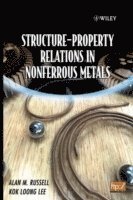
    Structure-Property Relations in Nonferrous Metals

    AvAlan Russell,Kok Loong Lee

    Inbunden, Engelska, 2005

    2 062 kr

    Beställningsvara. Skickas inom 5-8 vardagar. Fri frakt över 249 kr.

    Beskrivning

    This junior/senior textbook presents fundamental concepts of structure property relations and a description of how these concpets apply to every metallic element except iron. Part One of the book describes general concepts of crystal structure, microstructure and related factors on the mechanical, thermal, magnetic and electronic properties of nonferrous metals, intermetallic compounds and metal matrix composites.Part Two discusses all the nonferrous metallic elements from two perspectives: First it explains how the concepts presented in Part One define the properties of a particular metallic element and its alloys. Second is a description of the major engineering uses of each metal. This section features sidebar pieces describing particular physical property oddities, engineering applications and case studies. An Instructor's Manual presenting detailed solutions to all the problems in the book is available from the Wiley editorial department.An Instructor's Manual presenting detailed solutions to all the problems in the book is available from the Wiley editorial department.

    Produktinformation

    • Utgivningsdatum:2005-07-01
    • Mått:187 x 261 x 29 mm
    • Vikt:1 057 g
    • Format:Inbunden
    • Språk:Engelska
    • Antal sidor:520
    • Förlag:John Wiley & Sons Inc
    • ISBN:9780471649526

    Utforska kategorier

    • Maskinteknik och material inom Naturvetenskap och teknik

    Mer om författaren

    ALAN M. RUSSELL, PHD, is a faculty member in the Materials Science and Engineering Department at Iowa State University in Ames, Iowa. KOK LOONG LEE, PHD, is a materials technologist with Corus Construction & Industrial in North Lincolnshire, UK.

    Recensioner i media

    "...it contains a wealth of information on a wide variety of metals for which it is relatively difficult to locate information." (Materials and Manufacturing Process, January 2007) "...a text that is informative and useful for the practicing engineer, as well as interesting and instructional for the student of metallurgy." (Journal of Metals Online, January 24, 2006)"...well-written, illustrated, and presented...would be helpful to junior/senior-level undergraduates, graduate students, faculty, and practicing metallurgists. An excellent acquisition for academic or industrial libraries." (CHOICE, November 2005)

    Innehållsförteckning

    • Preface. PART ONE.1. Crystal and Electronic Structure of Meals.1.1 Introduction.1.2 Crystal Structures of the Metallic Elements.1.3 Exceptions to the Rule of the Metallic Bond.1.4 Effects of High Pressure on Crystal Structure.1.5 Effect of Electronic Structure on Crystal Structure.1.6 Periodic Trends in Material Properties.2. Defects and their Effects on Materials Properties.2.1 Introduction.2.2 Point Defects.2.3 Line Defects (Dislocations).2.4 Planar Defects.2.5 Volume Defects.3. Strengthening Mechanisms.3.1 Introduction.3.2 Grain Boundary Strengthening.3.3 Strain Hardening.3.4 Solid-Solution Hardening.3.5 Precipitation Hardening (or Age Hardening).4. Disclocations.4.1 Introduction.4.2 Forces on Dislocations.4.3 Forces Between Dislocations.4.4 Multiplication of Dislocations.4.5 Partial Dislocations.4.6 Slip Systems in Various Crystals.4.7 Strain Hardening of Single Crystals.4.8 Thermally Activated Dislocation Motion.4.9 Interactions of Solute Atoms with Dislocations.4.10 Dislocation Pile-ups.5. Fracture and Fatigue.5.1 Introduction.5.2 Fundamentals of Fracture.5.3 Metal Fatigue.6. Strain Rate Effects and Creep.6.1 Introduction.6.2 Yield Point Phenomenon and Strain Aging.6.3 Ultrarapid Strain Phenomena.6.4 Creep.6.5 Deformation Mechanism Maps.6.6 Superplasticity.7. Deviations from Classic Crystallinity.7.1 Introduction.7.2 Nanocrystalline Metals.7.3 Amorphous Metals.7.4 Quasicrystalline Metals.7.5 Radiation Damage in Metals.8. Processing Methods.8.1 Introduction.8.2 Casting.8.3 Powder Metallurgy.8.4 Forming and Shaping.8.5 Material Removal.8.6 Joining.8.7 Surface Modification.9. Composites.9.1 Introduction.9.2 Composite Materials.9.3 Metal Matrix Composites.9.4 Manufacturing MMCs.9.5 Mechanical Properties and Strengthening Mechanisms in MMCs.9.6 Internal Stresses.9.7 Stress Relaxation.9.8 High-Temperature Behavior of MMCs.PART TWO.10. Li, Na, K, Rb, Cs, and Fr.10.1 Overview.10.2 History, Properties, and Applications.10.3 Sources.10.4 Structure–Property Relations.11. Be, Mg, Ca, Sr, Ba, and Ra.11.1 Overview.11.2 History and Properties.11.3 Beryllium.11.4 Magnesium.11.5 Heavier Alkaline Metals.12. Ti, Zr, and Hf.12.1 Overview.12.2 Titanium.12.3 Zirconium.12.4 Hafnium.13. V, Nb, and Ta.13.1 Overview.13.2 History and Properties.13.3 Vanadium.13.4 Niobium.13.5 Tantalum.14. Cr, Mo, and W.14.1 Overview.14.2 Chromium.14.3 Molybdenum.14.4 Tungsten.15. Mn, Tc, and Re.15.1 Overview.15.2 History and Properties.15.3 Manganese.15.4 Technetium.15.5 Rhenium.16. Co and Ni.16.1 Overview.16.2 Cobalt.16.3 Nickel.17. The Platinum Group Metals: Ru, Rh, Pd, Os, Ir, and Pt.17.1 Overview.17.2 History, Properties, and Applications.17.3 Toxicity.17.4 Sources.17.5 Structure–Property Relations.18. Cu, Ag, and Au.18.1 Overview.18.2 Copper.18.3 Silver.18.4 Gold.19. Zn, Cd, and Hg.19.1 Overview.19.2 Zinc.19.3 Cadmium.19.4 Mercury.20. Al, Ga, In, and Ti.20.1 Overview.20.2 Aluminum.20.3 Gallium.20.4 Indium.20.5 Thallium.21. Si, Ge, Sn, and Pb.21.1 Overview.21.2 Silicon.21.3 Germanium.21.4 Tin.21.5 Lead.22. As, Sb, Bi, and Po.22.1 Overview.22.2 Arsenic.22.3 Antimony.22.4 Bismuth.22.5 Polonium.23. Sc, Y, La, Ce, Pr, Nd, Pm, Sm, Eu, Gd, Tb, Dy, Ho, Er, Tm, Yb, and Lu.23.1 Overview.23.2 History.23.3 Physical Properties.23.4 Applications.23.5 Sources.23.6 Structure–Property Relations.24. Ac, Th, Pa, U, Np, Pu, Am, Cm, Bk, Cf, Es, Fm, Md, No, and Lr.24.1 Overview.24.2 History and Properties.24.3 Thorium.24.4 Uranium.24.5 Plutonium.24.6 Less Common Actinide Metals.25. Intermetallic Compounds: Their Promise and the Ductility Challenge.25.1 Overview.25.2 Bonding and General Properties.25.3 Mechanical Properties.25.4 Oxidation Resistance.25.5 Nonstructural Uses of Intermetallics.25.6 Stoichiometric Intermetallics.25.7 Nonstoichiometric Intermetallics.25.8 Intermetallics with Third-Element Additions.25.9 Environmental Embrittlement.Index.