• Fri frakt över 249 kr
  • •
  • Snabba leveranser
  • •
  • Billiga böcker
Kundservice

Du är på sajten för privatpersoner.

Företag, bibliotek eller offentlig verksamhet?

Du handlar på classic.bokus.com, där alla dina funktioner finns intakta.
Till classic.bokus.com
Bokus logotyp. Gå till startsidan.
  • Erbjudanden
  • Nyheter
  • Student
  • Topplistor
  • Barn & ungdom
  • Bokus Play
  • E-böcker
  • Pocketböcker
  • Spel & pussel

10% rabatt på allt med kod NYSTART10 →

Sidfot

Mina sidor

    Hjälp

    • Kundservice
    • Vanliga frågor och svar
    • Frakt och leverans
    • Retur vid ångerrätt
    • Reklamera vara
    • Betalning
    • Köpvillkor
    • Allmänna villkor
    • Information om webbplatsens tillgänglighet

    Om Bokus

    • Om oss
    • Pressrum
    • För studenter
    • För företag
    • För bibliotek och offentlig verksamhet
    • För leverantörer
    • Hållbarhet

    Populärt

    • Aktuella erbjudanden
    • Presentkort
    • Studentlitteratur
    • Nya böcker
    • Topplistor
    • Signerade böcker
    • Engelska böcker

    Inspiration

    • Boktips
    • BookTok
    • Populära bokserier
    • Barnbokskaraktärer
    • Populära författare
    Logotyp för Bokus
    Följ oss på Facebook (extern länk)Följ oss på Instagram (extern länk)Följ oss på YouTube (extern länk)Följ oss på TikTok (extern länk)
    bokus @ CookiesAnpassa cookiesIntegritetspolicyKöpvillkor
    Till Citymail hemsida (extern länk)Till Budbee hemsida (extern länk)Till Postnord hemsida (extern länk)Till Schenker hemsida (extern länk)Till Early Bird hemsida (extern länk)Till Walleys hemsida (extern länk)
    1. Ekonomi och Ledarskap
    2. Företagsekonomi
    3. Affärsförhandlingar

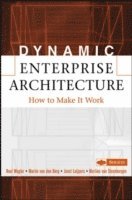
    Dynamic Enterprise Architecture

    How to Make It Work

    AvRoel Wagter,Martin van den Berg

    Inbunden, Engelska, 2005

    1 097 kr

    Beställningsvara. Skickas inom 5-8 vardagar. Fri frakt över 249 kr.

    Beskrivning

    This book presents an approach to enterprise architecture, which enables corporations to achieve their business objectives faster. Focusing on the governance of IT in the organization, it provides tangible tools, advice and strategies for implementing and designing the architectural process within a corporation that will make a major contribution in driving the business forward and achieve its goals.

    Produktinformation

    • Utgivningsdatum:2005-02-22
    • Mått:160 x 232 x 23 mm
    • Vikt:504 g
    • Format:Inbunden
    • Språk:Engelska
    • Antal sidor:260
    • Förlag:John Wiley & Sons Inc
    • ISBN:9780471682721

    Utforska kategorier

    • Affärsförhandlingar inom Ekonomi och Ledarskap

    Mer om författaren

    ROEL WAGTER is Chairman of R. Wagter Business and ICT Architecture B.V. and has more than thirty years of experience in the information technology field. He has held numerous managerial positions in which he gained experience in the alignment between business and IT. These experiences are the foundation for his ideas on enterprise architecture. MARTIN van den BERG is Chairman of the architecture section of the Dutch Society of IT Professionals, and an enterprise architect and service line manager with Sogeti Nederland B.V. He advises and trains companies in applying enterprise and IT architectures. In addition, he develops services to support organizations to improve the way they work with enterprise and IT architecture.JOOST LUIJPERS is an information architect with Sogeti Nederland B.V. Prior to joining Sogeti, he was a professor of information engineering.MARLIES van STEENBERGEN has more than ten years of experience as an enterprise architect. She now works for Sogeti Nederland B.V. as an advisor and coach in the field of enterprise architecture, and chairs Sogeti's Architectural Competence Network.

    Innehållsförteckning

    • Preface. Introduction.Target Audience.The Structure of This Book.Chapter 1: Agility and Coherence: A Conflict of Interests?Potential of Information Technology.Using IT: A Problem in the Making?Agility and Coherence.Increasing Tension.The Challenge.Chapter 2: Agility and Coherence Considered Separately.Different Answers to Different Questions.Increasing Agility: New Development Methods.Increasing Coherence: Architectural Awareness.One Answer to Both Questions: Dynamic Architecture.Chapter 3: Dynamic Architecture.Wanted: Agile Architecture.Architecture: A Multifaceted Concept.Dynamic Architecture: Architecture Aimed at Agility.Enabling Change.Quickly Achieving Business Objectives: DYA.Chapter 4: The DYA Model.Making It Work.Ten Principles of DYA.DYA: A Theoretical and Working Model.The Model and the Principles.How to Use the Model.Filling in the Model.Chapter 5: Strategic Dialogue.Crisis at WWW-TeleBel.Strategic Dialogue: Doing the Right Things.Determining Business Cases.Elaborating Business Cases.Strategic Dialogue: Coherence and Agility.Intermezzo: The Business Case for WWW-TeleBel.Chapter 6: Architectural Services.Architectural Ups and Downs at TeleBel.Architectural Services: Doing Things Properly.Maintaining an Overview with the Architectural Framework.Architectural Services Supports the Strategic Dialogue.Architectural Services Supports the Development.Architectural Team.Architectural Services: Coherence and Agility.Intermezzo: WWW-TeleBelâ??s Project-Start Architecture.Chapter 7: Development with(out) Architecture.WWW-TeleBel One Year Later.Development with(out) Architecture: Doing the Right Things the Right Way.Three Development Strategies.Anticipative Strategy.Offensive Strategy and Defensive Strategy.Project Team.Maintenance with(out) Architecture.Development with(out) Architecture: Coherence and Agility.Intermezzo I: A Building Permit for WWW-TeleBel.Intermezzo II: A Management Letter for WWW-TeleBel.Chapter 8: Governance.Deadlock for TeleBel.Successful Processes Do Not Just Happen.Responsibilities and Authorities.Coordination of Developments.Monitoring.Processes Also Require Maintenance.Governance: Coherence and Agility.Intermezzo: Embedding Dynamic Architecture at TeleBel.Conclusion.Appendices.Appendix A: Technique for Interactive Process Design.Appendix B: Information Economics.Appendix C: Architecture Maturity Model and Dynamic Architecture.Glossary.Bibliography.Index.