• Fri frakt över 249 kr
  • •
  • Snabba leveranser
  • •
  • Billiga böcker
Kundservice

Du är på sajten för privatpersoner.

Företag, bibliotek eller offentlig verksamhet?

Du handlar på classic.bokus.com, där alla dina funktioner finns intakta.
Till classic.bokus.com
Bokus logotyp. Gå till startsidan.
  • Erbjudanden
  • Student
  • Topplistor
  • Barn & ungdom
  • Bokus Play
  • E-böcker
  • Ljudböcker
  • Pocketböcker
  • Spel & pussel

Upp till 25% på utvalda nyheter →

Sidfot

Mina sidor

    Hjälp

    • Kundservice
    • Vanliga frågor och svar
    • Frakt och leverans
    • Retur vid ångerrätt
    • Reklamera vara
    • Betalning
    • Köpvillkor
    • Allmänna villkor
    • Information om webbplatsens tillgänglighet

    Om Bokus

    • Om oss
    • Pressrum
    • För studenter
    • För företag
    • För bibliotek och offentlig verksamhet
    • För leverantörer
    • Hållbarhet

    Populärt

    • Aktuella erbjudanden
    • Presentkort
    • Studentlitteratur
    • Nya böcker
    • Topplistor
    • Signerade böcker
    • Engelska böcker

    Inspiration

    • Boktips
    • BookTok
    • Populära bokserier
    • Barnbokskaraktärer
    • Populära författare
    Logotyp för Bokus
    Följ oss på Facebook (extern länk)Följ oss på Instagram (extern länk)Följ oss på YouTube (extern länk)Följ oss på TikTok (extern länk)
    bokus @ CookiesAnpassa cookiesIntegritetspolicyKöpvillkor
    Till Citymail hemsida (extern länk)Till Budbee hemsida (extern länk)Till Postnord hemsida (extern länk)Till Schenker hemsida (extern länk)Till Early Bird hemsida (extern länk)Till Walleys hemsida (extern länk)
    1. Kultur
    2. Musikböcker
    3. Musikvetenskap

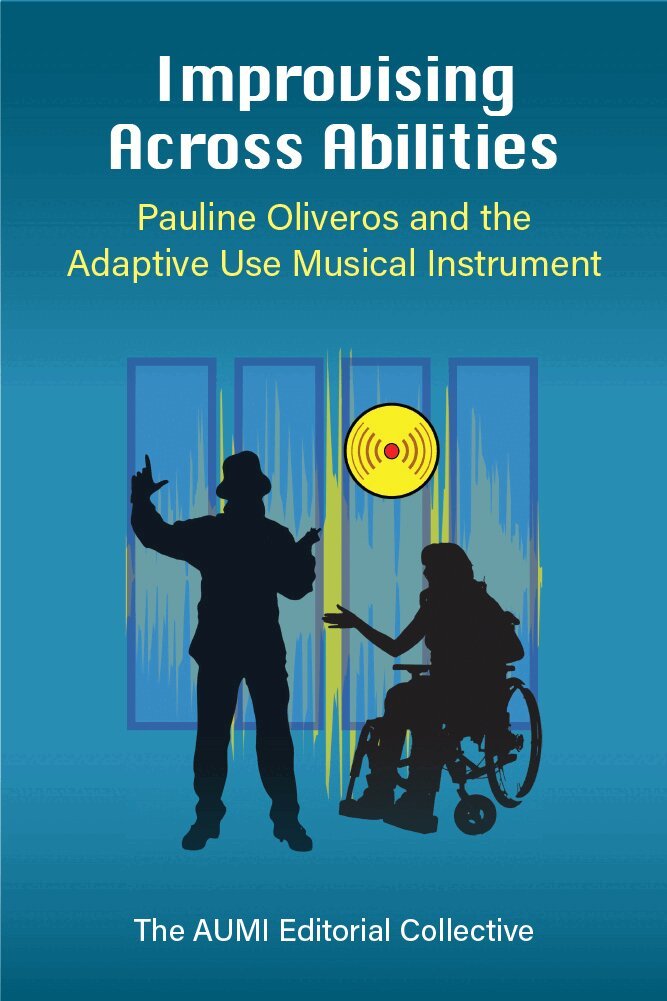
    Improvising Across Abilities

    Pauline Oliveros and the Adaptive Use Musical Instrument

    AvThomas Ciufo,Abbey L. Dvorak

    Häftad, Engelska, 2024

    Del i serien Music and Social Justice

    447 kr

    Beställningsvara. Skickas inom 5-8 vardagar. Fri frakt över 249 kr.

    Beskrivning

    Improvising Across Abilities: Pauline Oliveros and the Adaptive Use Musical Instrument (AUMI) brings together scholars, musicians, and family members, with and without disabilities, to collectively recount years of personal experiences, research, and perspectives on the societal and community impact of inclusive musical improvisation. One of the lesser-known projects of composer, improviser, and humanitarian, Pauline Oliveros (1932–2016), the AUMI was designed as a liberating and affordable alternative to the constraints of instruments created only for normative bodies, thus opening a doorway for people of all ages, genders, abilities, races, and socioeconomic backgrounds to access artistic practice with others. More than a book about AUMI, this book is an invitation to readers to use AUMI in their own communities. This book, which contains wisdom from many who have been affected by their work with the instrument and the people who use it, is a representation of how music and extemporized performance have touched the lives and minds of scholars and families alike. Not only has AUMI provided the opportunity to grow in listening to others who may speak differently (or not at all), but it has been used as an avenue for a diverse set of people to build friendships with others whom they may have never otherwise even glanced at in the street. By providing a space for every person who comes across AUMI to perform, listen, improvise, and collaborate, the continuing development of this instrument contributes to a world in which every person is heard, welcomed, and celebrated.

    Produktinformation

    • Utgivningsdatum:2024-01-22
    • Mått:152 x 229 x 31 mm
    • Vikt:652 g
    • Format:Häftad
    • Språk:Engelska
    • Serie:Music and Social Justice
    • Antal sidor:404
    • Förlag:The University of Michigan Press
    • ISBN:9780472055739

    Utforska kategorier

    • Musikvetenskap inom Kultur
    • Sociala och etiska frågor inom Samhälle och politik

    Mer om författaren

    The AUMI Editorial Collective includes Thomas Ciufo, Abbey Dvorak, Kip Haaheim, Jennifer Hurst, IONE, Grace Shih-en Leu, Leaf Miller, Ray Mizumura-Pence, Nicola Oddy, Jesse Stewart, John Sullivan, Sherrie Tucker, Ellen Waterman, and Ranita Wilks.

    Recensioner i media

    "Improvising Across Abilities is perhaps the only manuscript of its kind: one that explores the applications of one adaptive music technology, AUMI, in extraordinary depth through multivalent perspectives and scenarios via the words and metaphors of an extraordinarily varied collective of writers, students, teachers, social justice workers, technologists, community activists, group home directors, and creatives. While most scholarly essay collections feature chapters by academics from a narrow range of fields (if not a single one), this volume’s editorial team has consciously drawn writing from members of the public community who might not ordinarily contribute to such a collection, as well as from artists, scientists, and professors who write as part of their profession. The variation in writers and voices not only adds to the value of the book, but reinforces its argument that everyone, no matter what shape, size, or ability, should have a voice."

    Innehållsförteckning

    • Introduction Section I: Dreaming of AUMI Chapter 1 Going Deep: AUMI Since Before the BeginningLeaf MillerIllustrations by Ty DykemaChapter 2 From Punk Philosophy to Musical AccessibilityZane Van DusenChapter 3 My Transformation into a Masterpiece Musical Instrument and MusicianClara TomazChapter 4 The Gift of Expression: Playing AUMI with My SonJulie BrocklehurstChapter 5 AUMI as a Model for Social JusticeGeorge LipsitzChapter 6 The Dream of AUMIIONESection II: Software for All People: Improvising AUMI’s Development Chapter 7 AUMI in the Context of Adaptive MusicAlex LubetChapter 8 AUMI Among the ADMIs: The Adaptive Digital ContextGrace Shih-en LeuChapter 9 AUMI Development and Developers: The DLI Years (2007-2012)Sherrie TuckerChapter 10 AUMI Technology Development at McGill (2012-2019)John Sullivan, Ivan Franco, Ian Hattwick, Thomas Ciufo, Eric LewisChapter 11 How Adaptive, How Useful? Technological Design Solutions in AUMI for iOSHenry LowengardChapter 12 Pauline’s World of Virtuosos: Expanded Instruments, Deep Listening, and Stretched BoundariesJonas BraaschSection III, Part 1:AUMI Communities Chapter 13 Exploring AUMI’s Potential in the Thunder Bay CommunityAn Interview between Nicola Oddy and Lise VaugeoisChapter 14 Building and Sustaining Ethical Communities TogetherAn Interview with Rebecca Caines by Ellen WatermanChapter 15 There’s No Place Like AUMI: Building a Community Partnership in Lawrence, KansasJim Barnes, Kip Haaheim, Ray Mizumura-Pence, Sherrie Tucker, and Ranita WilksChapter 16 Love, Actually: Using AUMI to Transgress Ableist Directing HabitsNicole Hodges PersleyChapter 17 Wooden SnapdragonJulie UnruhChapter 18 Improvising Inclusive Communities: Shared Reflections on the Jesse Stewart Residency in Lawrence, KansasAbbey Dvorak, Kip Haaheim, Ray Mizumura-Pence, and Sherrie TuckerChapter 19 Sending and Receiving: AUMI Bodies and Dance ImprovisationMichelle Heffner Hayes and Sherrie TuckerChapter 20 Communities of Generosity and Gratitude: AUMI-KU InterArts’ First DecadeRay Mizumura-PenceSection III, Part 2:AUMI Performance Chapter 21 WAAM + AUMI: The We Are All Musicians Project and the Adaptive Use Musical InstrumentJesse StewartChapter 22 “To Me, Dance is a Home”: An Interview with Jessie HuggettJessie Huggett Interviewed by Jack Hui LitsterChapter 23 “I Am Here”: AUMI Sings and Choral ParticipationEllen Waterman, Laurel Forshaw, Gillian Siddall, Henry Lowengard, Gale Franklin, Teresa Connors, and Karen BerglanderChapter 24 AUMI, Theremin, and Sonic WitnessingLi HarrisChapter 25AUMI in Practice: The Mills AIEMatt RobidouxChapter 26 Knowing as Feeling: Five Meditations on the PlanetsKip HaaheimSection IV, Part 1: AUMI Classrooms Jennifer Hurst and Grace Shih-en LeuChapter 27 Working with AUMI in Classroom Settings in a Center School for Students with Severe Cognitive and Physical ChallengesDeborah A. Nelson and Nancy PattersonChapter 28 AUMI and ‘Improvise Approach’ Backing TracksCarrie LennardChapter 29 AUMI and the Ethics of Technology: A Personal EncounterEric LewisSection IV, Part 2: AUMI and Music Therapy: Supporting Independent Musicking Abbey Dvorak and Nicola Oddy Chapter 30 Clinical Applications Using AUMI in Music Therapy PracticeAbbey L. Dvorak, James Maxson, and David KnottChapter 31 Use of AUMI in Clinical Music Therapy for Hospitalized Patients with Complex Neurological DisabilitiesSergio HazardChapter 32 AUMI and Musical Empowerment in a Pediatric EnvironmentJohn MulcahySection V: Dreaming AUMI Futures Chapter 33 Dream MusicJulie UnruhChapter 34 Dreaming AUMI’S FutureIONEReferences Editorial Team and Chapter Contributors