• Fri frakt över 249 kr
  • •
  • Snabba leveranser
  • •
  • Billiga böcker
Kundservice

Du är på sajten för privatpersoner.

Företag, bibliotek eller offentlig verksamhet?

Du handlar på classic.bokus.com, där alla dina funktioner finns intakta.
Till classic.bokus.com
Bokus logotyp. Gå till startsidan.
  • Erbjudanden
  • Nyheter
  • Student
  • Topplistor
  • Barn & ungdom
  • Bokus Play
  • E-böcker
  • Pocketböcker
  • Spel & pussel

10% studentrabatt med kod TERM26

Sidfot

Mina sidor

    Hjälp

    • Kundservice
    • Vanliga frågor och svar
    • Frakt och leverans
    • Retur vid ångerrätt
    • Reklamera vara
    • Betalning
    • Köpvillkor
    • Allmänna villkor
    • Information om webbplatsens tillgänglighet

    Om Bokus

    • Om oss
    • Pressrum
    • För studenter
    • För företag
    • För bibliotek och offentlig verksamhet
    • För leverantörer
    • Hållbarhet

    Populärt

    • Aktuella erbjudanden
    • Presentkort
    • Studentlitteratur
    • Nya böcker
    • Topplistor
    • Signerade böcker
    • Engelska böcker

    Inspiration

    • Boktips
    • BookTok
    • Populära bokserier
    • Barnbokskaraktärer
    • Populära författare
    Logotyp för Bokus
    Följ oss på Facebook (extern länk)Följ oss på Instagram (extern länk)Följ oss på YouTube (extern länk)Följ oss på TikTok (extern länk)
    bokus @ CookiesAnpassa cookiesIntegritetspolicyKöpvillkor
    Till Citymail hemsida (extern länk)Till Budbee hemsida (extern länk)Till Postnord hemsida (extern länk)Till Schenker hemsida (extern länk)Till Early Bird hemsida (extern länk)Till Walleys hemsida (extern länk)
    1. Skönlitteratur
    2. Litteraturvetenskap
    3. Litteraturvetenskap

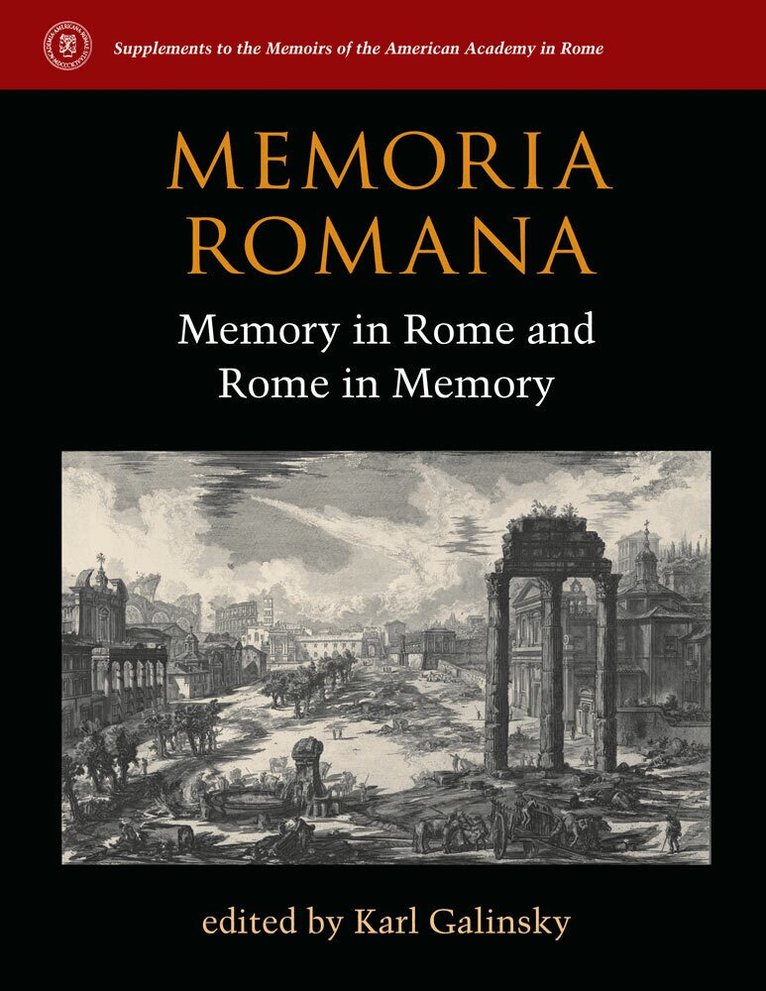
    Memoria Romana

    Memory in Rome and Rome in Memory

    AvG. Karl Galinsky

    Inbunden, Engelska, 2014

    Del i serien Supplements to the Memoirs of the American Academy in Rome

    1 421 kr

    Beställningsvara. Skickas inom 5-8 vardagar. Fri frakt över 249 kr.

    Beskrivning

    Concern with memory permeated Roman literature, history, rhetorical training, and art and architecture. This is the first book to look at the phenomenon from a variety of perspectives, including cognitive science. There is no orthodoxy in memory studies and the approaches are both empirical and theoretical. A central issue is: who and what preserved and shaped cultural memory in Rome, and how did that process work? Areas and subjects covered include the Romans' view of the changing physical fabric of the city, monuments (by etymology related to memory) such as the Arch of Constantine, memory and the Roman triumph, Roman copies of Greek sculpture and their relation to memory, the importance of written information and of continuing process, the creation of memory in Republican memoirs and Flavian poetry, the invention of traditions, and the connection of cultural and digital memory.The ten chapters present original findings that complement earlier scholarship from the perspective of memory and open up new horizons for inquiry. The introduction by volume editor Karl Galinsky situates the work within current studies on cultural and social memory, and the concluding chapter by Daniel Libeskind provides the perspective of a contemporary practitioner.Additional contributors include Richard Jenkyns, Harriet I. Flower, T. P. Wiseman, Karl-J. Hölkeskamp, Gianpiero Rosati, Diane Favro, Jessica Hughes, Anna Anguissola, Lisa Marie Mignone, and Bernard Frischer.

    Produktinformation

    • Utgivningsdatum:2014-04-30
    • Mått:216 x 279 x undefined mm
    • Format:Inbunden
    • Språk:Engelska
    • Serie:Supplements to the Memoirs of the American Academy in Rome
    • Antal sidor:212
    • Förlag:The University of Michigan Press
    • ISBN:9780472119431

    Utforska kategorier

    • Litteraturvetenskap inom Skönlitteratur

    Mer om författaren

    Karl Galinsky is Floyd A. Cailloux Centennial Professor of Classics and University Distinguished Teaching Professor, University of Texas at Austin.

    Recensioner i media

    Ancient historians have much to learn from better understanding how the memories of the artists and authors who now constitute their primary sources were shaped and shared, how and why Romans remembered, and how these processes of remembering differed from what they then chose to inscribe, and forget. At least from the time of Ennius, Rome’s present was always also its past."--Bryn Mawr Classical Review