• Fri frakt över 249 kr
  • •
  • Snabba leveranser
  • •
  • Billiga böcker
Kundservice

Du är på sajten för privatpersoner.

Företag, bibliotek eller offentlig verksamhet?

Du handlar på classic.bokus.com, där alla dina funktioner finns intakta.
Till classic.bokus.com
Bokus logotyp. Gå till startsidan.
  • Erbjudanden
  • Nyheter
  • Student
  • Topplistor
  • Barn & ungdom
  • Bokus Play
  • E-böcker
  • Pocketböcker
  • Spel & pussel

10% rabatt på allt med kod: NYSTART10 →

Sidfot

Mina sidor

    Hjälp

    • Kundservice
    • Vanliga frågor och svar
    • Frakt och leverans
    • Retur vid ångerrätt
    • Reklamera vara
    • Betalning
    • Köpvillkor
    • Allmänna villkor
    • Information om webbplatsens tillgänglighet

    Om Bokus

    • Om oss
    • Pressrum
    • För studenter
    • För företag
    • För bibliotek och offentlig verksamhet
    • För leverantörer
    • Hållbarhet

    Populärt

    • Aktuella erbjudanden
    • Presentkort
    • Studentlitteratur
    • Nya böcker
    • Topplistor
    • Signerade böcker
    • Engelska böcker

    Inspiration

    • Boktips
    • BookTok
    • Populära bokserier
    • Barnbokskaraktärer
    • Populära författare
    Logotyp för Bokus
    Följ oss på Facebook (extern länk)Följ oss på Instagram (extern länk)Följ oss på YouTube (extern länk)Följ oss på TikTok (extern länk)
    bokus @ CookiesAnpassa cookiesIntegritetspolicyKöpvillkor
    Till Citymail hemsida (extern länk)Till Budbee hemsida (extern länk)Till Postnord hemsida (extern länk)Till Schenker hemsida (extern länk)Till Early Bird hemsida (extern länk)Till Walleys hemsida (extern länk)
    1. Psykologi och pedagogik
    2. Psykologi
    3. Psykologiska teorier och skolor

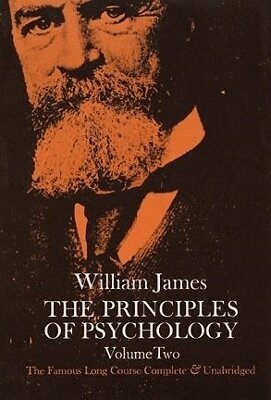
    Principles of Psychology, Vol. 2

    The Famous Long Course, Complete & Unabridged

    AvWilliam James

    Häftad, Engelska, 2000

    285 kr

    Beställningsvara. Skickas inom 5-8 vardagar. Fri frakt över 249 kr.

    Fler format och utgåvor

    Häftad

    336 kr

    Inbunden

    735 kr

    Häftad

    259 kr

    Beskrivning

    This is the first inexpensive edition of the complete Long Course in Principles of Psychology, one of the great classics of modern Western literature and science and the source of the ripest thoughts of America’s most important philosopher. As such, it should not be confused with the many abridgements that omit key sections.The book presents lucid descriptions of human mental activity, with detailed considerations of the stream of thought, consciousness, time perception, memory, imagination, emotions, reason, abnormal phenomena, and similar topics. In its course it takes into account the work of Berkeley, Binet, Bradley, Darwin, Descartes, Fechner, Galton, Green, Helmholtz, Herbart, Hume, Janet, Kant, Lange, Lotze, Locke, Mill, Royce, Schopenhauer, Spinoza, Wundt, and scores of others. It examines contrasting interpretations of mental phenomena, treating introspective analysis, philosophical interpretations, and experimental research.Although the book originally appeared nearly 75 years ago, it remains unsurpassed today as a brilliantly written survey of William James’ timeless view of psychology.

    Produktinformation

    • Utgivningsdatum:2000-02-01
    • Mått:140 x 210 x 50 mm
    • Vikt:690 g
    • Format:Häftad
    • Språk:Engelska
    • Antal sidor:720
    • Förlag:Dover Publications Inc.
    • ISBN:9780486203829

    Utforska kategorier

    • Psykologiska teorier och skolor inom Psykologi och pedagogik
    • Filosofiska discipliner inom Filosofi och religion

    Innehållsförteckning

    • CHAPTER XVII. SENSATIONIts distinction from perceptionIts cognitive function-acquaintance with qualitiesNo pure sensations after the first days of lifeThe 'relativity of knowledge'The law of contrastThe psychological and the physiological theories of itHering's experimentsThe 'eccentric projection' of sensationsCHAPTER XVIII. IMAGINATIONOur images are usually vagueVague images not necessarily general notionsIndividuals differ in imagination ; Galton's researchesThe 'visile' typeThe 'audile' typeThe 'motile' typeTactile imagesThe neural process of imaginationIts relations to that of sensationCHAPTER XIX. THE PERCEPTION OF 'THINGS'Perception and sensationPerception is of definite and probable things"Illusions;-of the first type, -of the second type""The neural process in perception, 'Apperception'"Is perception an uncouscious inference?HallucinationsThe neural process in hallucinationBinet's theoryPerception-time'CHAPTER XX. THE PERCEPTION OF SPACEThe feeling of crude extensityThe perception of spatial orderSpace-'relations'The meaning of localizationLocal signs'The construction of 'real' spaceThe subdivision of the original sense-spacesThe sensation of motion over surfacesThe measurement of the sense-spaces by each otherTheir summationFeelings of movement in jointsFeelings of muscular contractionSummary so farHow the blind perceive spaceVisual spaceHelmholtz and Reid on the test of a sensationThe theory of identical pointsThe theory of projection"Ambiguity of retinal impressions,-of eye-movements"The choice of the visual realitySensations which we ignoreSensations which seem suppressedDiscussion of Wundt's and Helmholtz's reasons for denying that retinal sensations are of extensionSummaryHistorical remarksCHAPTER XXI. THE PERCEPTION OF REALITYBelief and its oppositesThe various orders of realityPractical' realitiesThe sense of our own bodily existence is the nucleus of all realityThe paramount reality of sensationsThe influence of emotion and active impulse on beliefBelief in theoriesDoubtRelations of belief and willCHAPTER XXII. REASONINGRecepts'"In reasoning, we pick out essential qualities"What is meant by a mode of conceivingWhat is involved in the existence of general propositionsThe two factors of reasoningSagacityThe part played by association by similarityThe intellectual contrast between brute and man: association by similarity the fundamental human distinctionDifferent orders of human geniusCHAPTER XXIII. THE PRODUCTION OF MOVEMENTThe diffusive waveEvery sensation produces reflex effects on the whole organismCHAPTER XXIV. INSTINCTIts definitionInstincts not always blind or invariableTwo principles of non-uniformity in instincts:1) Their inhibition by habits2) Their transitorinessMan has more instincts than any other mammalReflex impulsesImitationEmulationPugnacitySympathyThe hunting instinctFearAcquisitivenessConstructivenessPlayCuriositySociability and shynessSecretivenessCleanlinessShameLoveMaternal loveCHAPTER XXV. THE EMOTIONSInstinctive reaction and emotional expression shade imperceptibly into each otherThe expression of grief; of fear; of hatred"Emotion is a consequence, not the cause, of the bodily expression"Difficulty of testing this viewObjections to it discussedThe subtler emotionsNo special brain-centres for emotionEmotional differences between individualsThe genesis of the various emotionsCHAPTER XXVI. WILLVoluntary movements: they presuppose a memory of involuntary movementsKinæsthetic impressionsNo need to assume feelings of innervationThe 'mental cue' for a movement may be an image of its visual or auditory effects as well as an image of the way it feelsIdeo motor actionAction after deliberationFive types of decisionThe feeling of effortUnhealthiness of will:1) The explosive type2) The obstructed typePleasure and pain are not othe only springs of actionAll consciousness is impulsiveWhat we will depends on what idea dominates in our mindThe idea's outward effects follow from the cerebral machineryEffort of attention to a naturally repugnant idea is the essential feature of willingThe free-will controversy"Psychology, as a science, can safely postulate determinism, even if free-will be true"The education of the WillHypothetical brain-schemesCHAPTER XXVII. HYPNOTISMModes of operating and susceptibilityTheories about the hypnotic stateThe symptoms of the tranceCHAPTER XXVIII. NECESSARY TRUTHS AND THE EFFECTS OF EXPERIENCEProgramme of the chapterElementary feelings are innateThe question refers to their combinationsWhat is meant by 'experience'Spencer on ancestral experienceTwo ways in which new cerebral structure arises: the 'back-door' and the 'front-door' wayThe genesis of the natural sciencesScientific conceptions arise as accidental variationsThe genesis of the pure sciencesSeries of evenly increasing termsThe principle of mediate comparisonThat of skipped intermediaries ClassificationPredicationFormal logicMathematical propositionsArithmeticGeometryOur doctrine is the same as Locke'sRelations of ideas v. couplings of thingsThe natural sciences are inward ideal schemes with which the order of nature proves congruentMetaphysical principles are properly only postulatesÆsthetic and moral principles are quite incongruent with the order of natureSummary of what precedesThe origin of instinctsInsufficiency of proof for the transmission to the next generation of acquired habitsWeismann's viewsConclusion