Beställningsvara. Skickas inom 5-8 vardagar. Fri frakt över 249 kr.
Beskrivning
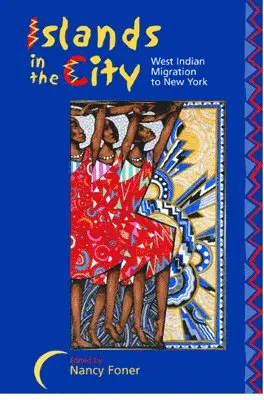
This collection of original essays draws on a variety of theoretical perspectives, methodologies, and empirical data to explore the effects of West Indian migration and to develop analytic frameworks to examine it.
Nancy Foner is Professor of Anthropology at the State University of New York at Purchase. She is the author of From Ellis Island to JFK: New York's Two Great Waves of Immigration (2000) and The Caregiving Dilemma: Work in an American Nursing Home (1994), among others. She is the editor of New Immigrants in New York (1987) and coeditor, with Ruben Rumbaut and Steven Gold, of Immigration Research for a New Century: Multidisciplinary Perspectives (2000).
Recensioner i media
"These superb essays illuminate the fascinating process of absorbing West Indian immigrants into New York City's multicultural but racially divided social fabric.... The result is a model of multidisciplinary analysis" - John Mollenkopf, coauthor of Place Matters; "Islands in the City is a comprehensive collection of the recent findings of the foremost scholars in this field. The premier researchers on West Indians in New York City discuss migration from historical, statistical, theoretical, and experiential points of view. This volume will be used as a model for understanding migration in other areas and it will have importance beyond its field." - Wallace Zane, author of Journeys to the Spiritual Lands; "Nancy Foner has pulled together excellent essays by the leading scholars of the emerging study of West Indians in the United States." - David Reimers, coauthor of All the Nations Under Heaven; "West Indians sit right at the center of the crucial divides of race, class, nationality, nativity, gender, generation, and identity. The insights of this book teach us much of what we need to know about our changing nation." - Jennifer Hochschild, author of Facing Up to the American Dream
Innehållsförteckning
ACKNOWLEDGMENTS Introduction. West Indian Migration to New York: An OverviewNancy Foner PART I • GENDER, WORK, AND RESIDENCE 1. Early-Twentieth-Century Caribbean Women: Migration and Social Networks in New York CityIrma Watkins-Owens /2. Where New York’s West Indians WorkSuzanne Model 3. West Indians and the Residential Landscape of New YorkKyle D. Crowder and Lucky M. Tedrow PART II • TRANSNATIONAL PERSPECTIVES 4. Transnational Social Relations and the Politics of National Identity: An Eastern Caribbean Case StudyLinda Basch 5. New York as a Locality in a Global Family NetworkKaren Fog Olwig PART III • RACE, ETHNICITY, AND THE SECOND GENERATION 6. “Black Like Who?” Afro-Caribbean Immigrants, African Americans, and the Politics of Group IdentityReuel Rogers 7. Growing Up West Indian and African American: Gender and Class Differences in the Second GenerationMary C. Waters 8. Experiencing Success: Structuring the Perception of Opportunities for West IndiansVilna F. Bashi Bobb and Averil Y. Clarke 9. Tweaking a Monolith: The West Indian Immigrant Encounter with “Blackness”Milton Vickerman Conclusion. Invisible No More?West Indian Americans in the Social Scientific ImaginationPhilip Kasinitz REFERENCES NOTES ON CONTRIBUTORS INDEX