• Fri frakt över 249 kr
  • •
  • Snabba leveranser
  • •
  • Billiga böcker
Kundservice

Du är på sajten för privatpersoner.

Företag, bibliotek eller offentlig verksamhet?

Du handlar på classic.bokus.com, där alla dina funktioner finns intakta.
Till classic.bokus.com
Bokus logotyp. Gå till startsidan.
  • Erbjudanden
  • Nyheter
  • Student
  • Topplistor
  • Barn & ungdom
  • Bokus Play
  • E-böcker
  • Pocketböcker
  • Spel & pussel

10% studentrabatt med kod TERM26

Sidfot

Mina sidor

    Hjälp

    • Kundservice
    • Vanliga frågor och svar
    • Frakt och leverans
    • Retur vid ångerrätt
    • Reklamera vara
    • Betalning
    • Köpvillkor
    • Allmänna villkor
    • Information om webbplatsens tillgänglighet

    Om Bokus

    • Om oss
    • Pressrum
    • För studenter
    • För företag
    • För bibliotek och offentlig verksamhet
    • För leverantörer
    • Hållbarhet

    Populärt

    • Aktuella erbjudanden
    • Presentkort
    • Studentlitteratur
    • Nya böcker
    • Topplistor
    • Signerade böcker
    • Engelska böcker

    Inspiration

    • Boktips
    • BookTok
    • Populära bokserier
    • Barnbokskaraktärer
    • Populära författare
    Logotyp för Bokus
    Följ oss på Facebook (extern länk)Följ oss på Instagram (extern länk)Följ oss på YouTube (extern länk)Följ oss på TikTok (extern länk)
    bokus @ CookiesAnpassa cookiesIntegritetspolicyKöpvillkor
    Till Citymail hemsida (extern länk)Till Budbee hemsida (extern länk)Till Postnord hemsida (extern länk)Till Schenker hemsida (extern länk)Till Early Bird hemsida (extern länk)Till Walleys hemsida (extern länk)
    1. Skönlitteratur
    2. Litteraturvetenskap
    3. Litteraturvetenskap

    Language of the Gods in the World of Men

    Sanskrit, Culture, and Power in Premodern India

    AvSheldon Pollock

    Inbunden, Engelska, 2006

    806 kr

    Beställningsvara. Skickas inom 5-8 vardagar. Fri frakt över 249 kr.

    Fler format och utgåvor

    Häftad

    468 kr

    E-bok

    708 kr

    Beskrivning

    In this work of impressive scholarship, Sheldon Pollock explores the remarkable rise and fall of Sanskrit, India's ancient language, as a vehicle of poetry and polity. He traces the two great moments of its transformation: the first around the beginning of the Common Era, when Sanskrit, long a sacred language, was reinvented as a code for literary and political expression, the start of an amazing career that saw Sanskrit literary culture spread from Afghanistan to Java. The second moment occurred around the beginning of the second millennium, when local speech forms challenged and eventually replaced Sanskrit in both the literary and political arenas. Drawing striking parallels, chronologically as well as structurally, with the rise of Latin literature and the Roman empire, and with the new vernacular literatures and nation-states of late-medieval Europe, "The Language of the Gods in the World of Men" asks whether these very different histories challenge current theories of culture and power and suggest new possibilities for practice.

    Produktinformation

    • Utgivningsdatum:2006-05-23
    • Mått:164 x 240 x 40 mm
    • Vikt:900 g
    • Format:Inbunden
    • Språk:Engelska
    • Antal sidor:703
    • Förlag:University of California Press
    • ISBN:9780520245006

    Utforska kategorier

    • Litteraturvetenskap inom Skönlitteratur
    • Socialhistoria och kulturhistoria inom Historia och arkeologi

    Mer om författaren

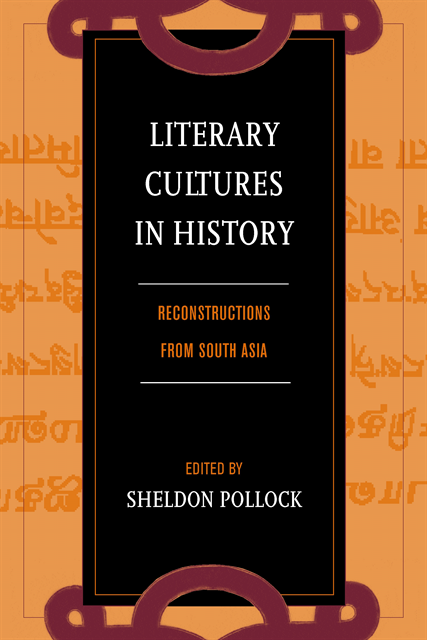
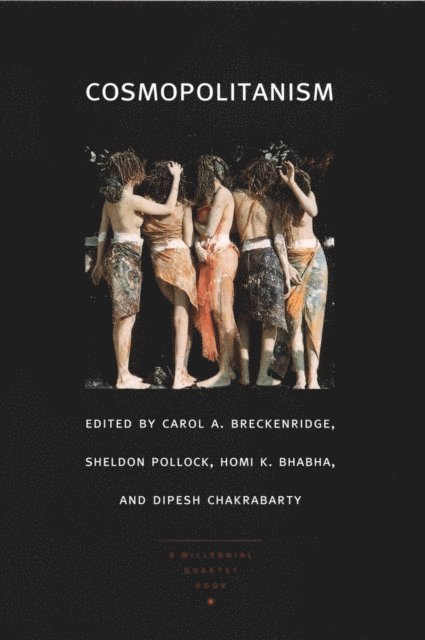
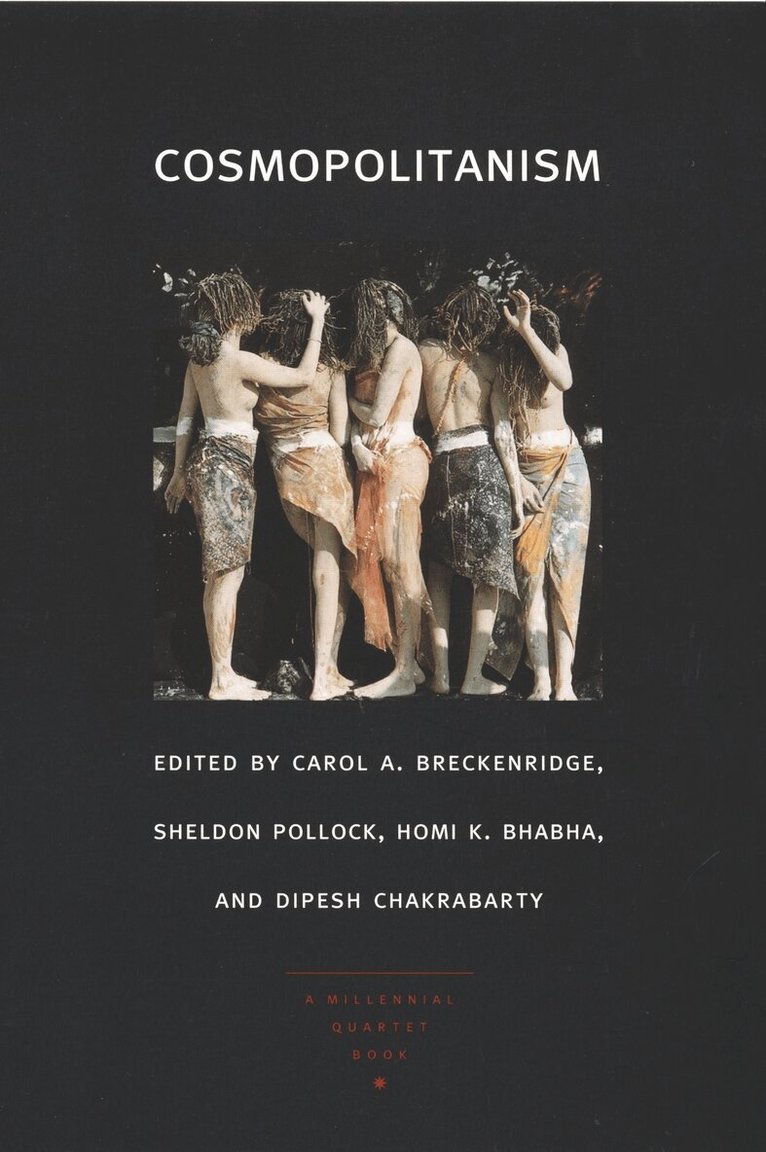
    Sheldon Pollock is William B. Ransford Professor of Sanskrit and South Asian Studies at Columbia University, and former George V. Bobrinskoy Distinguished Service Professor at The University of Chicago. His previous publications include Literary Cultures in History: Reconstructions from South Asia (California, 2003), Cosmopolitanism (2002, with Homi Bhabha et al.), and The Ramayana of Valmiki, Volume III: Aranyakanda (1991), and Volume II: Ayodhyakanda (1986).

    Recensioner i media

    "The scholarship exhibited here is not only superior; it is in many ways staggering. The author's control of an astonishing range of primary and secondary texts from many languages, eras, and disciplines is awe-inspiring. This is a learned, original, and important work." - Robert Goldman, Sanskrit and India Studies, The University of California at Berkeley "This major work is stimulating and path-breaking, and presents an extraordinarily ambitious argument. It is perhaps the first book in the Indological tradition to be a major empirical study as well as a contribution to critical cultural theory. Pollock is doubtless without peer in this entire field." - Arjun Appadural, New School University"

    Innehållsförteckning

    • List of Maps Preface and Acknowledgments Introduction Culture, Power, (Pre)modernity The Cosmopolitan in Theory and Practice The Vernacular in Theory and Practice Theory, Metatheory, Practice, Metapractice PART 1. THE SANSKRIT COSMOPOLIS Chapter 1. The Language of the Gods Enters the World 1.1 Precosmopolitan Sanskrit: Monopolization and Ritualization 1.2 From Resistance to Appropriation 1.3. Expanding the Prestige Economy of Sanskrit Chapter 2. Literature and the Cosmopolitan Language of Literature 2.1. From Liturgy to Literature 2.2. Literary Language as a Closed Set 2.3. The Final Theory of Literary Language: Bhoja's Poetics Chapter 3. The World Conquest and Regime of the Cosmopolitan Style 3.1. Inscribing Political Will in Sanskrit 3.2. The Semantics of Inscriptional Discourse: The Poetics of Power, Malava, 1141 3.3. The Pragmatics of Inscriptional Discourse: Making History, Kalyana, 1008 Chapter 4. Sanskrit Culture as Courtly Practice 4.1. Grammatical and Political Correctness: The Politics of Grammar 4.2. Grammatical and Political Correctness: Grammar Envy 4.3. Literature and Kingly Virtuosity Chapter 5. The Map of Sanskrit Knowledge and the Discourse on the Ways of Literature 5.1. The Geocultural Matrix of Sanskrit Knowledge 5.2. Poetry Man, Poetics Woman, and the Birth-Space of Literature 5.3. The Ways of Literature: Tradition, Method, and Stylistic Regions Chapter 6. Political Formations and Cultural Ethos 6.1. Production and Reproduction of Epic Space 6.2. Power and Culture in a Cosmos Chapter 7. A European Countercosmopolis 7.1. Latinitas 7.2. Imperium Romanum PART 2. THE VERNACULAR MILLENIUM Chapter 8. Beginnings, Textualization, Superposition 8.1. Literary Newness Enters the World 8.2. From Language to Text 8.3. There Is No Parthenogenesis in Culture Chapter 9. Creating a Regional World: The Case of Kannada 9.1. Vernacularization and Political Inscription 9.2. The Way of the King of Poets and the Places of Poetry 9.3. Localizing the Universal Political: Pampa Bharatam 9.4. A New Philology: From Norm-Bound Practice to Practice-Bound Norm Chapter 10. Vernacular Poetries and Polities in Southern Asia 10.1. The Cosmopolitan Vernacularization of South and Southeast Asia 10.2. Region and Reason 10.3. Vernacular Polities 10.4. Religion and Vernacularization Chapter 11. Europe Vernacularized 11.1. Literacy and Literature 11.2. Vernacular Anxiety 11.3. A New Cultural Politics Chapter 12. Comparative and Connective Vernacularization 12.1. European Particularism and Indian Difference 12.2. A Hard History of the Vernacular Millennium PART 3. THEORY AND PRACTICE OF CULTURE AND POWER Chapter 13. Actually Existing Theory and Its Discontents 13.1. Natural Histories of Culture-Power 13.2. Primordialism, Linguism, Ethnicity, and Other Unwarranted Generalizations 13.3. Legitimation, Ideology, and Related Functionalisms Chapter 14. Indigenism and Other Culture-Power Concepts of Modernity 14.1. Civilizationalism, or Indigenism with Too Little History 14.2. Nationalism, or Indigenism with Too Much History Epilogue. From Cosmopolitan-or-Vernacular to Cosmopolitan-and-Vernacular Appendix A A.1 Bhoja's Theory of Literary Language (from the Srngaraprakasa) A. 2 Bhoja's Theory of Ornamentation (from the Sarasvatikanthabharana) A.3 Sripala's Bilpank Prasasti of King Jayasimha Siddharaja A.4 The Origins of Hemacandra's Grammar (from Prabhacandra's Prabhavakacarita) A.5 The Invention of Kavya (from Rjaekhara's Kavyamimamsa) Appendix B B.1 Approximate Dates of Principal Dynasties B.2 Names of Important Peoples and Places with Their Approximate Modern Equivalents or Locations Publication History Bibliography Index