• Fri frakt över 249 kr
  • •
  • Snabba leveranser
  • •
  • Billiga böcker
Kundservice

Du är på sajten för privatpersoner.

Företag, bibliotek eller offentlig verksamhet?

Du handlar på classic.bokus.com, där alla dina funktioner finns intakta.
Till classic.bokus.com
Bokus logotyp. Gå till startsidan.
  • Erbjudanden
  • Nyheter
  • Student
  • Topplistor
  • Barn & ungdom
  • Bokus Play
  • E-böcker
  • Pocketböcker
  • Spel & pussel

10% rabatt på allt med kod: NYSTART10 →

Sidfot

Mina sidor

    Hjälp

    • Kundservice
    • Vanliga frågor och svar
    • Frakt och leverans
    • Retur vid ångerrätt
    • Reklamera vara
    • Betalning
    • Köpvillkor
    • Allmänna villkor
    • Information om webbplatsens tillgänglighet

    Om Bokus

    • Om oss
    • Pressrum
    • För studenter
    • För företag
    • För bibliotek och offentlig verksamhet
    • För leverantörer
    • Hållbarhet

    Populärt

    • Aktuella erbjudanden
    • Presentkort
    • Studentlitteratur
    • Nya böcker
    • Topplistor
    • Signerade böcker
    • Engelska böcker

    Inspiration

    • Boktips
    • BookTok
    • Populära bokserier
    • Barnbokskaraktärer
    • Populära författare
    Logotyp för Bokus
    Följ oss på Facebook (extern länk)Följ oss på Instagram (extern länk)Följ oss på YouTube (extern länk)Följ oss på TikTok (extern länk)
    bokus @ CookiesAnpassa cookiesIntegritetspolicyKöpvillkor
    Till Citymail hemsida (extern länk)Till Budbee hemsida (extern länk)Till Postnord hemsida (extern länk)Till Schenker hemsida (extern länk)Till Early Bird hemsida (extern länk)Till Walleys hemsida (extern länk)
    1. Kultur
    2. Konstböcker
    3. Konsthistoria

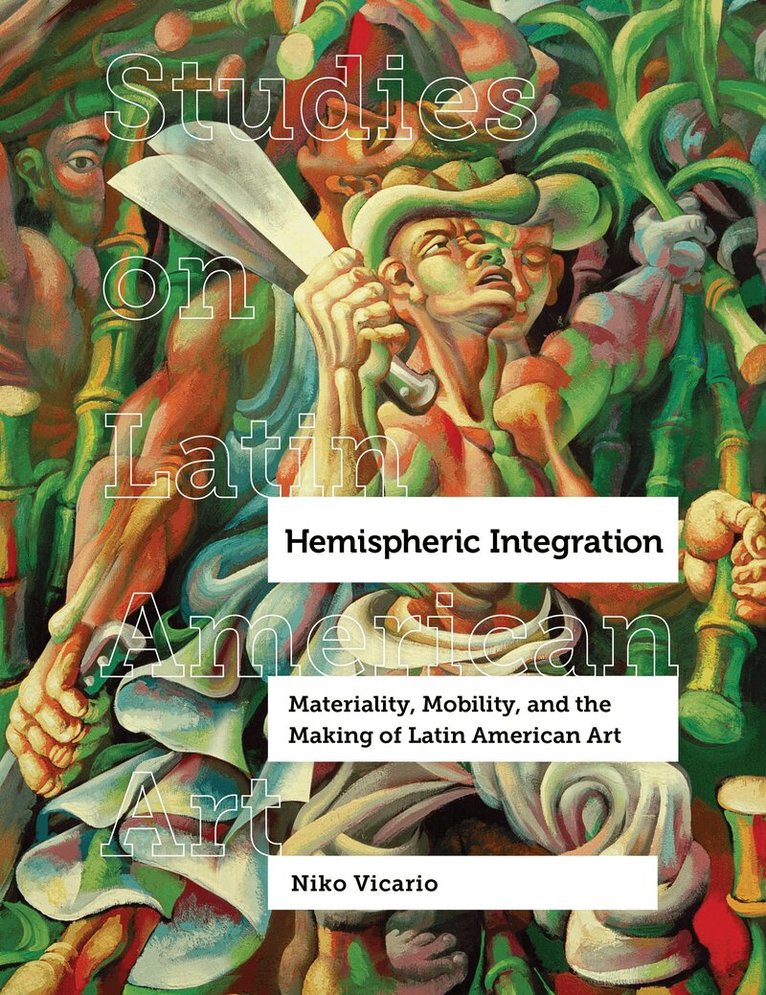
    Hemispheric Integration

    Materiality, Mobility, and the Making of Latin American Art

    AvNiko Vicario

    Inbunden, Engelska, 2020

    Del 3 i serien Studies on Latin American Art and Latinx Art

    428 kr

    Beställningsvara. Skickas inom 5-8 vardagar. Fri frakt över 249 kr.

    Beskrivning

    Exploring art made in Latin America during the 1930s and 1940s, Hemispheric Integration argues that Latin America’s position within a global economic order was crucial to how art from that region was produced, collected, and understood. Niko Vicario analyzes art’s relation to shifting trade patterns, geopolitical realignments, and industrialization to suggest that it was in this specific era that the category of Latin American art developed its current definition. Focusing on artworks by iconic Latin American modernists such as David Alfaro Siqueiros, Joaquín Torres-García, Cândido Portinari, and Mario Carreño, Vicario emphasizes the materiality and mobility of art and their connection to commerce, namely the exchange of raw materials for manufactured goods from Europe and the United States. An exceptional examination of transnational culture, this book provides a new model for the study of Latin American art.

    Produktinformation

    • Utgivningsdatum:2020-04-07
    • Mått:178 x 229 x 28 mm
    • Vikt:1 089 g
    • Format:Inbunden
    • Språk:Engelska
    • Serie:Studies on Latin American Art and Latinx Art
    • Antal sidor:312
    • Förlag:University of California Press
    • ISBN:9780520310025

    Utforska kategorier

    • Konsthistoria inom Kultur
    • Konstböcker inom Kultur
    • Amerikas historia inom Historia och arkeologi

    Mer om författaren

    Niko Vicario is Assistant Professor of Art and the History of Art at Amherst College.

    Recensioner i media

    "Joining a growing body of transnational studies (i.e., books by Lori Cole, María Amalia García, Michele Greet, Olga Herrera, Anna Indych-López, and Harper Montgomery), Vicario intervenes with an original and rigorous approach that puts into practice a social history of art embedded in the matter of art and in the dynamics of industry and trade."

    Innehållsförteckning

    • ACKNOWLEDGMENTSIntroduction1. “The Revolutionary Medium”:Siqueiros’s Duco Muralism2. Morphological Constructivism:Torres-García’s “New Art of America”3. OIAA/MoMA:The Rockefeller Nexus of Latin American Art4. Local Color:Carreño’s Art of “Interpenetration”ConclusionNOTESSELECTED BIBLIOGRAPHYLIST OF ILLUSTRATIONSINDEX