• Fri frakt över 249 kr
  • •
  • Snabba leveranser
  • •
  • Billiga böcker
Kundservice

Du är på sajten för privatpersoner.

Företag, bibliotek eller offentlig verksamhet?

Du handlar på classic.bokus.com, där alla dina funktioner finns intakta.
Till classic.bokus.com
Bokus logotyp. Gå till startsidan.
  • Erbjudanden
  • Student
  • Topplistor
  • Barn & ungdom
  • Bokus Play
  • E-böcker
  • Ljudböcker
  • Pocketböcker
  • Spel & pussel

Upp till 25% på utvalda nyheter →

Sidfot

Mina sidor

    Hjälp

    • Kundservice
    • Vanliga frågor och svar
    • Frakt och leverans
    • Retur vid ångerrätt
    • Reklamera vara
    • Betalning
    • Köpvillkor
    • Allmänna villkor
    • Information om webbplatsens tillgänglighet

    Om Bokus

    • Om oss
    • Pressrum
    • För studenter
    • För företag
    • För bibliotek och offentlig verksamhet
    • För leverantörer
    • Hållbarhet

    Populärt

    • Aktuella erbjudanden
    • Presentkort
    • Studentlitteratur
    • Nya böcker
    • Topplistor
    • Signerade böcker
    • Engelska böcker

    Inspiration

    • Boktips
    • BookTok
    • Populära bokserier
    • Barnbokskaraktärer
    • Populära författare
    Logotyp för Bokus
    Följ oss på Facebook (extern länk)Följ oss på Instagram (extern länk)Följ oss på YouTube (extern länk)Följ oss på TikTok (extern länk)
    bokus @ CookiesAnpassa cookiesIntegritetspolicyKöpvillkor
    Till Citymail hemsida (extern länk)Till Budbee hemsida (extern länk)Till Postnord hemsida (extern länk)Till Schenker hemsida (extern länk)Till Early Bird hemsida (extern länk)Till Walleys hemsida (extern länk)
    1. Ekonomi och Ledarskap
    2. Nationalekonomi
    3. Ekonomisk politik

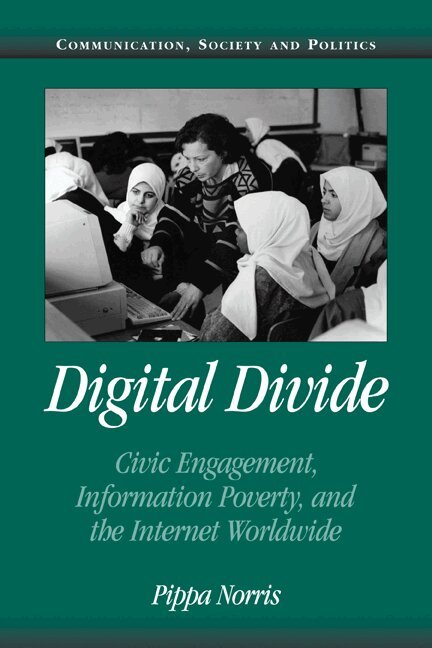
    Digital Divide

    Civic Engagement, Information Poverty, and the Internet Worldwide

    AvPippa Norris,W. Lance Bennett

    Häftad, Engelska, 2001

    Del i serien Communication, Society and Politics

    390 kr

    Beställningsvara. Skickas inom 7-10 vardagar. Fri frakt över 249 kr.

    Fler format och utgåvor

    Inbunden

    1 098 kr

    Beskrivning

    There is widespread concern that the growth of the Internet is exacerbating inequalities between the information rich and poor. Digital Divide examines access and use of the Internet in 179 nations world-wide. A global divide is evident between industrialized and developing societies. A social divide is apparent between rich and poor within each nation. Within the online community, evidence for a democratic divide is emerging between those who do and do not use Internet resources to engage and participate in public life. Part I outlines the theoretical debate between cyber-optimists who see the Internet as the great leveler. Part II examines the virtual political system and the way that representative institutions have responded to new opportunities on the Internet. Part III analyzes how the public has responded to these opportunities in Europe and the United States and develops the civic engagement model to explain patterns of participation via the Internet.

    Produktinformation

    • Utgivningsdatum:2001-09-24
    • Mått:153 x 229 x 23 mm
    • Vikt:435 g
    • Format:Häftad
    • Språk:Engelska
    • Serie:Communication, Society and Politics
    • Antal sidor:320
    • Förlag:Cambridge University Press
    • ISBN:9780521002233

    Utforska kategorier

    • Ekonomisk politik inom Ekonomi och Ledarskap

    Recensioner i media

    'Norris's worldwide comparison of 179 countries' national and political context of Internet access and use is a valuable contribution to our understanding of the problem of the digital divide because it blends together the economic aspect with socioeconomic and democratic development with a systematic framework.' Prometheus

    Innehållsförteckning

    • Part I. Introductory Framework: 1. The digital divide; 2. Understanding the digital divide: wired world; 3. Social inequalities; Part II. The Virtual Political System: 4. Theories of digital democracy; 5. e-governance; 6. Online parliaments; 7. Virtual parties; 8. Civic society; Part III. The Democratic Divide: 9. Cyberculture; 10. Digital engagement; 11. Conclusions: promoting digital democracy.